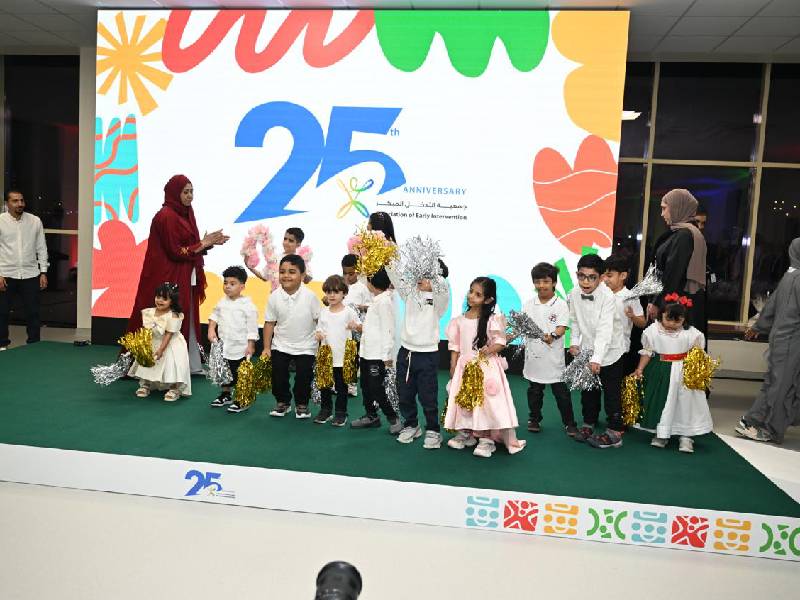
Muscat – What began as a vision to provide early support for children with disabilities has grown into a nationally recognised institution. The Association of Early Intervention celebrated 25 years of service on Monday, marking a significant milestone in its development. Muscat Daily spoke with CEO Sabah bint Mohammed al Bahlani on the association’s evolution, challenges and plans ahead.
Reflecting on the association’s 25-year journey, how do you assess its impact on children with disabilities and their families?
The association was established with the aim of providing high-quality services for children with disabilities through early intervention and strong parental support. In its early years, services were limited and delivered by high school graduates who underwent three months of training, with support provided to around 12 children.
Over time, the association introduced the home-visiting portage programme, which trains parents to support their children from birth to three years of age within the home environment. Daycare services were also launched for children aged three to nine years, offering them access to holistic and comprehensive rehabilitation.
Significant progress was achieved through the training of Omani staff in cooperation with the University of Nizwa, where they obtained diplomas in special education. The association gradually expanded its services by establishing a multidisciplinary team that includes physiotherapists, occupational therapists, speech therapists, psychologists, special education and applied behaviour analysis specialists, as well as adapted sports instructors. This integrated approach has enabled the association deliver comprehensive and specialised rehabilitation services for children.

What were the main challenges in promoting early intervention, and how were these addressed?
One of the key challenges was the limited availability of specialised rehabilitation professionals, particularly in early intervention. In addition, awareness among families and the wider community about the importance of early intervention for children with disabilities was initially low.
To overcome these challenges, the association invested in training Omani professionals and recruited experienced specialists from abroad to ensure the delivery of quality services. Continuous training programmes were also provided for parents to enhance their caregiving skills and encourage their active participation in their children’s rehabilitation.
At the community level, the association organised extensive awareness campaigns in schools, colleges, companies and public spaces to promote understanding of disability and highlight the critical role of early intervention.
Which programmes have had the greatest impact on children with disabilities?
Introduced in 2002, the home-visiting portage programme remains one of the association’s most impactful initiatives. The programme is built on the principle that the mother plays a central role in child development, with services delivered in the child’s natural home environment.
The programme empowers mothers by equipping them with the skills to support their children’s development, focusing on enhancing abilities and teaching essential life skills. It serves children with disabilities from birth to three years of age, with services extended up to nine years for children with severe disabilities.
With social, economic and educational conditions evolving in Oman in the last 25 years, parental awareness has significantly increased. In response, the association has strengthened parental engagement through regular training and introduced additional programmes to meet the changing needs of families and children.

How does early intervention make a difference for children and their families?
Early intervention encourages families to actively participate in their child’s development and builds confidence in their parenting abilities. It addresses developmental milestones during the critical early years, improving children’s readiness for school as well as their communication, social and emotional skills.
Family-centred approaches ensure that interventions are aligned with each family’s cultural values and daily routines, making services more effective and relevant. Through close collaboration with professionals, families gain the knowledge and confidence to make informed decisions and seek appropriate support.
Ultimately, early intervention benefits not only the child but the entire family, creating lasting positive outcomes that extend well beyond the early years.
How many children currently require early intervention services, and how is the association responding to growing demand?
There are no precise statistics on the number of children requiring early intervention services in Oman. However, according to the 2024 report by the National Centre for Statistics and Information, there are 19,266 Omani children with disabilities. Of these, 59% are male and 41% female, representing 1.5% of the total child population aged 0–17 years.
Children aged 0–4 years account for 13% of cases, while 33% are aged 5–9 years, 35% are 10–14 years, and 18% fall within the 15–17 age group. Congenital disabilities account for 11,691 cases, while 7,575 are non-congenital, with 57% of non-congenital cases occurring during birth. North Batinah records the highest proportion of children with disabilities at 22.2%, followed by Muscat governorate at 16.1%, while Musandam has the lowest proportion at 0.9%.
What are the association’s priorities as it enters the next phase?
The association aims to continue providing comprehensive services for families under one roof, while empowering parents with the skills needed to care for their children. It focuses on preparing children for school and supporting those already enrolled through coordinated rehabilitation services in partnership with families and educational institutions.
Training professionals and parents remains a key priority, alongside expanding lifelong services for individuals with cognitive disabilities. These include transition and pre-vocational programmes for children aged 10–14 years, as well as vocational training for individuals aged 15 and above. The initiatives aim to address gaps in vocational opportunities, promote sheltered employment and enhance social inclusion.
What message would you like to share with partners, supporters and families?
We extend our sincere appreciation to our partners, including companies, individuals, government entities, community members and families whose support enables us to continue our mission. Their contributions ensure that children with disabilities and their families receive the care, opportunities and quality of life they deserve. We also thank the Ministry of Social Development for its ongoing guidance and support, which plays a vital role in sustaining the association’s services.