5 min read
RMAFC cannot override Supreme Court on 76 Akwa Ibom oil wells – Ex-NBA President
vanguardngr.com
Monday, February 16, 2026
By Egufe Yafugborhi UYO – FORMER President of the Nigeria Bar Association, Paul Usoro, SAN, on Monday affirmed that only the Supreme Court can review its two judgments affirming Akwa Ibom state ownership of 76 offshore oil wells in dispute with neighboring Cross River state. Usoro mad...
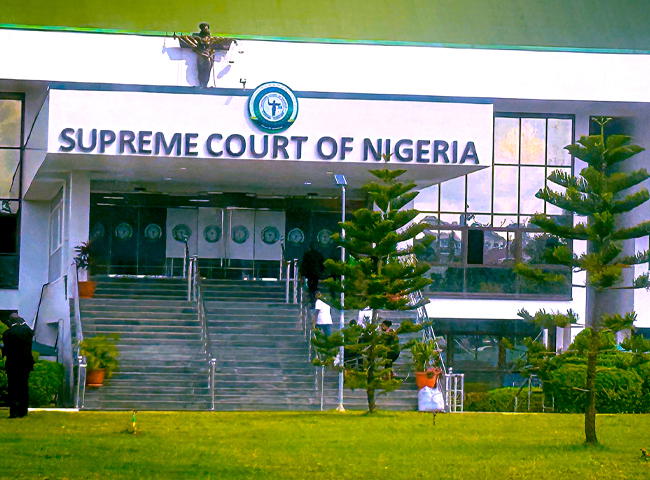
By Egufe Yafugborhi
UYO – FORMER President of the Nigeria Bar Association, Paul Usoro, SAN, on Monday affirmed that only the Supreme Court can review its two judgments affirming Akwa Ibom state ownership of 76 offshore oil wells in dispute with neighboring Cross River state.
Usoro made the clarification in Uyo Monday in company of Akwa Ibom Attorney General and Commissioner for Justice, Uko Udom, SAN, as the State Government called for calm and restraint among citizens as dispute with neighboring Cross Rivers over the oil wells regains media prominence.
Udom had said the State has reviewed media reports suggesting the oil wells attributed to Akwa Ibom may be “returned” to Cross River based on the report the federal Inter-Agency Committee has submitted to the Revenue Mobilisation Allocation and Fiscal Commission (RMAFC).
Only SC Can Review Own Judgement
Usoro at the clarification gathering told media men, “First of all, the location of all the oil wells in issue is offshore. To have access offshore, you must be a littoral state.
“If it’s offoshore and you’re not a littoral state you don’t have access to the sea, absolutely no way attribution (ownership) can be made to you with regard to that offshore.
“What the Supreme Court said, very explicit, is that Cross River is aimed in and has no access to the sea. That has not changed, to the extent that she (Cross River) does not have that access to the sea.
“And the oil wells that have been discovered, attributed are all offshore and it’s Akwa Ibom that aborts the sea, then that essentially become issues that have been settled by the Supreme Court without any discretion by any agency.
“The Supreme Court did not leave any loophole because the central question which determinates the coordinates is whether you have access to the sea, whether you aborts the sea.”
The former NBA boss emphasised that, “When you need to review a Supreme Court decision, you go to the Supreme Court. Nobody, absolutely no individual reviews a court decision. Only that court can review its own decision.
“So if this was a case of wanting to review what the Supreme Court had said, the only place that issue will be lodged is the Supreme Court.
“And nobody to the best of our (Akwa Ibom state) knowledge is disputing that was a Supreme Court judgement and what the court said. That is not in dispute and therefore the issue of review does not come in at all.”
No Cause For Alarm
Reflecting on the latest arguments, A’Ibom Justice Commissioner, Udom, SAN, examined, “Firstly, RMAFC has publicly clarified that what it received 13th February 2026 is a draft report — not a decision, not an approved recommendation, and certainly not a reallocation of oil wells.
“The Commission has described the circulating claims as speculative and not reflective of any final position. Beyond this procedural clarification lies a more fundamental issue -the binding authority of the Supreme Court and the settled history of this dispute.
“In Suit No. 124/1999, Cross River State sued Akwa Ibom State over two principal matters -The northern non-estuarine boundary involving 24 villages of Oku, Itu, and Ayadehe in Itu Local Government Area of Akwa Ibom State and the southern estuarine boundary where the oil wells are located.
“On 24th June 2005, the Supreme Court ruled in favour of Cross River State only with respect to portions of the northern boundary. The Court dismissed Cross River’s claim over the estuarine southern territory, where all the oil wells are situated.
“In its pronouncement, the Court made it clear that the October 10, 2002 judgment of the International Court of Justice (ICJ) on the land and maritime boundary between Nigeria and Cameroon had fundamentally altered Cross River State’s coastal status.
“The Court held that the ICJ decision effectively eliminated Cross River’s estuarine sector, with the legal implication that Cross River no longer possessed seaward boundary.
“Subsequently, despite Akwa Ibom’s efforts to promote peaceful engagement and preserve kinship and harmony, further litigation was initiated by Cross River seeking clarification on offshore entitlements.
“On 10th July 2012, Supreme Court again ruled decisively in favour of Akwa Ibom, holding that Cross River was no longer a littoral state entitled to offshore derivation.
“That its (Cross River) case was founded on a legally unsustainable assumption and Akwa Ibom’s entitlement to the oil wells was fully recognized.
“The legal position therefore stands firmly established: following the cession of the Bakassi Peninsula pursuant to the 2002 ICJ judgment, Cross River State ceased to have a seaward boundary and lost its status as a littoral state for purposes of offshore oil derivation.”
Udom assured Akwa Ibomites that, “No oil well has been ceded. No Supreme Court judgment has been overturned, no constitutional provision has been amended.
“Akwa Ibom will not surrender its God-given resources. We will not relinquish what rightfully belongs to our people under the Constitution and under binding judicial authority.
“We urge our citizens to remain calm, united, and confident. The foundation of our position is law. The strength of our case is geography. The shield of our rights is the Constitution of the Federal Republic of Nigeria.”
The post RMAFC cannot override Supreme Court on 76 Akwa Ibom oil wells – Ex-NBA President appeared first on Vanguard News.
Read the full article
Continue reading on vanguardngr.com


