By Luminous Jannamike
The Supreme Council for Shari’ah in Nigeria has declared that it will not recognise or legitimise elections conducted under conditions it considers compromised, warning that the credibility of Nigeria’s democratic process must be protected ahead of the 2027 general elections.
The position was announced on Wednesday in Abuja at the Council’s Annual Pre-Ramadan Lecture and General Assembly, attended by Islamic scholars, traditional and community leaders, professionals, representatives of Islamic organisations, and the media.
The gathering featured remarks by the President of the Shariah Council, Sheikh Dr. Bashir Aliyu Umar, and Madakin Zazzau, Mallam Muhammadu Munir Ja’afaru.
Speaking at the event, the Council’s leader stressed that public confidence in institutions, particularly those responsible for elections, is central to national stability, noting that democratic legitimacy cannot exist without integrity.
“The Council has clearly stated that the Ummah will not recognise or legitimise any election presided over by a character with questionable integrity, as democratic credibility must never be compromised,” Umar said.
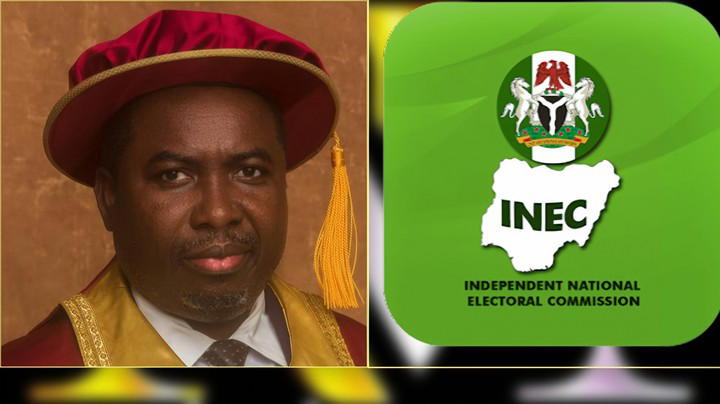
The Islamic body expressed concern over developments surrounding the leadership of the Independent National Electoral Commission (INEC), warning that elections conducted under questionable circumstances would lack public trust.
“No election conducted under a cloud of compromised integrity can be recognised as credible,” the Council stated.
Beyond electoral matters, the Shariah Council painted a grim picture of the state of the nation, describing Nigeria as facing worsening insecurity, economic hardship and declining public trust, with millions struggling under inflation, unemployment and rising costs of living.
“Nigeria today stands at a critical crossroads. The nation is confronted by worsening insecurity, widespread loss of lives, economic hardship, erosion of public trust, and deep social anxiety,” Umar said.
On insecurity and terrorism, the Council reiterated its condemnation of violence in all its forms, while calling for both effective security measures and peaceful reconciliation. It noted that Muslim communities have been heavily affected by ongoing violence across the country.
“The Council has provided irrefutable evidential data demonstrating that Muslim communities constitute a disproportionate number of victims in the ongoing insecurity and terrorism across Nigeria,” Umar said, adding that every human life, Muslim or Christian, is sacred and inviolable.
The Council also rejected what it described as misleading and inflammatory narratives around religious violence, urging responsible public discourse to avoid deepening divisions.
“The Council firmly debunked and rejected misleading and inflammatory propaganda, including the so-called ‘Christian genocide’ narrative,” Umar said.
On economic governance, the Shariah Council criticised aspects of Nigeria’s tax reform efforts, arguing that fiscal policies should not impose unjust hardship on ordinary Nigerians. It also raised concerns over budget implementation, mis-prioritisation and underfunding of critical institutions in the 2025 and 2026 national budgets.
“The Council firmly opposes any tax reform that imposes unjust hardship on ordinary Nigerians and insists that all fiscal policies must be equitable, humane, and socially responsible,” Umar said.
The Council further decried what it described as a systemic imbalance in federal appointments, warning that such practices undermine constitutional equity and national cohesion.
“The imbalance in federal appointments raises serious moral, constitutional and national cohesion concerns,” Umar said.
On religious rights, the Council reaffirmed that the implementation of Shari’ah is a constitutional right of Muslims and applies only to them, while restating its commitment to peaceful coexistence.
“Islam is Shariah, as there is no Islam without Shariah, and Muslims will not accept any constitutional amendment that falls short of granting Muslims their right,” the Council said.
The Shariah Council also condemned the ongoing war in Gaza, describing it as genocide, and expressed concern over what it called a global conspiracy of silence regarding the suffering of the Palestinian people, while continuing to advocate justice and humanitarian access.
In his remarks, Mallam Muhammadu Munir Ja’afaru, described the Shariah Council as a principled and courageous voice of the Nigerian Muslim Ummah, noting its role in promoting justice, unity and national stability.
“In a plural and complex country like Nigeria, the existence of such a body is not only desirable but indispensable,” Ja’afaru said.
As Ramadan approaches, the Council urged Islamic scholars to use Tafseer sessions to promote unity, moral reformation, responsible civic engagement and ethical leadership, stressing that national renewal requires moral responsibility.
The post Shariah Council to INEC: We won’t accept compromised elections in 2027 appeared first on Vanguard News.
