
Muscat – A small-scale rice cultivation experiment in Sur, South Sharqiyah has drawn attention to the potential for expanding local production of rice in Oman, as the sultanate continues to prioritise food security and sustainable agricultural practices.
Hamad bin Salim al Alawi, a farmer and Vice-Chairman of Oman Chamber of Commerce and Industry in South Sharqiyah , successfully cultivated basmati rice using simple farming tools despite the limited size of the farm. The trial covered an approximately 6m by 10m plot and yielded more than 270kg of rice, including Indian basmati and Saudi hijazi, demonstrating different varieties can adapt to local conditions.

Speaking to Muscat Daily, Alawi said his involvement in agriculture dates back to 1983, when he began cultivating a range of crops such as tomatoes, cucumbers, peppers and wheat. Over the years, he managed farmland exceeding two feddans, gaining experience through trial, error and continuous learning. He said the early stages of his work were challenging, but persistence played a decisive role in overcoming obstacles. “The results gradually became positive,” he said.
Alawi noted that his recent success in rice cultivation was supported by exposure to agricultural practices in neighbouring countries, particularly the United Arab Emirates. Through visits and field observations, he gained practical insights into crop management and irrigation techniques, some of which were later adapted to suit local environmental conditions in Sur.
One of the key methods applied during the experiment was the use of dam soil, which helped retain moisture and reduce water loss. He said this approach proved effective in supporting rice growth while promoting efficient water use, a critical consideration in Oman’s arid climate. The results, he added, reinforce the importance of applying scientific and sustainable principles when introducing non-traditional crops.
According to Alawi, the experiment shows that rice cultivation in Oman is possible if based on careful planning, responsible use of natural resources and appropriate technical support. While the project remains small in scale, he said it offers a practical model that could be developed further with institutional backing.
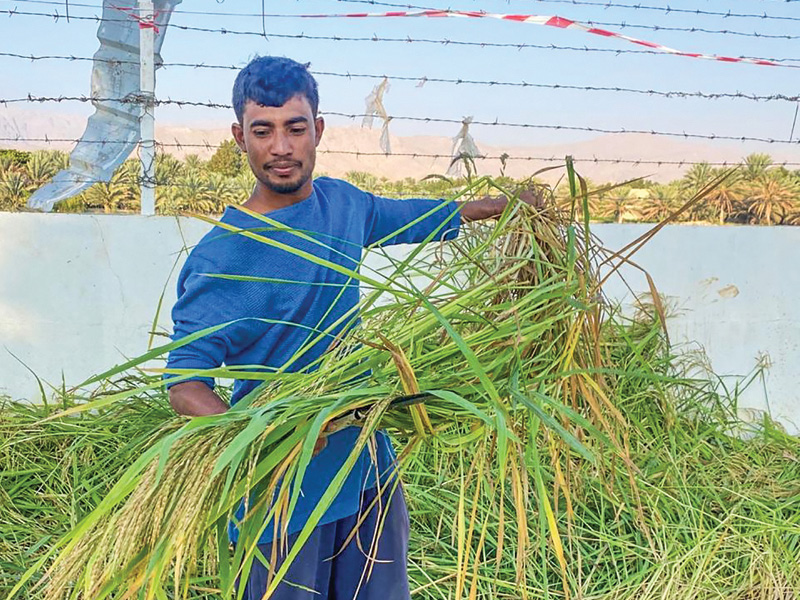
He stressed that expanding such initiatives could contribute to diversifying local agricultural production and enhancing food security, particularly if farmers receive guidance, training and access to suitable inputs. Cooperation between farmers and relevant authorities, he said, will be essential to ensure that similar projects are implemented in a structured and sustainable manner.
Looking ahead, Alawi said he plans to launch an initiative aimed at distributing rice seeds free of charge and organising workshops to train farmers in rice cultivation techniques. The initiative seeks to expand the cultivated area of rice in Sur, and encourage wider adoption of the crop using sound agricultural practices.
He also delivered a message to young people, especially those seeking employment, urging them to view agriculture as a viable and productive profession. With commitment, patience and continuous learning, he said, farming can provide opportunities while contributing to national development goals. Dedication and perseverance, he added, remain key to transforming challenges into sustainable outcomes.


