By Luminous Jannamike, Abuja
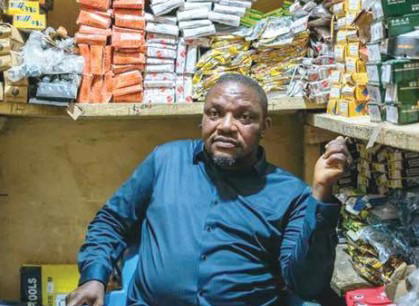
Last Monday, Nigeria woke differently. Before the press briefings, before the studio lights and official statements, Emeka Umeagbalasi begins his day like many Nigerians who live between survival and belief.
Read Also: Killings, abductions soar after U.S. airstrikes as terrorists kill 183, abduct 366 in 27 days
Paperwork. Phone calls. Advocacy. For decades, he has lived a double life familiar in this country, a small-scale businessman who sells tools, and a civil liberties advocate who documents violence others would rather look away from.
Then, in one stroke, that life was flattened into a headline: “The Screwdriver Salesman Behind Trump Strikes in Nigeria.”
With those words, the New York Times transformed a Nigerian citizen into a global symbol, not of facts, but of insinuation.
A complex web of intelligence-sharing, congressional testimonies, survivor accounts, and Nigerian government briefings were reduced to one man, one profession, and one dangerous suggestion: that American bombs fell because a “screwdriver salesman” said so.
When global journalism becomes local threat
By the time the article circulated across Nigeria, the damage had already begun.
In a country fractured by ethnicity, religion, and suspicion, narratives carry consequences. Linking a man from the South-East to airstrikes in the North is not merely careless, it is combustible. That danger was not lost on Nigerian journalists.
On Arise TV, Rufai Oseni did not hide his anger: “I think this is a hit job by the New York Times, and it’s sad that media is doing this globally. For the New York Times to suggest that it was solely this man’s work that drove the Christian genocide narrative is false.”
For Oseni, the problem was not scrutiny, it was reductionism.
Evidence the headline ignored
Oseni dismantled the New York Times framing with facts.
He said, “On March 12, 2025, Bishop Wilfred Anagbe of the Makurdi Catholic Diocese testified before the US House Foreign Affairs Subcommittee on Africa on religious persecution in Nigeria… In November 2025, he returned to testify again.”
According to Oseni, there were others.
“Reverend Remigius Ihyula… joined that testimony. A survivor of the June 2025 Yelwata attack in Benue State also testified virtually… recounting how he watched five children being slaughtered,” he said.
These were not Google searches. These were sworn testimonies.
“So for the New York Times to hinge everything on a screwdriver salesman feels like a hit job and makes a mockery of the American intelligence system,” Oseni added.
‘This narrative is dangerous’ – Reuben Abati
Former presidential spokesman Reuben Abati took the argument further, beyond journalism into national security.
“The American intelligence system does not rely on one source. There are multiple sources, evaluated and investigated,” he said.
Reducing U.S. military action to one Nigerian citizen, Abati argued, insults both countries.
He added, “To say one screwdriver salesman is ‘screwing down’ Nigeria is unfair. Nigeria should not allow itself to be framed that way.”
But Abati’s gravest concern was social fallout.
“This narrative could inflame North-South tensions, suggesting that someone from Onitsha invited the US to bomb Sokoto. That is divisive and dangerous,” he cautioned.
In a country already struggling to hold itself together, such framing does not merely misinform, it destabilises.
Who really owns the story?
Abati redirected the spotlight where he believes it belongs.
“Anyone can make a claim, but the responsibility lies with journalists and media houses to verify it,” he stated.
If the New York Times amplified a claim with global consequences, he argued, the burden of accountability rests squarely with the publication.
“If the New York Times took his story and gave it global credibility, then either they conducted thorough checks or they amplified a claim with far-reaching consequences without proper due diligence,” Abati said.
He paused before adding: “That reflects badly.”
Voices from beyond the studio
Public reaction spread quickly. Former senator Shehu Sani wrote: “It’s unfortunate and tragic to read the New York Times report that the claim of Christian genocide was sourced from one Emeka, an Onitsha-based screwdriver trader and small NGO operator… How such an unverified claim could tense up US lawmakers, the president, and the intelligence community… is one of the most foolish and comical historical events of our lifetime. This is shameful.”
Others, like Sir Inyang, shifted focus back to lived reality:
“But the media has been reporting community mass killings, killings in churches, banditry, terrorist activities, herdsmen attacks, kidnappings, etc. Nigerians mainly want the killings and terrorism to stop,” he stated.
Response from Intersociety
Intersociety itself rejected the New York Times account outright, accusing the paper of misrepresentation, false attribution, and dangerous framing. The organisation insisted its data follows international best practices and warned that the headline had placed its leadership at physical risk.
Civil society group HURIWA went further, describing the report as propaganda and questioning whether lobbying interests had begun reshaping international narratives about Nigeria.
Question journalism must answer
This story is not about defending bad data. Misinformation exists, and it must be challenged.
But journalism that collapses complexity into caricature, especially in a fragile society, does not illuminate truth. It trades context for drama, and accuracy for spectacle.
Somewhere in Onitsha, a man whose life straddles commerce and conscience watched himself become a global villain overnight, not because of what he did, but because of how a story was told.
Nigeria deserves better than that. And so does journalism.
The post From Citizen to Scapegoat: Inside New York Times story that put Nigeria on edge appeared first on Vanguard News.
