10 min read
2027: Sowore predicts verdict of judges on election matters
vanguardngr.com
Saturday, February 14, 2026
Says that’s why they are avoiding real-time mandatory transmission of election results •90% of our lawmakers will not return to Nation Assembly if elections are transparent By Dickson Omobola Presidential candidate of the African Action Congress, AAC, in the 2023 elections and human righ...
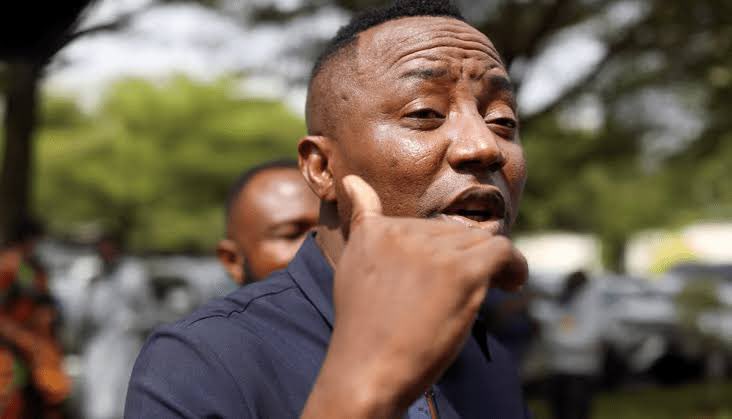
Says that’s why they are avoiding real-time mandatory transmission of election results
•90% of our lawmakers will not return to Nation Assembly if elections are transparent
By Dickson Omobola
Presidential candidate of the African Action Congress, AAC, in the 2023 elections and human rights activist, Mr Omoyele Sowore, in this monitored interview, spoke on the controversy trailing the electronic transmission of election results and other issues.
Excerpts:
Senate has decided to approve electronic transmission of results with manual backing. That has drawn a number of reactions, especially with the explanation provided by the Senate spokesman.
What is your reaction to the explanation?
I don’t think I need any explanation from a spokesperson of the Senate. What we know or what we heard is that the provision for electronic transmission of results was not made mandatory. What we asked for, and what led most of us to join the barricades, was for them to be very clear that this must be made mandatory.
Those Bimodal Voter Accreditation System, BVAS, machines are in two modes. It is called a bimodal verification machine because it is able to take a shot of the results and transmit them to the Independent National Electoral Commission, INEC, portal. It may happen immediately if there is a network, but it could also happen once it finds a network.
However, what is most important is that the process must be started as soon as elections are concluded, such that when the shot of the final result paperwork is taken, it goes to the INEC Result Viewing Portal, where people can immediately view results from each polling unit across the country.
That was not made mandatory in what was passed by the Senate, according to what we know. What they did was to be clever by half by saying that wherever there is no opportunity to transmit, they will accept the hard copy. What that means, when you deal with these characters, is that they will always go to court and say this is not mandatory. The judges will rule that there is no provision in the law that says it is mandatory.
This is just to instil a little bit of trust. I said it yesterday and I will repeat it here: I am not a fan of these old systems. By now, we should be doing what they are doing in India. India has 900 million registered voters and they use electronic voting as their way of expressing the wishes of the people, and those systems are almost foolproof.
I don’t think you hear a lot of tribunal sittings in India after 900 million people vote, and we have only about 90 million people here. We should be able to go for electronic voting. Like I said, if you can use electronic processes to send money to people and do other confidential transactions, why can’t we vote from our homes instead of roaming around to vote, and then at the end of the day the elections are not even credible? You end up electing people you didn’t vote for.
Let’s look at the House’s position against the Senate’s position. The House in December approved electronic transmission from each polling unit to the IREV portal in real time, with each transmission done simultaneously with physical collation of results. With this contrast between the position of the House and that of the Senate, does it give some form of credibility to the legislative process of the National Assembly? Should we trust the National Assembly?
Obviously, we can’t trust them. Even when these two positions are harmonised, which is what they said they would do, we still have to comb through the fine print of what is in the final law they are going to pass.
What I suspect, and I know these people well, is that they are not worried about you or the public. They are covering up in advance for what will happen in courtrooms in the future. They don’t want a situation where judges are hamstrung by a definitive word.
What we are saying here is that the language of the Electoral Act must make electronic transmission mandatory. Wherever that is violated, there must be credible evidence or excuse provided. And the burden of proof should not be on those who are being rigged out of elections. That is exactly what they are trying to avoid.
They don’t want to make it mandatory. The excuse is that there is no network in nine states. In essence, if you don’t make it mandatory, they can just shut down all the networks in the country.
BVAS, as they call it, is something that can work with any kind of network. Some people have said INEC should deploy Starlink to power them. That is another possibility. However, I think their excuse is not credible because even in places where networks were deliberately shut down in previous years, terrorists were sending live content to TikTok, Facebook and Twitter. So this excuse that there is no network in nine states is just another baloney on their part.
They don’t want transparent elections because they know that if elections are transparent, 90 per cent of them will not make it to the National Assembly, the presidency and other elected positions.
Portal
If you listened to me at the rally or protest, I said that even in the best of circumstances, IREV is a portal for viewing either rigged or unrigged election results. That is the truth. But for those who believe in incremental progress, they are saying that even at that, let us be able to view these results as soon as they are collated so that nothing happens overnight, because a lot of things happen after people have gone to sleep.
That is what people are demanding and that is what I went there to support. But my preference is not even this. In my view, it is outdated. Even if IREV functions at 100 per cent capacity, you are basically viewing a result that has already been decided, whether it is rigged or not.
In situations where elections are being rigged, which they often are, you are only looking at results processed by people at the polling units. But people are saying that regardless, let us have that, and I support it. That is why I said if people can have more faith in the system because certain things are in place, then we can step on that platform and demand greater things.
If you ask me my preference, I will tell you it is an outdated process. I feel that part of the reason they are doing this is because they don’t want the public to ask for more serious and transparent means of electioneering. They keep you bogged down with old systems so you don’t demand what is new, creative and progressive.
However, we cannot discount what the public wants as a way forward for credible elections, especially since we don’t have much time. If you demand electronic voting, they will tell you it is impossible within one year.
I attended a meeting between the INEC chairman and political parties last week, and he said he had been to India and the Indians asked him why Nigeria was wasting time with BVAS. The only country in the world using BVAS is Nigeria. If you Google BVAS, it almost always leads you back to Nigeria. That tells you it is not a globally popular electioneering device.
The Indians told him they could help Nigeria with electronic voting. With electronic voting, you go there, input your name, confirm that you are a registered voter, and you are presented with digital ballot options.
You select the party you want to vote for, confirm your choice, and it prints a receipt and sends a copy of your vote to your email, WhatsApp or phone number. That way, you have proof of who you voted for, and if the process is rigged, you can present evidence instantly.
This is what is done globally. People argue that electronic systems can be tampered with, but we have a global banking system that is almost fully digitalised. These processes can be improved using existing technologies to make them foolproof.
The physical handling of ballot papers has proven over time to be fraudulent. Continuing with it only drags us backwards while the rest of the world has moved on. A hybrid process can be adopted, where physical voting is used in areas without access to digital systems.
Such processes are easier to count and save time. By noon, most people would have voted without queuing or using outdated and expensive machines that are difficult to maintain. Many of these machines can even be programmed in advance by INEC officials.
There are new members joining civil society, including former APC members and former ministers in the Buhari government. How did you feel seeing them at the protest?
No, they are politicians. I wasn’t surprised. We welcome them and the new activists, but they are fair-weather friends of the activist community. They will do this briefly and then return to their comfort zones.
It shows that when their interests are affected, they know what to do. When their interests are not affected, they mock those of us who protest, saying we are wasting our time.
It was interesting to see Amaechi yesterday. He even brought his son and claimed his son was a doctor who wanted to treat anyone injured by the police. It is all a game. You can just laugh about our new activist brothers and sisters.
I also saw Lauretta Onochie, one of the most rabid supporters of Buhari during his eight years in power. This is not the real test of activism. I am sure their police friends decided not to use tear gas because they were present. If this was Sowore protesting alone, you would have seen a different police response.
What do you make of the NNPCL statement that reopening government-owned refineries would be a waste of resources?
When they started repairing the refineries, I said on your show or another TV station that they were engaging in criminal activities. This is financial fraud. You can only maintain a facility that exists. They already killed the refineries.
They killed them deliberately for private interests so they could import fuel massively and scam the public. Yet, the same country that claims it cannot repair refineries helped Dangote build his refinery.
When Dangote’s refinery was commissioned, even though it was not operational at the time, almost every politician attended. They helped him access forex, provided land and displaced villagers. He later claimed he paid $100 million to Lagos State officials that did not reach the real landowners.
Yet, these same people cannot repair their own refineries. If they were serious, they could have built new refineries in Port Harcourt, Warri and Kaduna. They did this deliberately to steal money, knowing that refinery repairs appeal to public sentiment.
They had no intention of making any changes.
The intention was to defraud the country. That is why we should not be debating whether refineries are open or not. We should see people handcuffed, standing in courtrooms, explaining where the money went and how to recover it. They set up a scam to defraud the nation.
The post 2027: Sowore predicts verdict of judges on election matters appeared first on Vanguard News.
Read the full article
Continue reading on vanguardngr.com


