5 min read
Top 10 African countries with the smallest but modern militaries
vanguardngr.com
Tuesday, February 3, 2026
In the dynamic landscape of global security, military strength is often measured by sheer numbers: boots on the ground, aircraft in the sky, and tanks in formation. However, a quiet revolution is underway in Africa, where several nations are redefining military effectiveness. They are proving tha...
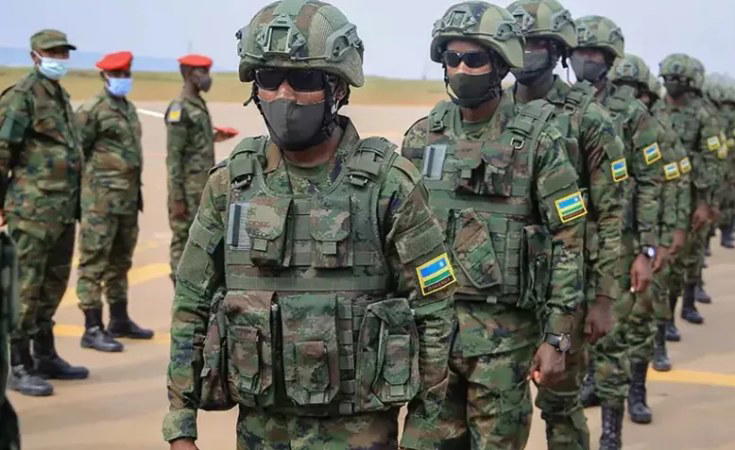
In the dynamic landscape of global security, military strength is often measured by sheer numbers: boots on the ground, aircraft in the sky, and tanks in formation. However, a quiet revolution is underway in Africa, where several nations are redefining military effectiveness. They are proving that a smaller, highly trained, and technologically advanced force can be a formidable deterrent and a critical asset for regional stability.
This article focuses on nations that prioritise quality over quantity. We’ll explore their strategic acquisitions, sophisticated training regimes, and specialised capabilities that allow them to punch above their weight. This isn’t about the largest armies; it’s about the smartest investments in defence.
Here are the African nations demonstrating exceptional military modernisation despite their relatively smaller force sizes:
1. Rwanda: (Approx. 35,000 personnel)
Rwanda’s military (RDF) is renowned for its discipline and efficiency. It has heavily invested in modern infantry equipment, including night vision, advanced communications, and anti-tank guided missiles.
Their special forces are highly regarded, often deployed in UN peacekeeping missions. Recent acquisitions include sophisticated Israeli-made drones (e.g., AeroStar, Hermes 450) for border surveillance and counter-insurgency, alongside a growing fleet of light attack helicopters (e.g., H125M Fennec) for rapid response.
Rwanda’s military focuses on tactical flexibility, intelligence integration, and high-tech solutions for internal and regional security challenges.
2. Botswana: (Approx. 12,000 personnel)
The Botswana Defence Force (BDF) is a professional, well-equipped military focused on national defence, anti-poaching, and regional stability. It boasts a small but potent air arm, with advanced light attack aircraft (e.g., F-5 Freedom Fighter upgrades, possibly new batch of M-346 Master jets for training/light attack) and a robust ground force equipped with modern armoured personnel carriers (APCs) and precision artillery. Investment in cyber defence and ISR platforms is also a priority.
3. Namibia: (Approx. 10,000 personnel)
Namibia’s defence force has strategically focused on maritime security for its extensive coastline and surveillance capabilities for its vast desert borders. The Namibian Navy operates modern patrol vessels. The army is being equipped with advanced reconnaissance vehicles, modern small arms, and communication systems. There’s a growing emphasis on drone technology for border monitoring and anti-poaching operations.
Namibia’s military employs smart allocation of resources to protect vital economic zones (marine resources) and territorial integrity with modern, adaptable assets.
4. Gabon: (Approx. 5,000 personnel)
Gabon, a relatively wealthy nation, has invested in a highly professionalised military with a particular emphasis on special operations capabilities and naval assets to secure its offshore oil interests. Recent acquisitions include modern patrol boats and frigates, along with upgrades to its small air force (e.g., Mirage F1 upgrades, potentially new light attack aircraft). Its special forces are well-trained and frequently participate in regional anti-piracy and counter-terrorism exercises.
5. Cabo Verde: (Approx. 1,200 personnel)
As an archipelago nation, Cabo Verde’s military (Armed Forces of Cape Verde) is primarily geared towards maritime surveillance, coastal defence, and search and rescue. While small, it boasts modern patrol boats, radar systems, and a highly trained coast guard. They have received significant support and training from European partners, enhancing their capacity to combat drug trafficking and illegal fishing in their vast Exclusive Economic Zone (EEZ).
6. Djibouti: (Approx. 1,000 personnel)
Due to its pivotal geostrategic location, Djibouti hosts several foreign military bases (US, France, China, Japan). While its own armed forces are relatively small, they are highly integrated into regional security architectures and benefit from extensive training and some equipment transfers from allied nations. Djibouti has invested in modern light infantry equipment, coastal patrol assets, and modest air surveillance capabilities. Its special forces are crucial for counter-terrorism operations.
7. Equatorial Guinea: (Approx. 2,500 personnel)
Driven by significant oil wealth, Equatorial Guinea has pursued a policy of modernising its small military. This includes acquiring modern naval vessels (corvettes, offshore patrol vessels), advanced radar systems for air and maritime surveillance, and upgrading its air force with new transport and light attack aircraft.
While transparency can be limited, the trend is towards high-tech acquisitions to protect its sovereign interests.
8. Lesotho: (Approx. 3,000 personnel)
The Lesotho Defence Force (LDF) focuses on internal security, border patrol, and maintaining stability in its mountainous terrain. While small, it has prioritised modern light infantry equipment, specialised mountain warfare training, and a small but effective air wing equipped with helicopters for transport and reconnaissance.
Its participation in SADC (Southern African Development Community) missions highlights its professionalisation.
9. Eswatini (Swaziland): (Approx. 3,000 personnel)
The Umbutfo Eswatini Defence Force (UEDF) maintains a small but relatively well-equipped force focused on internal security, ceremonial duties, and border protection. Recent modernisations include upgrades to light armored vehicles, advanced communications equipment, and modest air surveillance capabilities (light aircraft, drones). Professionalisation and training exchanges with regional partners are ongoing.
10. Mauritius: No Army (Approx. 1,500 NCG & SMF personnel)
Mauritius uniquely operates without a standing army, relying instead on its Police Force and a highly capable National Coast Guard (NCG) and Special Mobile Force (SMF). These units are exceptionally well-trained and equipped for maritime security, counter-narcotics, anti-piracy and rapid response.
They boast modern patrol vessels, surveillance aircraft, and advanced communication systems, making them a leading force in the Indian Ocean for their size.
The post Top 10 African countries with the smallest but modern militaries appeared first on Vanguard News.
Read the full article
Continue reading on vanguardngr.com


