
This is an edition of The Atlantic Daily, a newsletter that guides you through the biggest stories of the day, helps you discover new ideas, and recommends the best in culture. Sign up for it here.
The most notable, and perhaps most effective, ad of the 2024 presidential campaign featured footage of the Democratic nominee, Kamala Harris, voicing her support for gender-affirming treatment for inmates in federal prisons. “Kamala is for they/them. President Trump is for you,” the narrator concluded.
The spot was a crisp, 30-second encapsulation of one of the key Republican talking points of the cycle: that “wokeness” was sweeping the nation and upending established ways of life, and that Donald Trump would fight against it. Trump has since made clear that he wasn’t interested in just reining in what some people saw as excesses. He was interested in a wholesale rollback of bedrock civil-rights protections.
During his recent interview with The New York Times, the president harshly criticized the legislation of the 1960s, which included the Civil Rights Act of 1964 (which bans employment discrimination based on race, color, religion, sex, or national origin) and the Voting Rights Act of 1965 (which bans racial discrimination in voting).
“White people were very badly treated where they did extremely well, and they were not invited to go into a university or a college. So I would say, in that way, I think it was unfair in certain cases,” he said. “It accomplished some very wonderful things, but it also hurt a lot of people—people that deserve to go to a college or deserve to get a job were unable to get a job.”
Trump went on to say that the laws caused “reverse discrimination.” This idea that white Americans are suffering from widespread bias is a core belief of the revanchist right. In a Pew Research Center poll last year, 62 percent of white Republicans said that white people face some or a lot of discrimination. It’s not a mainstream view, though. Overall, fewer than 40 percent of Americans believe that white people face some or a lot of discrimination; roughly three-quarters say the same about Black and Hispanic people, and two-thirds about Asian people.
The idea that early-2020s “wokeness” went too far is more mainstream. Trump’s anti-woke campaigning appealed not only to the MAGA base but also to independents and even some voters who viewed themselves as left of center but felt that Democrats had overreached. The word woke was a useful tool because it had no clear definition—in one infamous moment in 2023, the author of a conservative book about “woke ideology” struggled to offer a simple explanation for what it was. This meant that people could interpret Trump’s rhetoric however they wanted—perhaps they were just looking for permission to not have to worry about anyone’s preferred pronouns. This anti-wokeness language helped Trump win back independents who had abandoned him in 2020, even as observers, including my colleague Adam Serwer, warned that this vagueness was a Trojan horse for attacking more popular equal-rights protections.
After taking office, Trump did move to push back on DEI initiatives (in the federal government and in private universities) and transgender-athlete participation in sports; a veteran FBI employee claims that he was fired for displaying a Pride flag. But Trump has also gone much further than that, working to undermine structures that were in place long before DEI or woke became familiar terms. This broader project is one that keen observers of the plans laid out in Project 2025 would have known to expect—but that many voters may not have intended and may not endorse.
In April, Trump issued an executive order that throws out the theory of disparate impact, an approach that allows policies to be assessed not just on whether their intent is to discriminate but also on whether their effect is discriminatory. Disparate impact has been a core tool for civil-rights enforcement for decades. The Justice Department’s Civil Rights Division has been hollowed out (and has continued to bleed talent even this week) and has been reoriented around chimerical right-wing causes such as claims of voter fraud in the 2020 election. Last month, the chair of the Equal Employment Opportunity Commission posted on X to solicit complaints: “Are you a white male who has experienced discrimination at work based on your race or sex? You may have a claim to recover money under federal civil rights laws.” The administration is even trying to erode the foundational post–Civil War constitutional amendments.
Meanwhile, the conservative wing of the Supreme Court, strengthened by three Trump-appointed justices, appears poised to demolish yet another pillar of the Voting Rights Act when it rules in Louisiana v. Callais. The case could allow states to eliminate majority-minority congressional districts, which some conservatives have argued is another instance of reverse discrimination against white Americans.
Alongside these policy moves to undermine civil-rights protections, the administration has also resorted to old-fashioned racist rhetoric. The Department of Homeland Security has consistently published winking nods to core racist texts in its advertising materials, including the white-nationalist screed Which Way Western Man? My colleague David Frum reported earlier this week on a DHS post that alludes to a song popular on the far right. Quoting the song, the post read, “We’ll have our home again.”
The administration makes no pretenses about its demonization of immigrants; Vice President J. D. Vance admitted last year that he was happy to make up lies about migrants in Ohio. But Trump’s new frankness about the most basic civil-rights laws shows another way in which he hopes to restore MAGA’s sense of home: His administration is going to reclaim the pride of white people who believe that their country has left them behind, no matter who gets treated badly in the process.
Related:
- Adam Serwer: Conservatives want the antebellum Constitution back.
- David Frum: Why Vance committed so hard to the Minneapolis shooter
Here are three new stories from The Atlantic:
- Denmark’s army chief says he’s ready to defend Greenland.
- Tom Nichols: Trump is risking a global catastrophe.
- He was homeschooled for years, and fell so far behind.
Today’s News
- Vice President Vance and Secretary of State Marco Rubio met behind closed doors with the foreign ministers of Denmark and Greenland as tensions rose over President Trump’s renewed threats to buy or seize Greenland.
- The Trump administration will suspend processing of immigrant visas for citizens of 75 countries. The State Department said that immigrants from these nations rely on U.S. welfare at “unacceptable rates.”
- The U.S. military started withdrawing some troops and equipment from a base in Qatar as Trump considers possible strikes on Iran. Officials say that the move is a precaution amid threats from Tehran to launch a counterstrike against the Qatari base and American forces.
Dispatches
- The Weekly Planet: Noah Kaufman explores the climate question that economists cannot answer.
Explore all of our newsletters here.
Evening Read
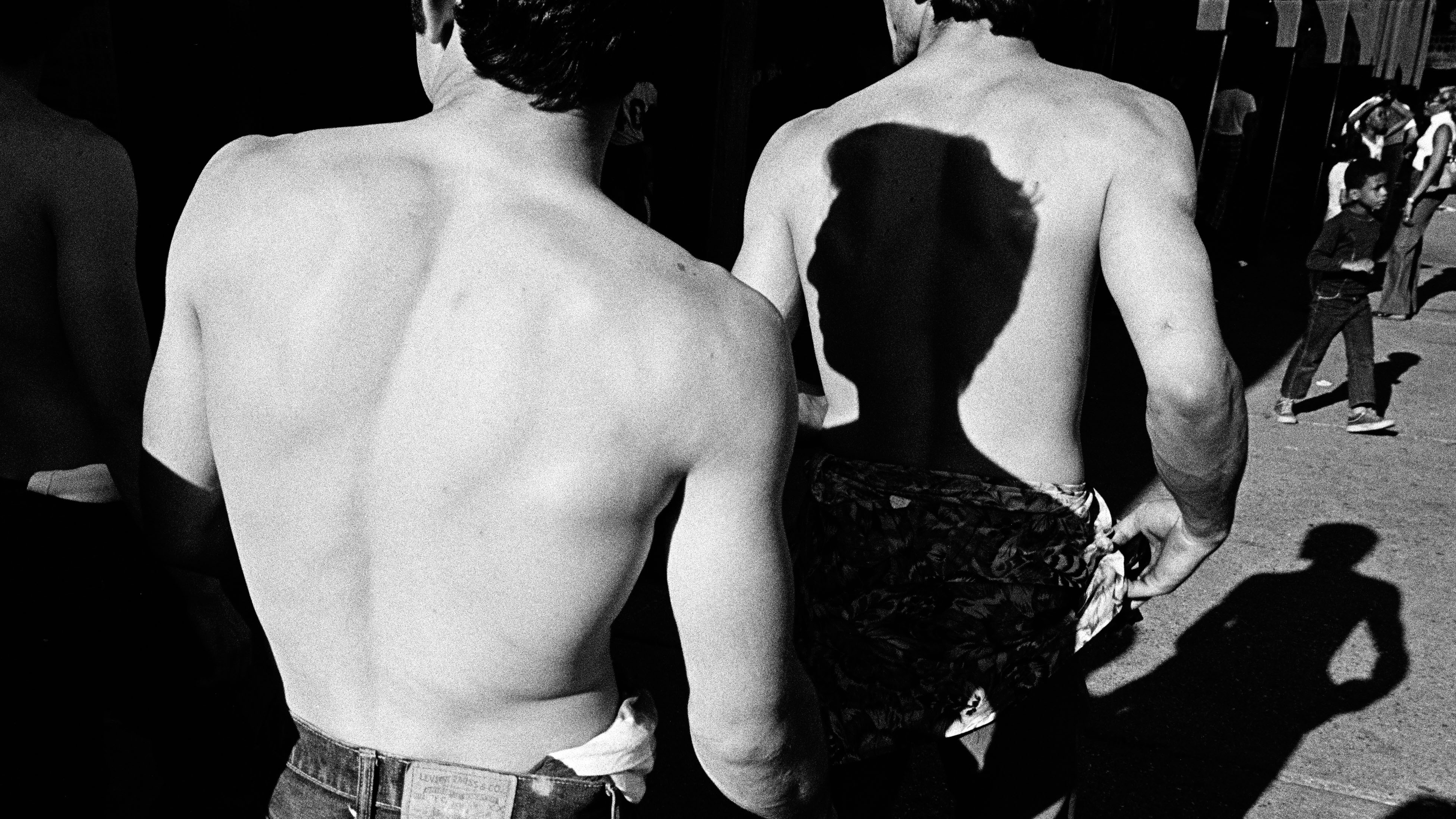
A Different Type of ‘Muscle Memory’
By Bonnie Tsui
Before Adam Sharples became a molecular physiologist studying muscle memory, he played professional rugby. Over his years as an athlete, he noticed that he and his teammates seemed to return to form after the offseason, or even from an injury, faster than expected. Rebuilding muscle mass and strength came easy: It was as if their muscles remembered what to do.
In 2018, Sharples and his research lab, now at the Norwegian School of Sport Sciences in Oslo, were the first to show that exercise could change how our muscle-building genes work over the long term. The genes themselves don’t change, but repeated periods of exertion turns certain genes on, spurring cells to build muscle mass more quickly than before. These epigenetic changes have a lasting effect: Your muscles remember these periods of strength and respond favorably in the future …
Now 40 years old, Sharples is still thinking about how our muscles remember but has lately been investigating the inverse trajectory: Do muscles have a similar memory for weakness?
More From The Atlantic
- Jonathan Chait: Jeff Bezos needs to speak up.
- Putin’s explosive message to Trump
- The David Frum Show: Trump has redefined presidential scandal.
- Yvonne Wingett Sanchez: MAGA thinks Maduro will prove Trump won in 2020.
- Move over, ChatGPT.
- How doubt became a weapon in Iran
Culture Break
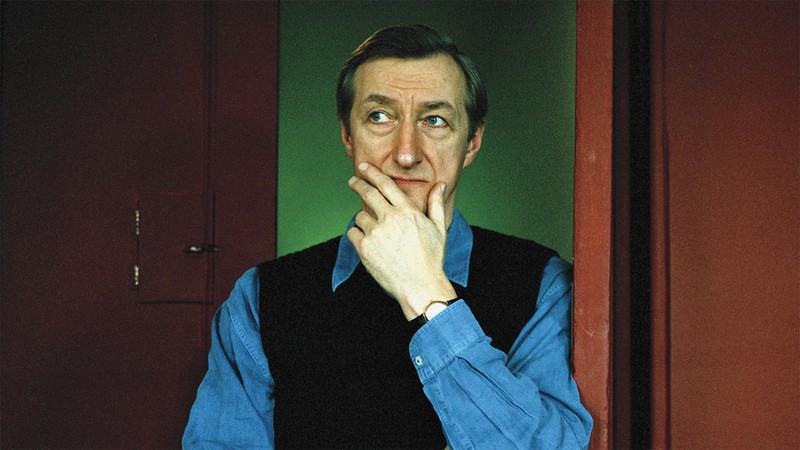
Read. Julian Barnes’s fiction finds meaning in life’s gaps and love’s absence. Adam Begley writes about the author’s farewell to the novel.
Watch. Season 2 of The Pitt (out now on HBO Max) is a brilliant portrait of American failure, Sophie Gilbert writes.
Rafaela Jinich contributed to this newsletter.
When you buy a book using a link in this newsletter, we receive a commission. Thank you for supporting The Atlantic.


