Digital images have become a cornerstone of modern identity verification. From passports and national ID cards to remote onboarding and biometric authentication, facial images are widely used to confirm who a person is. However, as biometric systems evolve, so do the methods used to deceive them. One of the most sophisticated techniques is face morphing.
Face morphing is no longer limited to creative or entertainment use. Today, it represents a real challenge for biometric security, border control, and identity verification systems. Understanding how facial morphing works, why it is difficult to detect, and how it can be mitigated is critical for organizations that rely on facial recognition.
What is face morphing?
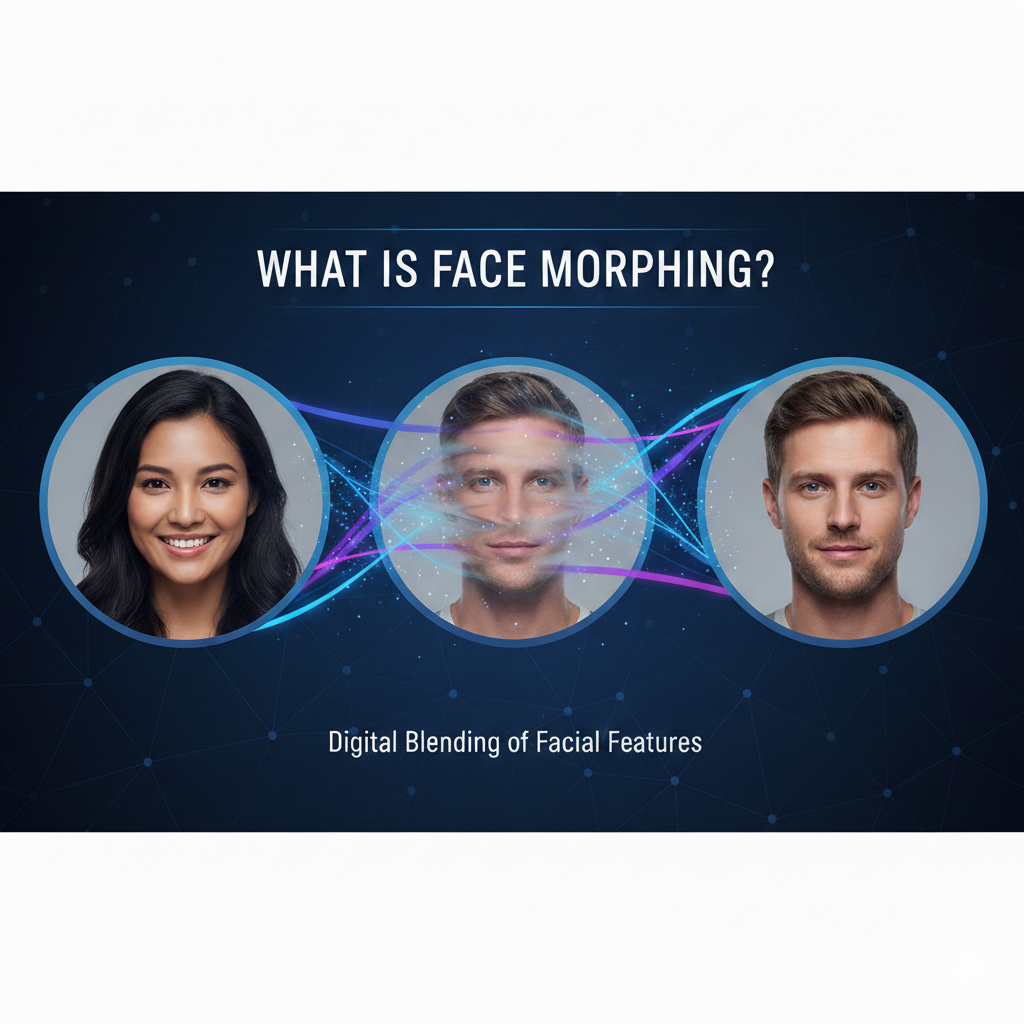
So, what is face morphing exactly? Face morphing is a digital image manipulation technique that blends two or more facial images into a single composite image. The resulting morph image contains facial features of multiple individuals and can resemble each of them to a certain degree.
In the context of identity fraud, face morphing is often used to create an image that can successfully match more than one person during biometric verification. This makes it possible for different individuals to authenticate using the same identity document or reference photo.
A typical face morphing process involves combining original images of two people into an intermediate image that visually appears natural and realistic. When produced with high quality, such images can pass both human inspection and automated biometric checks.
As a result, facial morphing has become a growing concern for authorities and organizations relying on facial images for secure identification.
The usage of morphing: positive and negative
Face morphing technology itself is not inherently malicious. Like many digital imaging techniques, it has both legitimate and harmful applications.
Legitimate use cases
In positive contexts, face morphing is widely used in creative industries and research. Common applications include:
- Film and visual effects, where smooth transitions between faces are required
- Aging and rejuvenation simulations
- Academic research in computer vision and image processing
- Dataset augmentation for training facial recognition systems
In these scenarios, face morphing technology helps generate realistic facial images for visualization or experimentation purposes.
Malicious use cases
The negative side of morphing becomes evident when it is used for fraud. Face morphing attacks typically target identity verification systems by exploiting their tolerance to natural variations in facial appearance.
For example, a morphed passport photo may allow two different individuals to use the same document. One person enrolls with the morphed image, while the other later passes verification because the morph image partially matches their facial features.
This misuse of face morphing poses serious risks for border security, financial institutions, and digital identity platforms.
Types of morphing
Not all morphs are created in the same way. Different morphing algorithms produce different results, with varying levels of realism and detectability.
Landmark-based morphing
This is one of the most common approaches. Facial landmarks—such as the eyes, nose, mouth, and jawline—are detected in the original images. The landmarks are then aligned and blended to create a morph image.
Landmark-based morphing is relatively easy to implement and can produce convincing results when image quality is high.
Pixel-based morphing
Pixel-based methods focus on blending pixel values directly between facial images. These techniques often rely on smooth interpolation and warping to ensure that transitions between faces are not visible.
Deep learning–based morphing
Modern face morphing algorithms increasingly rely on deep learning. Generative models and convolutional neural networks can synthesize highly realistic facial images that preserve key facial features of multiple individuals.
These state of the art methods significantly increase the difficulty of morph detection, especially when images are optimized for biometric systems.
How does facial morphing work?
To understand why face morphing is such an effective attack vector, it is important to look at how the process works step by step.
First, two or more original images are selected. These images typically meet biometric standards, such as neutral expression, frontal pose, and sufficient resolution.
Next, facial features are detected and aligned. This ensures that corresponding regions—eyes, nose, mouth—overlap correctly across all images.
Then, a face morphing algorithm blends the images together. This may involve averaging pixel values, interpolating facial landmarks, or generating a synthetic face using a neural network.
Finally, post-processing steps improve image quality. Color correction, smoothing, and artifact removal help produce a high quality morph image that appears natural.
The result is an intermediate image that shares biometric similarities with multiple individuals, increasing the likelihood of successful impersonation.
Is face morphing really a threat?
The short answer is yes. Face morphing is a well-documented and growing threat to biometric systems.
Studies and real-world cases have shown that morphed facial images can successfully bypass face recognition systems, especially when those systems are not designed to detect morphing artifacts.
The risk is particularly high in scenarios where facial images are submitted digitally, such as:
- Remote identity verification
- ePassport and ID card issuance
- Online KYC and onboarding processes
In these cases, attackers can carefully control the image creation process, ensuring that the morph image meets all formal requirements.
As biometric technologies become more widespread, the potential impact of undetected face morphing attacks continues to increase.
Why is it difficult to identify a morph?
One of the main challenges with face morphing detection is that morphed images are designed to look natural. When created using advanced techniques, they often show no obvious visual defects.
Several factors contribute to this difficulty:
- High-quality source images reduce visible artifacts
- Morphing algorithms preserve realistic facial textures
- Compression and resizing can hide subtle inconsistencies
- Human inspectors are not trained to spot morph-specific patterns
Even automated systems may struggle. Traditional face recognition focuses on similarity, not authenticity. If a morph image is similar enough to multiple facial images, the system may accept it without suspicion.
This is why face morphing detection requires specialized algorithms trained to identify inconsistencies at a deeper, feature-based level.
How to prevent morphing attacks?
Preventing morphing attacks requires a combination of technology, process design, and risk awareness.
Morph detection technology
Dedicated morph detection solutions analyze facial images for signs of manipulation. These systems use machine learning and deep neural networks to identify subtle artifacts left by morphing algorithms.
Modern morph detection tools can be integrated directly into identity verification pipelines, adding an additional layer of security without disrupting the user experience.
Live capture and liveness detection
Requiring live image capture reduces the risk of submitting pre-generated morph images. Liveness detection techniques ensure that the facial image comes from a real, present person rather than a static file.
Multi-factor verification
Combining face recognition with document verification, biometric checks, and database validation makes it significantly harder for attackers to succeed. Even if a morph image passes one control, it is unlikely to bypass all layers.
Advanced facial recognition solutions, such as Regula’s Face Recognition SDK, incorporate AI-driven analysis to strengthen resistance against morphing and other biometric attacks.
Conclusion
Face morphing is a powerful image manipulation technique with both legitimate and harmful applications. While face morphing technology can be used for research and creative purposes, it also enables sophisticated identity fraud when abused.
Understanding what face morphing is, how face morphing algorithms work, and why morph detection is challenging is essential for organizations that rely on facial images for security and compliance.
As biometric systems become more prevalent, defending against face morphing attacks is no longer optional. By combining advanced detection technologies, live capture, and layered verification approaches, organizations can significantly reduce their exposure to this evolving threat.
The post What Is Face Morphing? appeared first on Vanguard News.
