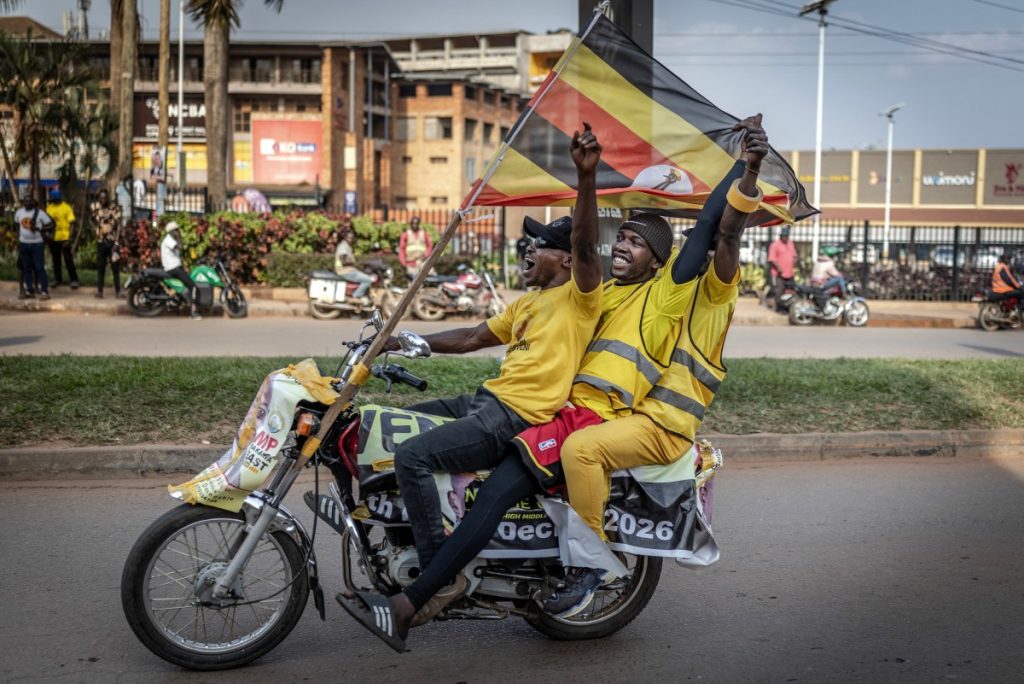
Uganda said Sunday it would maintain a ban on social media platforms, while lifting a nationwide internet block hours after longtime ruler Yoweri Museveni was declared the winner of national elections.
The internet was blocked two days before polls opened on Thursday. While the government said that was necessary to curb “misinformation”, the United Nations labelled the decision “deeply worrying”.
Although much of the country remained calm after the vote, there were reports of small-scale protests late Saturday after the results, with AFP journalists hearing tear gas in parts of capital Kampala.
As of Sunday morning, the security presence in Kampala appeared to have significantly decreased with people out on the streets and shops open.
“Social media platforms… remain temporarily restricted to continue safeguarding against misuse that could threaten public order,” said George Nyombi Thembo, executive director of Uganda Communications Commission (UCC).
He confirmed the return of most of the internet, while justifying the days-long suspension as “necessary and proportionate”.
The cut was to “prevent the rapid spread of misinformation, disinformation, and malinformation, to curb potential electoral fraud and protect against incitement to violence during a highly sensitive national period”, he said.
Thembo declined to say when full access would be restored, telling reporters: “I don’t want to put estimate.”
“We are a reasonable agency. We are a reasonable government. We don’t expect this to exceed a reasonable time that will mitigate the risk that we are seeing,” he said.
It comes after an election characterised by low turnout and major security deployments, as the government sought to prevent protests similar to those seen in neighbouring Tanzania during polls in October last year.
Analysts have long viewed Ugandan election as a formality, with Museveni exerting total control over the state and security apparatus.
The post Uganda maintains social media ban after election appeared first on Vanguard News.
