
This is an edition of The Atlantic Daily, a newsletter that guides you through the biggest stories of the day, helps you discover new ideas, and recommends the best in culture. Sign up for it here.
When President Donald Trump visited George Washington’s Mount Vernon in 2018, he reportedly showed little interest in the estate or in the first president. But Trump did have a critique of his predecessor. “If he was smart, he would’ve put his name on it,” he reportedly said. “You’ve got to put your name on stuff, or no one remembers you.”
The advice might seem “truly bizarre,” as Mount Vernon’s CEO described the visit to others, but Trump practices what he preaches. Yesterday, the Trump White House announced that the board of the John F. Kennedy Center for the Performing Arts—which is chaired by Donald J. Trump, who was appointed to that role by Donald J. Trump, who also filled the board with fellow Trump appointees—would rename the venue the Donald J. Trump and the John F. Kennedy Memorial Center for the Performing Arts. This was, the Trump spokesperson Karoline Leavitt opined, a tribute to “the unbelievable work President Trump has done over the last year” at the center, “not only from the standpoint of its reconstruction but also financially, and its reputation.”
This is a challenging claim from a factual standpoint. As The Washington Post found, ticket sales at the Kennedy Center have tanked since Trump’s hostile takeover of the institution in February. Patrons booed Trump and Vice President J. D. Vance at concerts this year. Events there have taken on an uncanny sheen of decay and mediocrity, my colleague Alexandra Petri reported after attending the Kennedy Center Honors last week.
The announcement is also challenging from a statutory perspective. The Kennedy Center’s name was bestowed by a law passed by Congress and can’t be changed by the board on its own. Tim Shriver, John F. Kennedy’s nephew, wrote on X, “Would they rename the Lincoln memorial? The Jefferson?”
Who’s to stop Trump, though? Workers began changing the signage this morning, and Congress seems unlikely to act; anyway, even if the name isn’t formally changed, nothing will prevent the president from calling it what he wants. Consider the Department of Defense, which the administration insists on calling the Department of War, despite the former name being established by law. Or more apropos, take the U.S. Institute of Peace, which was also established and named by Congress but which recently got a (rather premature) rebrand, with the facade now reading Donald J. Trump United States Institute of Peace. The gesture here is blunt. The president placing his own name before the nation’s is redolent of dictators in isolated countries—North Korea’s Kim family and Turkmenistan’s Saparmurat Niyazov, who even renamed January after himself—and long-ago absolute monarchs such as Louis XIV, who is said to have declared, “L’état, c’est moi.”
In line with his view of himself not merely as an elected representative but as father of the nation (or perhaps “daddy” of the nation?), Trump has put his name and image in places large and small. His scowling visage is next to George Washington’s portrait on National Parks passes; for good measure, citizens can now enter parks for free on Trump’s birthday, which happens to be Flag Day, but no longer on Martin Luther King Jr. Day. A new pay-for-play visa for the very rich is called the Trump Gold Card. The Treasury has proposed 250th-anniversary $1 coins with Trump’s face on them, a serious deviation from precedent. (The law bars printing money with images of living people on it but does not apply to minting coins.) Does anyone have any doubt what name he’ll put on his boondoggle ballroom at the White House?
This tendency is not new. Throughout his career, Trump has plastered his name on whatever he can, including many buildings, a hideous pair of sneakers, a bottle-water brand, a short-lived airline, a short-lived magazine, and a short-lived steak line. (At a 2016 primary-victory party, Trump displayed steaks bought at a local butcher but claimed that they were Trump Steaks.) The apotheosis came late in his real-estate career, when Trump had mostly stopped developing properties but continued to license his name to other builders. (Some Trump-branded buildings have removed his name in recent years, as his scandals and growing unpopularity have made it a liability.)
The difference is that those things belonged to Trump. The assets of the United States of America do not—they belong to the people. His change to the facade of the U.S. Institute of Peace is just graffiti. Putting his name on the Kennedy Center and parks passes are acts of vandalism of public property, in the most original sense of the word.
Many things in this country are named for former presidents, of course. The performing-arts center was established not by John F. Kennedy but as a memorial to him after his assassination. Trump, by contrast, is rechristening things for himself and then pretending it’s an honor rather than an ego trip. He asks not what he can do for his country, but what his country can name for him.
Related:
- Trump’s very weird night at the Kennedy Center Honors
- Trump takes over the Kennedy Center. (From February)
Here are three new stories from The Atlantic:
- Elizabeth Bruenig: Circles of Epstein hell
- The truth about immigration that MAGA doesn’t acknowledge
- The Trump administration’s unintended autism experiment
Today’s News
- The suspect in the Brown University shooting and the killing of an MIT professor was found dead last night of a self-inflicted gunshot wound in a New Hampshire storage facility, authorities said. Homeland Security Secretary Kristi Noem said yesterday that she had ordered an immediate pause of the green-card lottery program through which the suspect entered in 2017, following a directive from the president.
- The Justice Department released only a portion of the Jeffrey Epstein files required by law to be made public today. Deputy Attorney General Todd Blanche announced that several hundred thousand more documents will be released in the next few weeks.
- The U.S. carried out major air strikes in Syria, targeting suspected Islamic State sites in response to the attack that killed two American soldiers and a U.S. interpreter last weekend, according to U.S. officials.
Dispatches
- The Books Briefing: Anne Applebaum went searching for Venice as the novelist Henry James knew it, Maya Chung writes.
Explore all of our newsletters here.
Evening Read
The Color of the Year Is an Exercise in Absurdity
By Ellen Cushing
Earlier this month, many attractive people filled a room in Lower Manhattan. They drank elaborate cocktails and gazed upon Instagram-y art installations and left with a gift bag that contained, among other things, earbuds studded with Swarovski crystals. The vibe was high-end, sophisticated, arty. The guest of honor was a color.
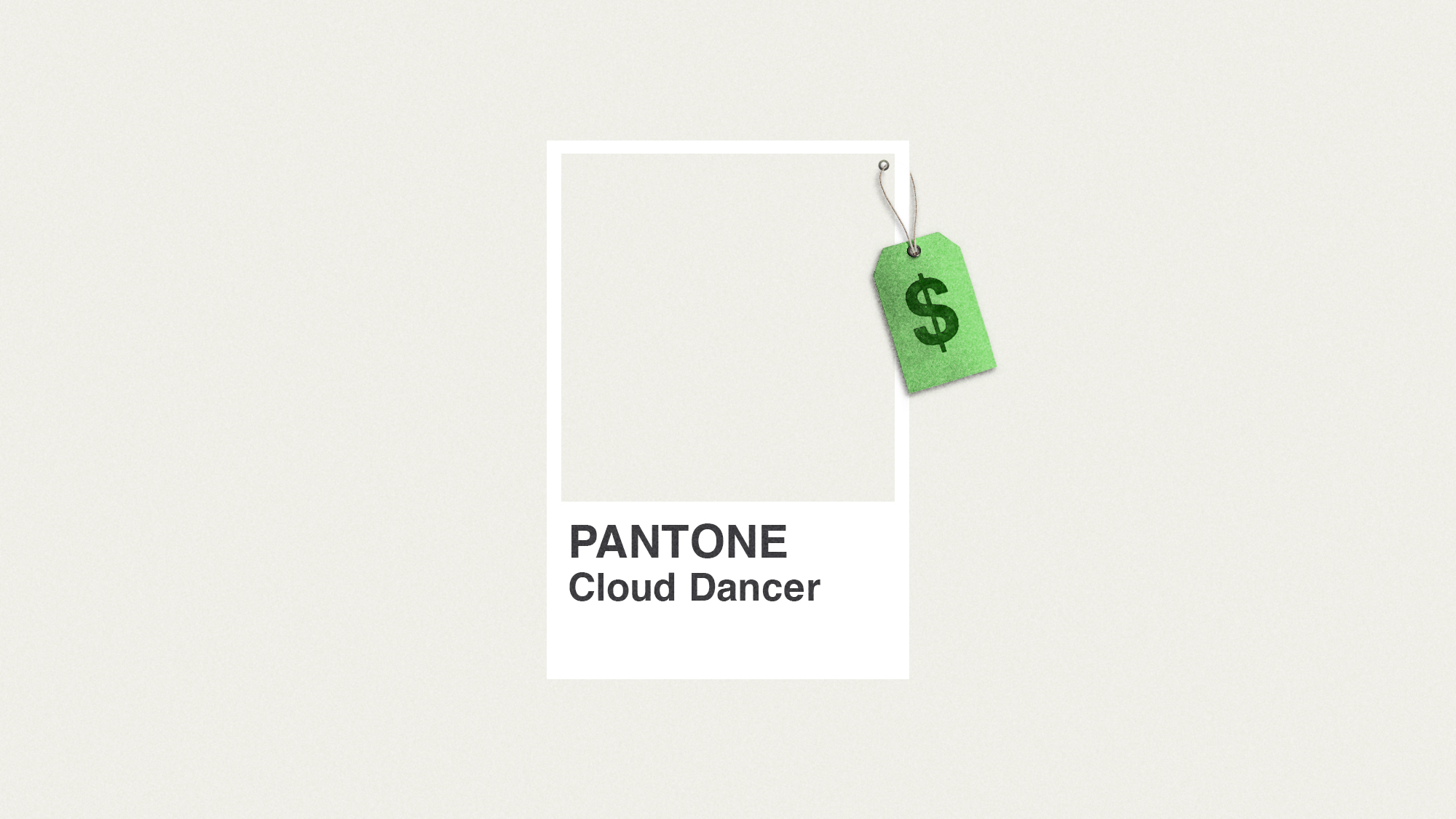
Pantone throws a party like this one annually, in conjunction with the announcement of its “Color of the Year.” For 2026, it’s “Cloud Dancer,” which, the company notes in a press release, “serves as a symbol of calming influence in a frenetic society rediscovering the value of measured consideration and quiet reflection.” The color, the release continues, also helps peel “away layers of outmoded thinking,” “making room for innovation,” and, of course, reminds us that “true strength lies not just in doing, but also in being.” (It’s white.)
More From The Atlantic
- Are we really going to war over oil?
- How to treat purveyors of baseless speculation
- The risk of Trump’s marijuana order
- Charles Fain Lehman: Rescheduling marijuana is an enormous mistake.
- Galaxy Brain: Prediction markets and the “suckerifcation” crisis, with Max Read
- The backlash against car prices is here.
Culture Break

Watch. Avatar is no longer trying to get anyone on board. But for the franchise’s devotees, Avatar: Fire and Ash (out now in theaters) is another thrilling installment, David Sims writes.
Explore. The most beloved Christmas specials are (almost) all terrible, Tom Nichols argued in 2021.
PS
For many years, I kept a bottle of Trump Ice water on my desk. My first job in journalism after graduation was interning on the real-estate desk at The Wall Street Journal, where I talked with Trump for the first time. (He engaged in some fairly transparent puffery.) A veteran reporter, preparing to ship out to another assignment, jokingly gave me the bottle as a memento. I eventually got rid of it when I realized that it appeared to be leaching water even though the lid was sealed. Perhaps that was foreshadowing of the Trump administration’s approach to clean water.
— David
Rafaela Jinich contributed to this newsletter.
When you buy a book using a link in this newsletter, we receive a commission. Thank you for supporting The Atlantic.


