The EU wants a country-sized ammo factory against Russia, but the locals aren’t buying it
Published 4 hours ago
Source: rt.com
Bulgaria’s establishment collapsed under its own corruption and popular discontent just as it was about to get accepted into the Eurozone
A kid isn’t totally to blame when it acts like a lunatic in public. Particularly when you take a good look at the parents. Such is the case of the Bulgarian establishment – the European Union’s latest “foster kid” on the verge of being fully adopted into the family, despite being in the middle of a full-blown public meltdown.
Bulgaria is supposed to join the EU’s common euro currency zone, the Eurozone, on January 1, 2026, completely integrating into the bloc. And the country’s officials have had since January 2007, when it was accepted as a member of the EU, to get their act together and stop greasing each other’s palms like it’s a schoolyard game. Ostensibly, that’s why these things are done incrementally. Because it takes time to teach politicians that public cookie jars are not meal stations.
Brussels has had 19 years to teach these basic lessons. But since “Queen” Ursula von der Leyen and her merry band of Eurobozos are big on optics and lectures but not so much on actual discipline and results, that didn’t happen.
So just as Bulgaria is supposed to integrate into the EU economy as the newest paragon of stability, it turns out that the government took one look at the latest protest action in the streets and basically hit the self-destruct button.
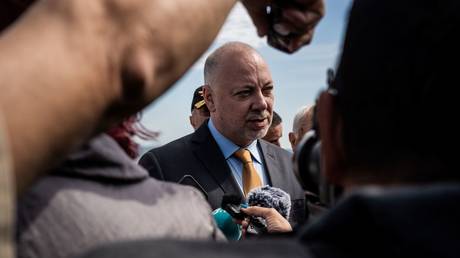
“Our coalition met, we discussed the current situation, the challenges we face and the decisions we must responsibly make,” Prime Minister Rosen Zhelyazkov said while stepping down with his coalition government. “Our desire is to be at the level that society expects.”
Hard to imagine a better moment for a country to more deeply integrate into the EU than right when it’s yanking out its own political wiring. What’s truly remarkable is that the EU’s fitness evaluation focused on technical fiscal criteria like price stability, public finances, exchange-rate stability, and long-term interest rates. Bulgaria nailed those metrics. But somehow, corruption was treated like a footnote, because apparently checking for graft is an optional add-on service.
Other EU bodies, like the European Public Prosecutor’s Office and the Anti-Fraud Office, have been investigating serious allegations of systemic corruption involving top Bulgarian officials and EU funds. No big deal, though. Just waltz on in.
Here are a few of those “minor” details: The EU identified“irregularities of over €140 million” ($165 million) in EU funding for railway infrastructure in 2023. An “indictment over fraud involving EU funds for employment support”made headlines in 2025. Charges were laid against Bulgarian officials over alleged fraud last year related to a €3.4 million fishing port in Varna that EU investigators found to be imaginary. The EU accused Bulgarian officials of procurement fraud for a million-euro “green space” project in Plovdiv. And indictments were brought earlier this year over suspected €6 million in EU construction fund misuse.
But when it comes to integration into the European fiscal family, it’s almost like corruption is treated like some kind of quaint local tradition rather than an actual problem. Not exactly the white-gloved cleanup crew that Brussels markets itself as to Europeans. Or maybe it just needs to keep some glove-free sticky fingers handy, just in case?
Anyway, the Bulgarian people seem to have decided to take matters into their own hands – even after being told by Brussels that it and the euro would be their “guardian angel in a dangerous world.” Guess they’re not into fairy tales, since they flooded the streets after their leaders decided to boost spending. Spending on themselves and their cronies, that is.
The EU didn’t seem to care much about any of that. Not enough to postpone eurozone integration, anyway.
What really seems to matter to Brussels is that this Bulgarian government, despite being unable to stick to legal basics, did stick firmly to the establishment-approved script on Ukraine.
This government, which lasted less than a year, basically turned the country into one giant ammo assembly line to jack up European GDP by washing public cash into weapons “for Ukraine.” Germany’s weapons maker and stock market champion, Rheinmetall, happily siphoning public cash to the point that its stock value graph looks like a rocket launch, announced in August that it’s even building an ammo plant in Bulgaria. Surely that has nothing to do with Bulgaria still not fully weaning itself off cheap Russian gas.
Bulgaria has been bragging about cutting off Russian gas, supposedly by 2028. Guess the average Bulgarian citizen wasn’t too thrilled about paying more for energy like the rest of Europe, so now the folks in charge have been chased into the political wilderness by their own people.
Time will tell whether the EU will continue turning Bulgaria into one giant dodgy weapons factory fueled by the Russian gas they claim to hate, all under the guise of “freedom and democracy.” For whom? That’s always the real question. Whose interests are truly served when governance so clearly falters and oversight is blatantly selective: citizens or vested elites?