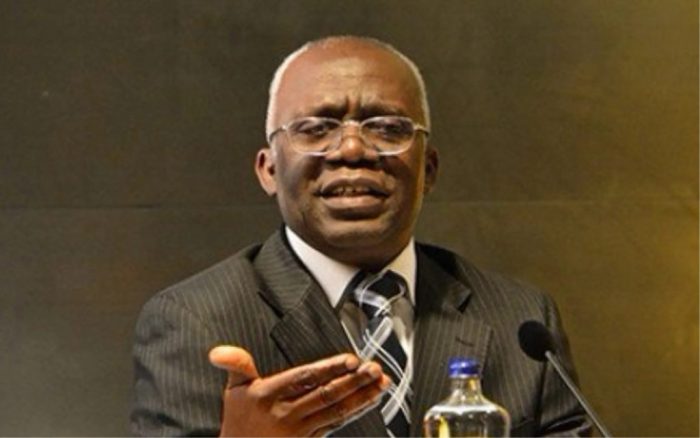
By Femi Falana SAN
In its judgment delivered on December 15, 2025 in Attorney-General of Adamawa State & 19 Ors v Attorney-General of the Federation (Suit No SC/CV/329/2025), the Supreme Court dismissed the case for want of jurisdiction on the ground that the plaintiffs lacked the locus standi to maintain the action.
However, the apex court decided to consider the merit of the substantive case. Curiously, the judgment has been wrongly interpreted by the media. Contrary to the misleading reports, the Supreme Court did not endorse the dissolution of democratic structures during emergency rule in any state of the Federation.
In the leading judgment of the apex court, Mohammed Baba Idris JSC stated that Section 305 of the Nigerian Constitution does not confer power on the President to temporarily dissolve executive and legislative institutions of a State during emergency rule. According to his Lordship:
“By virtue of sections 4-7 of the Constitution, governmental powers divided among the Executive, Legislature and Judiciary, and distributed across the Federal, State, and Local Government tiers. No arm or tier of government is constitutionally superior to another, and none may lawfully usurp the powers expressly vested in another…
However, unlike the Constitutions of India and Pakistan, Section 305 of the Nigerian Constitution does not expressly confer power on the President to assume or temporarily displace executive or legislative institutions of a State. This omission is deliberate and reflects Nigeria’s constitutional commitment to federalism and the autonomy of state governments.”
The post Supreme Court did not endorse dissolution of democratic structures during emergency rule appeared first on Vanguard News.
