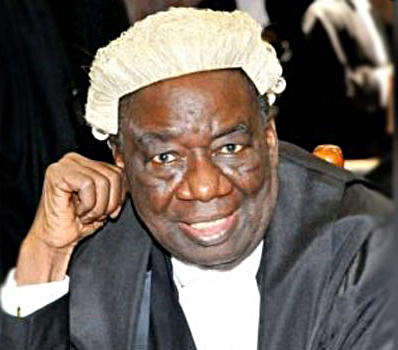
In this speech, Chief Osuolale Abimbola Richard Akinjide (SAN), who served as Minister of Education in the First Republic, insists “we did not hand over voluntarily to General Ironsi”, and he “spent 18 months in prison as a victim of the first coup
Read Also: The Nzeogwu I interacted with — Brig-Gen Alabi-Isama
I didn’t know a coup had happened
I was in the first cabinet that was overthrown by the military in this country. I entered parliament on December 12, 1959. And I remained in parliament until January 15, 1966, when the government was overthrown. I was the Federal Minister of Education in that cabinet. I woke up one morning in my official house in Ikoyi, Lagos, to discover that my telephone was not working.
I had never experienced a coup before nor did I know that it was a coup. I was thinking it was just a telephone fault, until a colleague of mine in the cabinet, Chief Abiodun Akerele, came in and told me there had been a military coup. So, I had the fortune or the misfortune of being a victim of the first coup in this country.
18 months in prison as a victim
Many people may not know that I spent 18 months in detention in prisons across the country. I spent time in KiriKiri prison, Ilesha prison, Ibadan prison and Abeokuta prison.
Shagari and I were ministers in the First Republic
Two of us who were in Tafawa Balewa’s government emerged, when the military handed over to the civilians in 1979, as part of the civilian government. In Balewa’s government, Alhaji Shehu Shagari was the Minister of Works, while I was the Minister of Education. When the military handed over to us after about 14 years, Shagari emerged as the President while I became the Attorney-General and Minister of Justice. Again, Shagari’s government was overthrown just a few months after I left the cabinet. Of course, we suspected it was coming.
A lot of things that happened between that period and now would never see the light of the day. When you are in government, you know a lot of things, you see a lot of things. A lot of things you know or did or saw will die with you.
This is the practice of the whole world. People have asked me to write my memoirs, I just laugh because there are certain things I can never reveal.
When I was in Tafawa Balewa’s Cabinet, all Cabinet Ministers had access to a written intelligence report every month. That was the practice at that time. But when Shagari came in, for reasons which I cannot explain, that practice was no longer followed. But by virtue of my duties as the Attorney-General and as a member of the National Security Council, I continued to have access to some sensitive matters.
Confusion after the coup
Talking about the first coup, when Balewa got missing, we knew Okotie-Eboh had been killed, we knew Samuel Akintola had been killed. The members of the Balewa cabinet started meeting. But how can we have a cabinet meeting without the Prime Minister acting or the Prime Minister presiding. So, unanimously, we nominated the acting Prime Minister amongst us and we continued holding our meetings. Then we got a message that we should all assemble at the Cabinet office. All the Ministers were requested by the G.O.C. of the Nigerian Army, General Aguiyi Ironsi to assemble.
What was amazing at that time was that Ironsi was going all over Lagos unarmed.
We assembled there, having nominated Zana Diphcharima as our acting prime minister in the absence of the Prime Minister, whose whereabouts we didn’t know. We approached the acting President, Nwafor Orizu to swear him in because he could not legitimately act as the Prime Minister except he was sworn in. Nwafor Orizu refused. He said he needed to contact Zik who was then in the West Indies.
Under the Law, that is, the interpretation Act, as acting President, Nwafor Orizu had all the powers of the President.
You either hand over as gentlemen or you hand over by force — General Ironsi
The G.O.C said he wanted to see all the cabinet ministers. And so we assembled at the cabinet office.
Well, I have read in many books saying that we handed over to the military. We did not hand-over. Ironsi told us that “you either hand over as gentlemen or you hand-over by force”. These were his words.
Is that voluntary hand-over? So we did not hand-over. We wanted the Acting Prime Minister to be in place but Ironsi forced us, and I use the word force advisedly, to handover to him. He was controlling the soldiers.
Nwafor Orizu gave us away
The acting President, Nwafor Orizu, who did not cooperate with us, co-operated with the GOC. Dr. Orizu and the GOC prepared speeches which Nwafor Orizu broadcast, handing over the government of the country to the army.
I hereby state again categorically as a member of that cabinet that we did not hand-over voluntarily. It was a coup. I pray that all Nigerians should rise up and say no if anybody seizes a radio station and says “fellow countrymen”.
(Being excerpts from the speech of late Chief Richard Akinjide, SAN, First and Second Republic Minister, at the public presentation of the first edition of the book “Fellow Countrymen – the story of Coup D’etats in Nigeria” by Richard Akinnola, on June 12, 2000)
The post Say no if anybody seizes a radio station and says ‘fellow countrymen’ — Richard Akinjide appeared first on Vanguard News.
