“There is nothing which has yet been contrived by man, by which so much happiness is produced as by a good tavern or inn.” Dr Samuel Johnson, 1709-1784. VANGUARD BOOK OF QUOTATIONS, VBQ p 183.
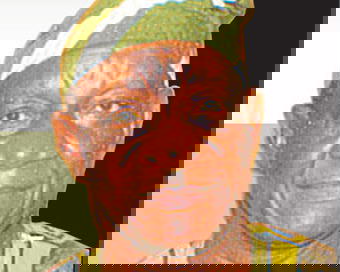
Nigerian clubs are modern versions of taverns in Great Britain long before the eighteenth century – places men, and occasionally some women, patronized after typically hard days; in order to maintain their sanity and make friends. Nothing promoted networking than a place to relax and leave life’s problems at the gate. Pa Domingo Amidu, of blessed memory, had established the greatest and most enduring tavern-plus in Nigeria ever since the creation of the country called Nigeria in 1914. Before anyone starts disputing that claim, he must have lived and worked in as many cities and big towns in Nigeria as I did; and must have been a member of as many clubs or an affiliate off them as myself. In 1982, as the Marketing Manager of North Brewery Limited, Kano, I was a member of the three leading clubs in Kano, all of which were affiliated to clubs in all the state capitals and big towns, I never visited a state without going to the major clubs.
Consequently, I challenge anybody to provide two examples of private clubs in Nigeria which were started by one man and which still endure till today. When Pa Amidu started WAKA CLUB (I will shortly explain why the club was named WAKA) in 1945, it was an unprecedented and revolutionary idea; few people could have predicted that it would last for so long. The Club is now 80. Yet the nucleus of the vision was anchored in the belief propagated by Samuel Johnson – that a good tavern was an indispensable institution in any society in order to promote happiness and good fellowship among men – especially those in leadership positions in the community.
WAKA CLUB 1945, 10 JOSEPH STREET, LAGOS ISLAND
“An institution is the lengthened shadow of one man.”
Ralph Waldo Emerson, 1803-1882.
WAKA CLUB 1945 is unlike any other club known to me in Nigeria. The vast majority of the current members of Ikoyi Club, Island Club, Metropolitan Club, Yoruba Tennis Club, Kano Club, Aba Club, Jos Club etc don’t know who started those clubs and, to be quite candid, they don’t care to know. Apart from providing tavern services and some sports and games facilities, virtually all of them make no attempt to serve their communities in any other way. For the most part, they were just places to which people retire to get a drink; take girl-friends; do some networking and return home late at night.
To begin with, WAKA CLUB 1945 occupies the smallest space of any major club in Nigeria. It occupies most of the ground floor of a one-storey building at the junction of what is actually Joseph Harding Street (which Lagosians quickly shortened to Joseph Street) and Catholic Mission Street. Pa Amidu inherited a small bungalow from his father. It was a strategic corner piece; he raised it up by adding one floor. He must have had in mind the vision of an institution before doing that; because, there is no other club more easily accessible in Lagos than WAKA CLUB 1945. It was destined to endure right from the start given its strategic location; on account of setback under military rule.
That corner, in 1945, was situated right in the middle of everything that mattered in the then Federal Capital – for everybody; alive or dead (I will explain the dead part later).
Within walking distance of the place could be found the original homes of all the leading families of the Brazillian-Nigerians – Cardoso, Fernandez, Salvador, Carrena, Rica, Da Rocha, Branco, Augusto among others too numerous to mention. Keeping up with the Joneses, in the last century in Lagos Island, meant aspiring to be accepted by the inhabitants of Popo Aguda or Brazillian quarters – mostly Catholics as well as Muslims. The Holy Cross Cathedral was a block away on Catholic Mission Street; the Holy Cross Primary School was directly opposite it. Four leading secondary schools – Baptist Academy, Methodist Boys High School, CMS Grammar School and Kings College could be reached without breaking a sweat. Several Federal Government establishments were also short strolls away from No 10. When Cappa & Dalberto built the six-storey Federal Secretariat on Broad Street, near the General Hospital, the Ministry of Justice and the Federal Printing Press it was fortuitous. Until then, the tallest building in Lagos Island was a two-storey structure. Most people in Lagos were dead sure that the six stories building would collapse. Instead, Pa Amidu saw opportunity and grabbed it with both hands. Several Ministries relocated to the building and a few Ministers became members of WAKA CLUB 1945. J M Johnson exemplified the top government officials who joined the club which was a stroll away from office. One of his sons later became Chairman of the Board of Trustees.
Lagos people benefited; several were placed in their first jobs, thanks to WAKA CLUB 1945 influence, which led to greater achievements for them. Poor but brilliant kids received scholarships for higher education; young widows, whose late husbands left more children than money, were assisted through fund-raising by the club.
BABA ITE: TENDING A CEMETERY WITHOUT PAY
“A society can be judged by observing how it treats the dead”. That was the observation of a philosopher. By extension, a person can also be judged by how he takes care of them. Ite in Yoruba meant cemetery or graveyard. Except for those paid to work there, few men, and no women, wanted to be associated with it. Pa Amidu, later nick named Baba Ite, was an exceptional individual who embraced the care of the dead as he did the living.
No 10 Joseph Street was directly opposite the Lagos Cemetery, before it was moved to Ikoyi. From the balcony of his house, Pa Amidu could observe everything going on in every corner of the burial ground. Whereas, other neigbours were afraid of it and kept a safe distance, Pa Amidu selflessly took it upon himself to guard the graveyard against grave robbers – who like the poor, are always with us. One of my uncles told me about instances when Baba Ite had sent people to the Police Station at Tinubu Square to alert law enforcers about suspicious characters operating in the middle of the night. On a few occasions, he had organized young boys to drive away the intruders. Selflessness cannot be more aptly defined.
HEROISM IS MEANT FOR A FEW – THE SALTBOF THE EARTH
“The hero is known for achievements; the celebrity for well-knowness. The hero reveals the possibilities of human nature. The celebrities are people who make news; but, heroes are people who make history. Time makes heroes, but, dissolves celebrities.”
Daniel Boorstin, American historian, 1995, VBQ p 90.
WDR BEFORE ADR – A WAKA CLUB INITIATIVE
“Blessed are the peacemakers; for they shall be called the children of God.” Matthew 5:9.
WAKA Dispute Resolution, WDR, mechanism was introduced as early as when the Club was founded. WAKA, Yoruba, has an apt translation in English meaning “come and state your own side of the case in any controversy”. WAKA thus preceded the Alternative Dispute Resolution system which was first established in Lagos State in 2006.
Pa Amidu had noticed how litigation on civil matters was unnecessarily tearing families, friends and business partners apart and he was rightly convinced that there must be a better way. Out of court settlements were very rare in those days. Litigants went to court and became life-long enemies thereafter. WAKA CLUB 1945 was therefore probably the first tavern established to provide therapy for harried souls; and to mediate disputes in a manner which left all the parties (sometimes there were more than two parties, especially in inheritance disputes) fairly satisfied and harmony prevailed. I write from personal family experience.
My great grandfather, late Faseke Olukolu, was extremely wealthy for his era; officially had four wives and a number of unclaimed others. He died without a will and left a legal mess which would have taken decades for any court of law to disentangle. The Olukolu Family is still intact today, and I am one of its oldest sons, because WAKA CLUB, under the leadership of Pa Amidu intervened. Only God knows how many families, business partnerships, marriages etc had been saved from disintegration by WAKA intervention. I have traveled all over Nigeria since 1974; and I can state authoritatively that there is no other club like WAKA CLUB 1945 – which is 80 years old this year.
Permit me to summarise this article about a man, who actually deserves to have a book written about him. Baba Ite envisioned and established a broad social welfare institution, cleverly disguised as a tavern, which was called WAKA CLUB 1945. It has endured for so long because it was founded on the solid rock of service to community and mankind.
APPEAL FOR DESERVED RECOGNITION FOR PA AMIDU
“Beggars”, we have been told, “cannot be choosers”. However, a lot of us strongly believe that begging is sometimes ennobled given the totality of facts at society’s disposal. That Pa Amidu’s unique contributions to Lagos society has not been recognized until now can be attributed to several reasons – which need not delay us here. Today, those of us privileged to be members of WAKA CLUB strongly believe that an error has been made which should be corrected. Some of us even have suggestions for the State and Local governments to consider.
Rename Joseph Street, Domingo Amidu Street; or, add Domingo Amidu to the stadium now called Campos Stadium to call it Domingo Amidu Campos Stadium.
I feel deeply honoured to have been a member and now Trustee of this great CLUB.
Come and join us – if you are good enough. December 9 is Founders Day at WAKA.
Happy birthday WAKA CLUB 1945 at 80.
CALLING ON GCUOB MEMBERS; COME TODAY!!!
Government College Ughelli Old Boys Association, GCUOBA, is holding it 2025 Annual Luncheon at the Banquet Hall, Eko Hotel today; starting 2.30pm.
See you there.
•Follow me on Facebook @ J Israel Biola.
The post PA DOMINGO AMIDU (1915-1998): Baba Ite, Founder, Waka Club 1945, by Dele Sobowale appeared first on Vanguard News.
