By Kayode Akinmade
As Ogun State marks fifty years since its creation on February 3, 1976, the milestone presents an opportunity for reflection on a journey shaped by history, resilience, strategic relevance, and steady transformation.
From its origins in Nigeria’s post-independence state-creation era to its present role as an industrial, educational, and cultural powerhouse, Ogun State has emerged as one of the most consequential states in the Nigerian federation.
For five decades, the Gateway State has stood at the intersection of heritage and modernity—drawing strength from its past while adapting to the pressures of growth, migration, and economic change. At fifty, Ogun is no longer merely recounting its story; it is evaluating what that story must sustain in the decades ahead.
History, Origins, and Identity
Ogun State was created on February 3, 1976, during Nigeria’s landmark state-creation exercise under the military administration of General Murtala Mohammed. Abeokuta was designated the capital from inception, and the state took its name from the Ogun River, a defining natural feature that cuts across its landscape.
Historically, the territory that now constitutes Ogun State has occupied a central place in Yoruba civilisation, home to the Egba, Ijebu, Remo, Yewa, Awori, and Egbado peoples. Abeokuta itself developed around Olumo Rock, a natural fortress that offered refuge during periods of inter-tribal conflict. Today, Olumo Rock endures as a symbol of resilience, protection, and unity.
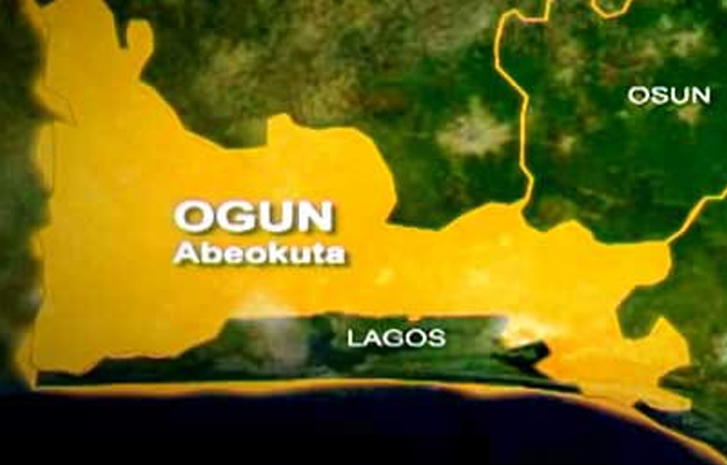
Ogun’s enduring identity as the “Gateway State” is rooted in geography. Bordering Lagos State—Nigeria’s commercial nerve centre—to the south and sharing an international boundary with the Republic of Benin to the west, Ogun has for five decades functioned as a strategic corridor for trade, migration, logistics, and regional integration within the West African sub-region.
Culture, Tradition, and Heritage
Ogun State is predominantly Yoruba, with a cultural life deeply anchored in tradition, royalty, communal values, and artistic expression. Its festivals, music, fashion, and oral traditions reflect a worldview that prizes continuity, respect for elders, and social harmony.
Among Ogun’s most celebrated cultural exports is the Ojude Oba Festival in Ijebu-Ode. Over time, the festival has evolved into a globally recognised cultural spectacle, featuring colourful age-grade parades, equestrian displays, drumming, music, and elaborate fashion. It attracts visitors from across Nigeria and the diaspora, strengthening cultural tourism and projecting Ogun’s heritage onto the global stage.
Symbolically, the state also carries deep spiritual significance in Yoruba cosmology. Sharing its name with Ogun—the orisha of iron, creativity, and industry—the state’s cultural identity aligns naturally with its modern role as a centre of manufacturing and enterprise.
Religion and Social Harmony
Ogun State is often described as Nigeria’s religious capital, hosting major Christian and Islamic organisations, seminaries, camps, and national headquarters. Churches, mosques, and traditional belief systems coexist peacefully across its communities.
This long-standing tradition of religious tolerance has become a defining social asset. Inter-faith harmony has reinforced political stability, social cohesion, and an environment conducive to investment and development, strengthening Ogun’s reputation as a peaceful and accommodating state.
Education and Human Capital
Since its creation, Ogun State has maintained a strong reputation for educational excellence. The state has produced many of Nigeria’s most influential intellectuals, writers, scientists, jurists, and public servants.
From having only one university at inception, Ogun now hosts dozens of tertiary institutions—federal, state, and private universities, polytechnics, and colleges of education. Institutions such as Olabisi Onabanjo University have expanded in size and scope, reinforcing the state’s position as a major centre of learning.
In recent years, education reform has been prioritised as a cornerstone of long-term development. Investments in classroom construction and rehabilitation, teacher recruitment, provision of learning materials, and the removal of levies in public schools reflect a deliberate strategy to strengthen foundational education while aligning human capital development with future workforce needs.
Governance, Stability, and Policy Direction
Over five decades, Ogun State has enjoyed relative political stability, supported by institutional continuity and a tradition of inclusive governance. This stability has enabled successive administrations to pursue long-term development objectives.
The current phase of governance has emphasised structural reforms across infrastructure, education, healthcare, social welfare, and the business environment. Policy direction is anchored on the ISEYA development framework—Infrastructure, Social Welfare and Well-being, Education, Youth Empowerment, and Agriculture—providing coherence and measurable direction across government programmes.
Dapo Abiodun’s Years: Steering Ogun at the Golden Jubilee
As Ogun State enters its golden jubilee, the administration of Governor Prince Dapo Abiodun represents a distinct phase in the state’s fifty-year journey. His tenure coincides with a period when accumulated growth began to place new demands on infrastructure, institutional efficiency, and social cohesion.
The administration has focused on consolidating gains, improving policy coherence, and preparing the state to function sustainably at scale. Key interventions during this period include:
• Aligning government priorities under the ISEYA framework
• Expanding and rehabilitating road networks to strengthen connectivity between industrial hubs, agricultural zones, and urban centres
• Improving foundational education through classroom construction, teacher recruitment, provision of learning materials, and abolition of school levies
• Supporting industrial consolidation to enhance internally generated revenue and employment
• Investing in healthcare, rural development, and social services to promote inclusive growth
This phase of leadership reflects a shift toward systematisation, consolidation, and future-proofing as Ogun prepares for its next fifty years.
Economy and Industry: A Manufacturing Powerhouse
Ogun State has evolved into one of Nigeria’s most industrialised states, widely regarded as second only to Lagos in industrial concentration. Its economy is driven by manufacturing, agro-processing, logistics, and services.
The state hosts major multinational and indigenous companies, with industrial clusters in Agbara, Ota, Sagamu, Ifo, and the Abeokuta axis. Industrial growth has expanded employment opportunities, strengthened supply chains serving Lagos and regional markets, and significantly boosted internally generated revenue.
Proximity to Lagos ports, combined with improving infrastructure and business-friendly reforms, continues to attract new investment.
Infrastructure, Logistics, and Regional Integration
Infrastructure development has been central to Ogun’s transformation. Extensive road construction and rehabilitation projects now link industrial hubs, agricultural zones, border communities, and urban centres, reinforcing Ogun’s role as a regional connector within southwestern Nigeria.
Strategic projects such as the Agro-Cargo Airport on the Ilisan–Iperu axis are designed to position the state as a logistics and export hub, supporting agriculture, manufacturing, and regional trade. These investments are conceived as long-term assets for sustained growth.
Healthcare, Agriculture, and Social Services
Healthcare reforms have prioritised accessibility and grassroots delivery through the renovation of primary healthcare centres, expansion of health insurance coverage, and upgrades to secondary facilities. This people-centred approach strengthens community resilience.
Agriculture remains a vital pillar, supported through improved inputs, mechanisation, training, and market access. These interventions enhance rural livelihoods, support agro-processing, and contribute to food security.
Ogun at 50: Consolidation and the Road Ahead
At fifty, Ogun State stands at a defining transition point. The first half-century was shaped by emergence—identity formation, institution-building, and the leveraging of geography. The next phase will be defined by consolidation, coordination, and sustainability.
Development is increasingly guided by planning and systems rather than circumstance. Infrastructure, education, economic policy, and social services are now treated as interconnected pillars of growth. Leadership at this stage—including under Governor Dapo Abiodun—forms part of this broader evolution: responding to the pressures of scale and population growth while laying foundations for endurance.
At fifty, Ogun State remains true to its name—a gateway not only to opportunity, but to the future.
Akinmade is Special Adviser information and Strategy, Ogun State
The post Ogun State at 50: Gateway of progress appeared first on Vanguard News.
