•Masses not benefiting from improved economy
•Discrepancies that derailed 2025 budget repeated in 2026
•Cardoso brilliant on monetary management, fiscal policies still failing us
Special Report By Dr Dele Sobowale
“There are only two families in the world, my grandmother used to say; the Haves and the Have-nots.” Miguel de Cervantes, 1547-1616
THE YEAR 2025 AND BUDGET OF RESTORATION UNDER REVIEW
The economic history of modern nations never repeats itself. A year, a month, or even a week can
turn around a nation’s economic fortunes in unpredictable ways.
The year started off with the presentation of the BUDGET OF RESTORATION by President Tinubu to the National Assembly, NASS. Unknown to the Executive and legislative branches, the grounds were laid for the birthing of an economy now flying with one engine – sound monetary policy and ruinous fiscal policy – the twin engines of economic progress.
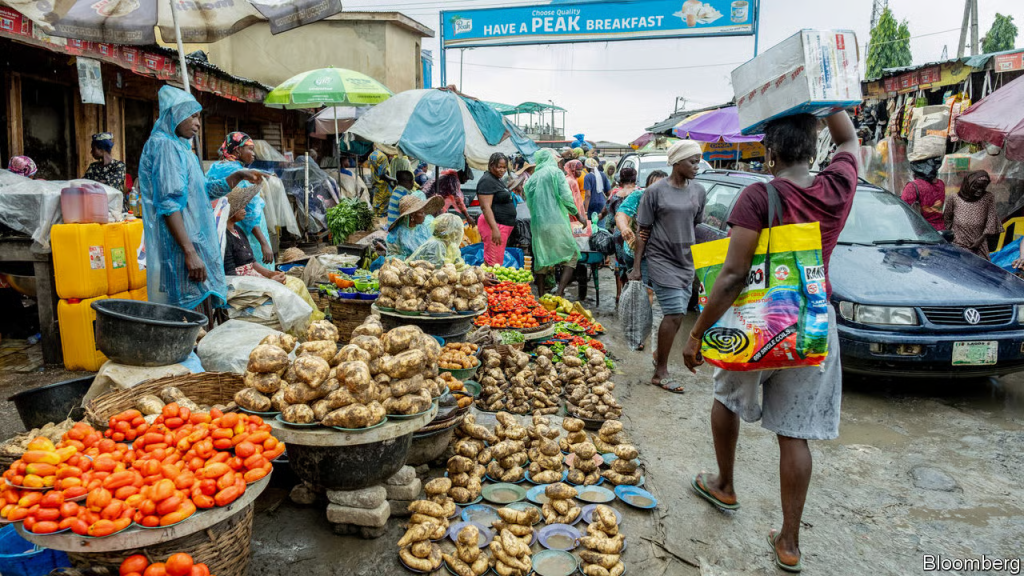
The most visible result of this phenomenon is the widening disparity between rich and poor; the latter provided the votes for victory on Election Day. They have been thrown under the bus of a rapidly accelerating economic recovery.
In 2025, the Haves and the Have-nots experienced the Nigerian economy differently. The Haves got richer; and the Have-nots got poorer. The disappearing Middle Class segment of the population lost more ground.
A report in the Weekend Trust, Saturday 6th-Sunday 7th December 2025, focused on how the out-going year has left most Nigerian farmers poorer than before and unwilling to farm in 2026. Farmers , by no means, form large number of poor people facing increasing hardships as the year comes to a close.
The Nigerian Labour Congress, NLC, had called for a day’s protest on December 18, 2025, as a prelude to a national strike later; perhaps as early as the first quarter of 2026.
Another dreadful Christmas has just followed the ten previous ones to the graveyard of collective memory. For most Nigerians, there was nothing merry about it.
Fortunately, there were glimpses of hope on the economic front. The Gross Domestic Product, GDP, was higher than expected – about 4 per cent compared to the 3.6 per cent forecasted. That is the good news; the bad news is that virtually all the benefits of improved economy have eluded the masses and there is no light at the end of the tunnel
SUMMARY OF 2025 FORECASTS AND RESULTS
“It is possible to forecast anything except the future.” Neils Bohr, 1885-1962.
The Danish physicist was only half-right.
While total accuracy about the future directions of the economy is impossible to achieve, attempts must still be made to predict what might happen.
In fact, every investment of funds and effort rests on some idea about future trends. Otherwise, any measure taken would be deemed correct.
However, every forecaster must be prepared to subject his work to examination after the event. Below therefore, is the summary of predictions made on the last Saturday of December 2024 concerning what Nigerians should expect in 2025.
Intellectual honesty demands that I should start with the prediction that proved to be wrong; before touching those that were accurate.
On Gross Domestic Product, GDP, the forecast was as follows: “The most optimistic forecast for 2025 is 3.0 per cent”. It turned out to be close to 4.0 per cent. Obviously, the turnaround of the economy was stronger than anticipated.
Ordinarily, that should have given cause for celebrations. But, the good result has been nullified by the latest reports indicating N30tn revenue shortfall. It was a mixed blessing at best.
On Housing, the projection said “In actual fact, more housing units might have been demolished by the Federal and state governments than they collectively built”. That is substantially correct. Residents of the Federal Capital Territory, FCT, would confirm that more housing units were demolished than were built.
Oil Production, still the major source of revenue, contributed substantially to the shortfall in Federal Government’s aggregate revenue. Below is a summary of what happened in the oil sector in 2025.
“Nigeria didn’t meet oil revenue in the first half of 2025 – Budget Office.”
VANGUARD December 24, 2025.
OIL REVENUE BUDGET AND ACTUAL 2025 (NTRN)
QUARTER BUDGET ACTUAL VARIANCE (+/-) %
Q1 12.76 4.45 -8.21 -64.35
Q2 12.76 4.77 -7.99 -62.62
There was no significant improvement for the rest of the year. On December 12, 2025, a VANGUARD report disclosed that “Nigeria’s oil output drops to 1.486 bpd in November – OPEC”. Additionally, on December 19, 2025, a national newspaper reported that “Global oversupply leaves Nigerian crude unsold.” The news report stated that 20 million barrels of for December, 2025, and January 2026 remain unsold.
Obviously, government officials were either grossly incompetent or deliberately misleading to have based the 2025 Budget on 2 million barrels per day in the first instance.
We predicted on this page in December last year that “Nigeria will be fortunate to achieve 1.7mbpd. As 2025 drew to a close, Nigeria, unfortunately had not achieved 1.7mbpd. Consequently, the budget deficits will be exceeded; and Nigeria will have to borrow more than was anticipated.
Finally, Nigeria reached another undesirable milestone in 2025. For the first time since 1959, Nigeria imported crude oil from the US; which was once our biggest customer.
REVENUE DISASTER – BUDGET AND ACTUAL
“Some act first and think later; and they think more of excuses than consequences. Others think neither before nor after…” Professor John Kenneth Galbraith, 1908-2006.
Galbraith, a Nobel Prize Winner in Economics, held many positions including being in the Presidential Office of Management and Budgets, OMB. To his dying day he had maintained that the OMB was the unknown most important office in the US.
The officer in charge must, not only be competent, he must be aware of the repercussions of a failed budget – starting with the revenue estimates. For ten years, the FG has piled up one budgetary disaster after another. The massive fiscal policy management disaster we are now experiencing cannot continue without unimaginable consequences for Nigeria . The reports from the FG speak loudest of a monumental fiscal crisis.
“FG recorded N30tn revenue shortfall in 2025 – Edun.” Report, December 17, 2025
For the second full year in a row, the negative variance between budgeted revenue and actual performance is so wide as to leave those with extensive budgeting experience wondering if the Ministers of Budget and Planning, as well as Finance thought deeply before presenting the 2025 to the Federal Executive Council for traditional rubber stamp.
The Budget was N40.8tn; the actual was N10.7tn. Put in context, no manager in the private sector would survive another day with that performance. The repercussions are clear. The NASS has extended the 2025 Budget to March next year.
That is very optimistic; given the fact that the 2024 Budget is just being concluded. Result: 70 per cent of the 2025 Capital Budget has been deferred until next year.
As Nigerians suffer on death traps, called highways, the people are feeling the lash of budgetary incompetence in Abuja. Most of the failure is directly traced to unrealistic crude oil revenue estimates.
Finally, the point was made in 2024 that the 2025 would not be implemented because it was clearly unrealistic and badly prepared. Even the most generous supporter of government must accept that, the 2025 Budget has not been implemented.
MTEF 2026-2028 AND PROJECTED 2026 BUDGET HIGHLIGHTS
“FG defers 70% of 2025 capital projects to next 2026.” News Report.
•projected revenue N34.33trn
•crude oil production 1.8 m barrels per day
•price $64.85 per barrel
•exchange rate N1,512/$US1
•fiscal deficit 2026 N20.12trn
•additional loans N17.89tn
Albert Einstein, 1879-1955, the great mathematician and physicist, once said that “you cannot solve a problem by adopting the mindset which created the problem in the first place”. The disastrous Budget of Restoration for 2025 was largely the product of two minds – Ministers Edun and Bagudu.
The MTEF 2026-2028, as well as the 2026 Budget, have been formulated by the same two Ministers; and it is dead on arrival. The same discrepancies which derailed the 2025 Budget had been repeated again in 2026.
CRUDE OIL PRODUCTION ILLUSION
“The most obstinate illusions are ultimately broken by facts”, according to Historian Trevor Roper, 1914-2003, who obviously has never heard of Nigerian government officials charged with the preparation of annual budgets. Invariably, they start with dangerous but politically convincing illusions.
At the federal level, crude oil production and export estimates had constituted the most persistent self-deceit and the major cause of annual budget failures since 2013 – when Dr Ngozi Okonjo-Iweala, as Finance Minister first introduced 2 million barrels per day as the basis for the MTEF 2013-2015. Despite the fact that in no single year had that mirage been realized in twelve years, Nigerian governments have obstinately refused to be guided by the facts at their disposal.
Granted, the 2026 Budget made a small concession to reality by adopting 1.8mbpd as basis for budgeting, even that figure is still too ambitious – given global events.
Already, from figures available to us, if we ever decide to be factual, a major shortfall is envisaged in January 2026. According to a news report, 20 million barrels of Nigerian crude remain unsold in December 2025 and January 2026. Other obstacles to realizing revenue from 1.8mbpd during the year include the following – many of which are beyond the nation’s control.
End to Russia-Ukraine War; sanction on Russian oil lifted
Warmer winter in the US, Canada, China and Europe than usual
300,000bpd committed to repaying loan
Low production in November and possibly December 2025
Lack of existing capacity to produce 1.8mbpd consistently
NNPCL remains an unreliable partner in the quest for progress
Space and time would not permit for full elaboration of how each of those variables will affect this year’s crude oil output. The most important is the end of hostilities between Russia and Ukraine. The two war-ravaged nations are ready for peace.
It requires no great intelligence to predict that Russia will pump and export as much crude as it can to replenish its coffers. Two benchmarks in the 2026 Budget will be adversely affected – volume and price assumptions. Mere increase in global supplies will depress prices; discounting by Russian exporters will drive crude oil prices further down below $60 per barrel for most of the year.
Crude oil remains the Achilles’ heel of the Nigerian economy. Starting with questionable crude oil volume and price estimates renders other projections concerningly doubtful.
OVERSTATING PROJECTED REVENUE ONCE AGAIN
“You are as good as your last show.” That remains the verdict of Show Business. Political actors – Presidents, Ministers etc – are among the world’s leading actors and actresses. Treating annual budgets as political documents instead of instruments for economic and social development has been responsible for most budgets since 1999. I am not advocating return to military rule, but, in many respects, military governments performed better in that regard. That is why virtually all the major infrastructural developments – refineries, NLNG, airports, sea ports, major highways, Third Mainland Bridge, Kainji and Shiroro hydro-power stations etc were established by them. Their budgets were more purposeful. To begin with, a higher percentage of annual budgets went to capital appropriations than since 1999; and the Minister of Works did more working than talking. Not now; the Works Minister should visit the South East to see things for himself. All these stem from the woeful shortfalls in revenue collection.
The Federal Government promisedN40.8tn revenue in 2025; and delivered only N10.7tn – leaving N30tn shortfall. Oil earnings fell short by N16.2tn according to the latest report; Ministries, Departments and Agencies delivered less than one quarter of the income expected from them and received 100 per cent salaries and wages. There was failure everywhere on revenue generation. That was the last show.
For 2026, the projection is N34.33tn revenue. Given the underwhelming performance for 2024 and 2025, who, other than those wedded to FG’s obstinate illusion, would believe them now. The 2025 Budget of Restoration is in shambles and was not implemented. Who seriously expects the 2026 Budget will be managed better?
Definitely, the fiscal deficit estimated to be N20.12tn and the additional loans pegged at N17.89tn are self-delusive and would be exceeded.
DEBT LOAD AND DEBT SERVICING GETTING WORSE
“Debt servicing gulps 27% of N58.1trn Budget.” Weekend Trust, Dec 20-21, 2025.
“Salaries, debt service gulp 105% of Budget.” PUNCH, December 18, 2025.
To understand why the RENEWED HOPE agenda has now become a nightmare, one only needs to look at the rising percentage of the revenue going towards debt servicing and salaries in relation to anticipated revenue. Bluntly stated, even if the expected revenue is achieved, and that is most unlikely, Nigeria will need to borrow to cover its debt service obligations and to pay staff.
Obviously, the funds for security, education, health, works, external affairs and capital projects will also have to be borrowed.
Consequently, a fund crisis is imminent. By mid-year, the FG will be once again defaulting in its payments to universities, doctors etc. A debt default cannot be totally ruled out. By year-end the total debt burden, already N152.39tn, would have surged beyond N220tn.
MONETARY POLICY COMES TO THE RESCUE
“NPA reports 1,085% export container surge in Q3.” Report, December 16, 2025.
“Nigeria’s trade with ECOWAS countries rises 43% to N6.9tn.” Vanguard, December 19, 2025.
“Foreign Direct Investment rises 140%”. VANGUARD December 23, 2025.
Fortunately, the economic outlook is not totally bleak. The Governor of the Central Bank, Yemi Cardoso, after a shaky start, has finally settled down to managing Monetary Policy in a competent manner last experienced under Chief Ani during the Abacha administration.
The exchange rate has stabilized around N1,400-1,450/US$. Private sector managers can now plan effectively – unlike the previous ten years when the rates were erratic and unpredictable. Forex stability has had a knock-on positive impact on steadily declining inflation rate. Prices are still rising, but, the upward pressure is coming from the sectors which are mostly influenced by Fiscal Policy management.
It is safe to predict that the exchange rate target might be achieved or even surpassed. The Governor of Central Bank has performed extremely well; and the situation would have been much worse without that sterling performance.
AMERICA’S TRAVEL RESTRICTIONS CASTS A SHADOW
“America’s new travel restrictions and ordinary Nigerians; consequences and what Nigerians need to know” – Olufemi Soneye, VANGUARD, December18, 2025.
Soneye, the immediate past Chief Corporate Communications Officer of the Nigerian National Petroleum Company Limited, had a warning for Nigerians; the economic policy managers in particular. The relevant portion is reproduced below.
“In a global economy built on speed, trust and access, restricted movement is restricted opportunity.” Already, Nigeria reportedly has suffered nearly N1tn export revenue loss on account of Trump’s tariff imposed earlier in 2025. Some of it is still in effect.
Despite the exceptional result recorded on monetary policy, the US government’s travel restrictions imposed on Nigerians would certainly impact the economy negatively. As this article was being concluded, there were reports of US bombing ISIS positions in Sokoto. When shooting starts, trade either slows down or stops completely.
SUMMARY
UNPRECEDENTED FISCAL POLICY MANAGEMENT FAILURE LOOMS
“No nation has borrowed indefinitely to finance consumption and developed.”
The optimist says the glass is half full; the pessimist says it is half empty. The realist says it is 50 per cent. BUDGET OF RESTORATION was largely a failure; partly rescued by strong Monetary Policy. Like a twin-engine plane which has lost one engine, a massive fiscal policy disaster looms – unless more competent managers are deployed.
The masses can expect no relief from this budget. On the contrary, it will make their situation worse.
Follow me on Facebook @ J Israel Biola
The post Nigeria Economy 2026: Twin-engine plane, one on fire appeared first on Vanguard News.
