
In late 1967, a young Nicaraguan American UCLA graduate named Patrick Arguello wrote to a friend about the death of Ernesto “Che” Guevara. The insurgent leader had been killed in Bolivia by CIA-trained Special Forces while trying to raise the rural masses against their right-wing government. Che was a hero of Arguello’s, and he was devastated by the news. But Che’s death did not signal “the end of the struggle,” Arguello wrote. Soon Arguello was running errands for the Sandinistas, and in 1970 he was shot and killed by an Israeli air marshal as he attempted to hijack a plane on behalf of the Popular Front for the Liberation of Palestine.
At almost exactly the same time, the execution of another ideologue inspired another young man to join the cause of revolutionary violence. Ayman al-Zawahiri, an introverted and intense child of a well-to-do family in Cairo, was a teenager when he learned that Syed Qutb, a senior official in the Muslim Brotherhood, had been hanged in prison. Qutb was a melancholic, misogynistic former bureaucrat and literary critic who’d been accused of trying to assassinate the Egyptian president. While behind bars, he had written a book, Milestones, which called for a renewal of faith among Muslims and a purging of Western influences—consumerism, moral decadence, capitalism. This message resonated with al-Zawahiri, who soon formed a cell dedicated to implementing Qutb’s ideas through violence. He went on to become one of the most infamous Islamist militants in the world, eventually leading al-Qaeda until he was killed by a U.S. missile in Kabul in 2022.
[From the April 2023 issue: The new anarchy]
Many assume that modern Islamist extremism emerged only after the war in Afghanistan in the 1980s. In fact, it began to gather force 20 years earlier, at a time of much wider revolutionary ferment, when leftist movements were already flourishing. Leftists rejected religion entirely. Islamists reviled Communists and the Soviet Union. Their social conservatism contrasted dramatically with leftists values, particularly about gender.
And yet, the two movements had a surprising—and often overlooked—amount in common. Both worshipped heroic martyrs who had urged the masses to rise up, overthrow their rulers, and transform society. Both called for “armed struggle” against imperialism, capitalism, the U.S., and Israel, and included some who saw terrorist attacks as shortcuts to major change. Followers of each were often encouraged to challenge the authority of parents, professors, mainstream scholars, and governments.
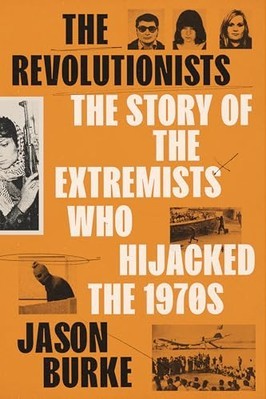
That these two movements shared certain beliefs and strategies was not purely coincidental, the result of small groups trying to take on greatly superior governments. In some cases, the leftists directly influenced the Islamists. (The reverse was not true in any meaningful sense.) Qutb was steeped in the anti-colonial narratives of his time. Youthful clerics in Iran admired “freedom fighters” in Africa. In Lebanon in the 1970s, leftist instructors trained Iranian Islamists dedicated to the overthrow of the shah, passing on techniques that they had refined over a decade or more. Other Iranian Islamists closely studied Minimanual of the Urban Guerrilla, a 1969 instructional text by the Brazilian Marxist revolutionary Carlos Marighella. In the ’70s, Islamists took over embassies, and in the ’80s, they hijacked planes—both tactics popularized by secular leftist groups.
Some vocabulary crossed over from the left to the religious right, too, particularly among Iranian thinkers and groups who tried to reconcile Marxist and Islamist language and ideas. The man who established the radical clerical regime in Iran, Ruhollah Khomeini, talked about “revolution,” using the Persian term mostazafin to describe the oppressed, miserable, or exploited—which came, via a key Iranian radical thinker, from a translation of Frantz Fanon’s The Wretched of the Earth. A smaller opposition group in Iran called the Mojahedin-e Khalq also studied Fanon’s writings, along with those of Che and Lenin. Its members worked hard to meld leftist ideologies with Islamic beliefs, recasting stories familiar to Shiite Muslims as parables of “armed struggle.” A group handbook stated: “We say ‘no’ to Marxist philosophy, especially atheism. But we say ‘yes’ to Marxist social thought, particularly to its analysis of feudalism, capitalism, and imperialism.”
Islamist extremism has become so closely associated with resolutely conservative values that many people don’t realize how much the Islamists borrowed from the leftists. Many Islamists subscribed, explicitly or not, to Che’s doctrine of foquismo, which argued that a small number of committed militants could create the conditions for revolution. A former leader of the Fedayeen-e Khalq, a leftist organisation in Iran that opposed the shah in the ’70s, told me that when its militants tried to launch an insurgent campaign shortly after Che’s death, they followed his playbook, attacking a remote gendarme post in the hopes of sparking a rural insurrection. Similarly, the Islamist extremists who in 1974 sought to overthrow the regime of Egyptian President Anwar Sadat were banking on the fact that a bold, violent action, which they called an “outrage for God,” would provoke a mass uprising, achieving in an instant what would otherwise take decades of preaching and social work.
For all their similarities and convergences, these two movements ultimately followed very different trajectories. In Western Europe, sweeping social and political reforms answered many of the demands of those who had taken to the streets. More effective security measures, widespread revulsion at extremist violence, and the popularity of new causes such as environmentalism meant that violent leftist groups seeking a “revolution” were marginalized by the early ’80s. There was still a great deal of terrorism, of course, but little that aimed at total transformation on a national or global scale.
Leftists in the Middle East were marginalized too—though for different reasons. In the 1960s, many young people across the region had been drawn in by the progressive ideals and anti-imperialism of the left. But without political reforms to address citizens’ grievances, the decade that followed offered little but disappointment, disillusionment, and the brutal repression of leftist organizations and ideas.
This crackdown created a vacuum that allowed Islamism to take hold. In 1973, the U.S. ambassador to Tehran sent a memo to Secretary of State Henry Kissinger describing “a swing toward conservative Islamic principles” in parts of the Arab world that was so pronounced, even leftists were “giving lip-service” to religion. Two years later, the CIA claimed that the major Arab countries were entering a “post-revolutionary era.” This was a miscalculation. One revolutionary ideology was dying, but another had been born. By 1978, the British travel writer Jan Morris was writing in Rolling Stone about “the revolution I find easiest to envisage in Cairo now”—one that would come not from the left but “from the arsenals of Islam.”
[From the November 2002 issue: Home thoughts from abroad]
Morris proved prescient. In 1979, a radical clerical regime took power in Iran, and a messianic militant group stormed and held the Great Mosque in Mecca. In 1981, Islamist extremist networks killed President Sadat—the culmination of multiple efforts across a decade. A year later, the various factions of the Palestine Liberation Organization, which was broadly secular and nationalist, and included radical leftists, were dispersed by the Israeli invasion of Lebanon. Not long after, massive suicide bombs launched by new Islamist groups—groups that would eventually merge to form Hezbollah—destroyed the U.S. embassy in Beirut and killed hundreds of Marines at the city’s international airport. Several of those behind the blasts had once belonged to secular, left-leaning factions—though their desire to cause mass casualties and their willingness to sacrifice their own comrades was dramatically new.
The late ’60s to the early ’80s was a period unlike today in many ways—a period when terrorists wanted “a lot of people watching and not a lot of people dead,” in the words of one contemporary commentator; when terrorist groups held press conferences and governments frequently met their demands; when a forged passport was enough to slip through an international frontier; and when wanted militants could disappear for months if not years unless they did something rash or were very unlucky.
But the parallels between then and now are striking. Those decades were a time of rapid and destabilizing change. Technological innovations, particularly in the media, exposed hundreds of millions of people to shocking images, radical ideas, and extreme opinions, sowing distrust and dislocation. Conspiracy theories and paranoia flourished. Great powers struggled for global dominance. The Middle East was mired in conflict and the West faced economic distress. Then, as now, many young people felt that their elders had betrayed them, and that wholesale change was called for. A small number of these people felt that violence was the only way to achieve it.
If we’re to take anything from that earlier period, it’s that violence can be avoided if calls for radical change are given a political outlet. If governments ignore people’s needs and demands, the violence will soon return. It might be perpetrated by different people, with different words, ideas, tactics, and values, but they’re sure to be equally determined to remake their world, whatever the cost.
*Illustration by The Atlantic. Sources: Bettman / Getty; Al-Jazeera / AFP; Keystone / Getty; Getty; PA Images; AFP / Getty.


