By Chioma Obinna
The National Agency for Food and Drug Administration and Control, NAFDAC, on Wednesday said Nigeria’s most decisive victories against fake drugs, unsafe foods, and illicit products did not begin with raids or arrests but with law.
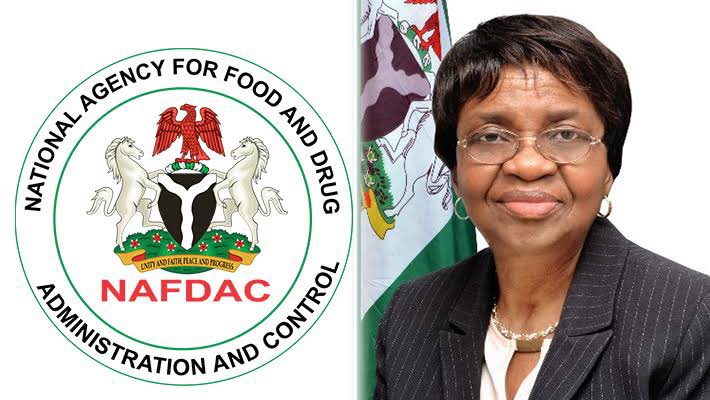
The Director General of the Agency, Prof. Mojisola Christianah Adeyeye, who disclosed this during at a media parley on the modernisation of the Agency’s regulatory systems said:“There is no regulatory agency that can function without a legal framework. When WHO came in 2019, our regulations were already prepared. That was the foundation.”
She explained that NAFDAC’s decision to gazette more than 28 regulations transformed the Agency from a struggling regulator into a globally respected authority.
“Without gazetting, there is no legal framework. Without a legal framework, there are no best practices. And without best practices, no one takes you seriously,” she added.
According to the DG, the gazetted regulations placed Nigeria firmly within the community of nations and formed the backbone of Nigeria’s National Action Plan 2.0 against substandard and falsified medicines. “WHO benchmarked us not by what we wrote, but by what we practiced,” she said.
She explained that the process forced NAFDAC to formalise collaboration with security and regulatory institutions through Memoranda of Understanding, including a landmark agreement with the Office of the National Security Adviser.
“For the first time, we signed an agreement with the National Security Adviser. International bodies began to take us seriously. And we also began to take ourselves seriously,” she said.
The impact of that legal credibility was seen in the coordinated Open Drug Market operations in Aba, Onitsha, and Irumatai. With backing from the National Security Adviser, NAFDAC deployed 1,350 personnel drawn from the police, military, and DSS in a six-week operation that resulted in 137 truckloads of banned, expired, and unregistered medicines being evacuated from circulation, alongside about 20 truckloads of narcotics. The seized products were destroyed in massive public burn operations lasting three weeks.
“We removed medicines that had been poisoning Nigerians for decades.
“Nobody would have taken us seriously if our regulations were just on someone’s computer,” Adeyeye said.
Adeyeye extended the same narrative to food safety enforcement, recalling major seizures of fake beverages at Zinku Market in Aba in December 2023 and 2024.
“We created monsters for ourselves through compromise. What went wrong for four decades cannot be corrected in one day. We have started. We have not finished,” she said. She confirmed that operations against illegal alcohol packaging had commenced following a Senate mandate.
“Whatever you see in circulation, just know that we have started the operation,” she warned.
Adeyeye narrated how contamination risks surfaced in her own home. “My staff served me soup. It was black. I asked where the beans were ground. That grinding machine contamination is a huge problem,” she said. Although grinding machines fall outside NAFDAC’s direct mandate, she said the Agency would approach the issue from a public health perspective, stressing that food safety threats often begin long before products reach the market.
Adeyeye linked the legal framework directly to NAFDAC’s modernization achievements, noting that the Agency had attained WHO GBT Maturity Level 3 and successfully re-benchmarked in 2025.
“NAFDAC was also admitted as the 24th member of the International Council for Harmonization and is now mentoring other African regulatory authorities, sharing knowledge on medicines, food safety, and chemical regulation.”
She highlighted how NAFDAC’s modernisation has gone beyond enforcement to stimulate local pharmaceutical and medical device manufacturing. “Through the 5+5 Regulatory Directive and the Ceiling List initiative, over 70 percent of selected medicines are now locally produced, reducing dependency on imports.
She noted that the partnerships between Nigerian firms and international companies such as Finecure from India, SD Biosensor from South Korea, and Troment from Turkey have brought foreign investment and advanced technology into local production.
“This is not just about compliance. It is about building an industry that can compete globally,” she said.
The DG said contract manufacturing collaborations have jumped from 10 in 2019 to 87 in 2025, reflecting growing confidence in Nigeria’s regulatory and industrial ecosystem.
She said NAFDAC has also embraced digital innovation. Advanced platforms like the Integrated Regulatory Information Management System (IRIMS) and the NAFDAC Traceability Information System (NTIS) are being used to monitor products from manufacturing to market.
The Agency is pioneering the use of artificial intelligence to detect unsafe medicines, adulterated foods, and harmful chemicals before they reach consumers. “This is intelligent regulation. We are moving from reacting to problems to preventing them proactively,” Adeyeye said.
She said the human capital has been a central focus of the Agency’s transformation. “Over 25 staff members are currently pursuing MSc and PhD degrees while in service, and new recruits include highly skilled scientists, doctors, pharmacists, and legal experts. This deliberate focus on expertise ensures that NAFDAC’s modernisation is both technological and knowledge-driven.”
Despite these achievements, Adeyeye warned that Nigeria’s regulatory battle is far from over. “If we removed 137 truckloads, imagine how many are still out there. We are removing them gradually. This is a war, not a ceremony,” she said.
She emphasised that modernisation is not about technology alone but about a culture of governance built on law, discipline, and enforcement.
“What we are building is not just a modern agency. We are building a regulatory system that Nigerians — and the world — can trust.”
The post Legal reforms powered Nigeria’s biggest crackdown on fake drugs, unsafe foods – NAFDAC DG appeared first on Vanguard News.
