By Johnbosco Agbakwuru
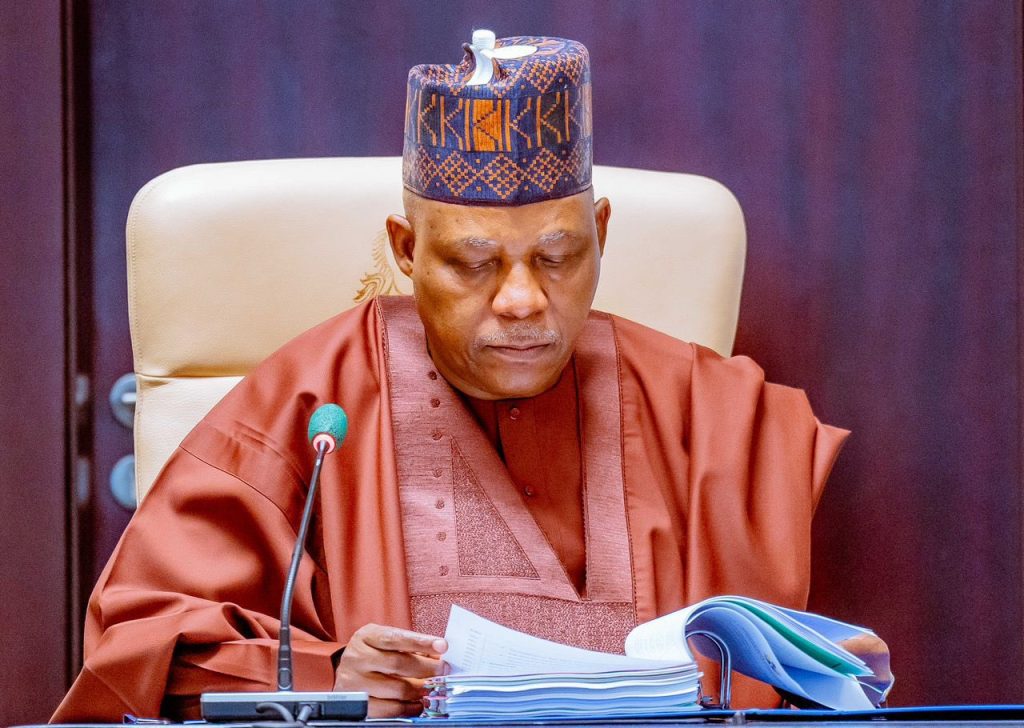
The Vice President Senator Kashim Shettima on Wednesday slammed African leaders over aid dependency, urging “strategic capitalism” through blended finance and private enterprise to fund Africa’s future.
Senator Shettima, who spoke at the Africa Social Impact Summit, ASIS, hosted by his office in partnership with Sterling One Foundation and United Nations Nigeria in Abuja, was represented by Hajia Hauwa Liman, his Technical Adviser on Women, Youth Engagement, and Impact.
The summit focused on “Scaling Action – Driving Inclusive Growth Through Policy and Innovation,” and also witnessed the launch of education and women’s inclusion platforms.
The Vice President said national success hinges on “the clarity of judgment and the courage of conviction that defines the solution it chooses,” positioning the summit as a space to “listen with humility, to reason with honesty, and to act with purpose.”
Shettima commended ASIS’s growth over four editions into a key platform for converting “intent into execution,” spotlighting launches of the business coalition for education and the women and financial and economic inclusion Ppatform, WIFI.
“Government as a whole cannot solve Africa’s development challenges,” he said. “Our responsibility today is to reframe it as an investment—in human capital, productive systems, climate resilience, infrastructure, and inclusive markets.”
He dismissed reliance on aid, asserting: “The future of this continent will not be financed by aid and loans. It will be financed by patient capital, catalytic capital, blended finance, and private enterprise deployed at scale, and guided by impact.”
Defining impact investing as “strategic capitalism” that builds civil society, educated workforces, and sustainable ecosystems, Shettima outlined Nigeria’s reforms under President Bola Tinubu in education, health, financial inclusion, and digital infrastructure.
According to him: “We are building national resource architectures, not to impress donors, but to serve citizens,” welcoming ASIS as a hub for “co-investment, co-design, and co-delivery.”
Shettima urged unity among policymakers, the private sector, civil society, and youth: “Development is not done to people. It is done with them.”
He warned against fragmentation, calling to “close the gap between promise and performance,” and predicted history would judge leaders by “the systems we built” and “the institutions we strengthened.”
With just five years until the 2030 Sustainable Development Goals, SDGs, deadline, UN Deputy Secretary-General Amina Mohammed, in a virtual message, warned that global progress has “faltered and, in many instances, regressed,” calling for urgent reforms amid rising debt, declining investment, and climate impacts hitting vulnerable nations hardest.
Mohammed highlighted stark inequities: “Today, three billion people reside in countries that allocate more resources to interest payments than to vital sectors like health and education.”
She described the situation as “untenable,” noting how nations contributing least to the climate crisis bear its brunt.
Mohammed outlined three priorities from last week’s international climate conference: “First, catalyzing large-scale investment in sustainable development. Second, addressing the climate debt and environmental crisis. And third, reforming the international financial architecture to better serve the most vulnerable among us.”
Mohammed called for a “new surge of global solidarity from governments, development banks, the private sector, and philanthropic organizations to unlock the finance, the technology, and the partnerships essential for transformative change.”
UN coordinators across Africa are working with governments and private sectors to turn plans into on-the-ground impact, she noted.
“Let us unite in solidarity to forge a sustainable future for all,” the UN Deputy Secretary-General concluded.
In her remarks, CEO of Sterling One Foundation Olapeju Ibekwe urged leaders from government, the private sector, and civil society to shift from ideas to execution.
She highlighted ASIS’s role in uniting public leadership, private capital, government institutions, and social innovators to tackle Africa’s complex challenges collaboratively and sustainably.
“That has been made possible because of partnership,” Ibekwe stated, expressing deep gratitude to founding partners like the UN system in Nigeria, financial institutions, foundations, corporates, and NGOs.
Ibekwe detailed achievements in blended finance for education, health, and humanitarian aid, as well as cross-sector partnerships expanding access to services for women, youth, and underserved communities.
“From financial inclusion frameworks reaching millions of women and youth, to education partnerships expanding foundational learning, to climate resilience—these platforms have mobilized capital for adaptation and innovation,” she noted.
The summit marked a “new chapter” with launches of the Business Coalition for Innovation and the Women and Financial and Economic Inclusion Platform (WIFI), an African Union initiative debuting in Nigeria.
“At Sterling One Foundation, our commitment has always been to move beyond child support to systems change, beyond interventions to implementation, and beyond access to outcomes,” she declared.
The United Nations High Commissioner for Refugees, UNHCR, representative, in his presentation, detailed Nigeria’s spiraling internal displacement crisis amid conflicts, insurgencies, flooding, and terrorism.
He outlined crises in the northwest and northeast, stating, “We are seeing over the past few decades conflict, flooding, more insurgencies, terrorism, and a series of issues that are now confounding. And as a result of these crises, we have seen large-scale displacement.”
He stressed that communities should demand self-reliance: “What we want are jobs. Give us a way to earn a living so that we can take care of ourselves and take care of our families. Handouts are unsustainable,” he added.
The post Africa needs ‘strategic capitalism’, not aid, loan – Shettima appeared first on Vanguard News.
