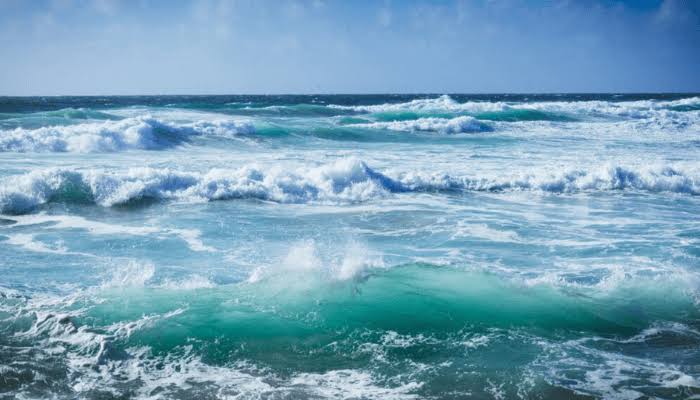
For years, the ocean existed in our national imagination as background noise. It was the road ships travel on, the place fishermen disappear into at dawn, the horizon we photograph and forget. Now, suddenly, it has entered economic conversations. Ministers mention it. Policy papers invoke it. Conferences are organized around it. And the question on the street is simple and fair. What exactly is the blue economy?

Stripped of jargon, the blue economy is an old truth rediscovered. It is the idea that the sea,our oceans, rivers, coastlines, and waterways can be a source of lasting prosperity if we use them wisely, not recklessly. It is not about squeezing the ocean dry. It is about earning from it without destroying it. A farmer who eats all his seeds will go hungry next season. A fisherman who empties the sea will soon have nothing left to catch. The blue economy is the discipline of restraint in pursuit of abundance.
It begins where many Nigerians already live: fishing. From the creeks of the Niger Delta to the Atlantic coastline, fish feeds millions and employs millions more. But overfishing, illegal trawlers, pollution, and poor storage mean that we lose both fish and income. A blue economy approach protects breeding grounds, regulates catches, supports fish farming, and invests in cold storage so today’s catch does not become tomorrow’s waste. Food security is not a slogan, it is a system.
Then there are ports. Lagos offers the clearest lesson in both promise and failure. On paper, it should be West Africa’s maritime powerhouse. In reality, miles of trucks once sat motionless for days outside Apapa, engines idling, goods trapped between ship and city. Time bled into cost. Cost bled into prices. A port meant to accelerate trade became a chokehold on it. The blue economy insists we confront a simple truth: a coastline alone is not an advantage. Efficiency is. Governance is. When ports work, factories rise, logistics firms multiply, exporters thrive, and jobs follow the tide. When they fail, the ocean’s wealth dies quietly in traffic and paperwork.
Tourism offers another lens. Clean beaches, protected mangroves, and vibrant coastal cultures attract visitors who spend money that sustains communities. Oil spills, plastic-strewn shores, and unplanned construction chase them away. The blue economy makes an uncomfortable demand, protect the environment, not because it is fashionable, but because destruction is bad business.
Energy is where the future presses hardest against the present. The sea moves endlessly. Waves rise and fall. Tides obey no subsidy regime. Offshore wind and tidal energy are no longer science fiction, they are operational realities elsewhere. For a country battling power shortages and climate pressure, ignoring the ocean’s energy potential is not caution, it is negligence.
Beyond what the eye sees lies an even deeper layer. Shipbuilding, marine research, underwater internet cables, and biotechnology that could produce new medicines, materials, and industries. The ocean is not empty, it is unexplored.
But here is the line we must not cross. The blue economy is not a license to plunder. Oil spills that poison creeks, plastic that strangles marine life, and unchecked dumping into waterways are not environmental footnotes. They are acts of economic vandalism. You cannot destroy your capital and call it growth.
For a country with vast coastlines and inland waterways, the blue economy offers something rare, diversification without fantasy. Jobs that cannot be outsourced. Food that does not depend entirely on imports. Energy that does not run out. But it also demands governance, enforcement, and leaders willing to choose tomorrow over today’s quick profit.
In the end, the blue economy is not a technocratic concept. It is a human one. It is the fisherman who wants his son to fish the same waters. It is the coastal child who deserves clean shores, not blackened tides. It is the choice between a one-time gain and a living inheritance.
When the sea enters the conversation, it asks a question back, will we treat it like loot, or like legacy? Our answer will determine not just how blue our waters remain, but how sustainable our future truly is.
The post The Blue Economy: What is this phrase we keep hearing about?, by Stephanie Shaakaa appeared first on Vanguard News.
