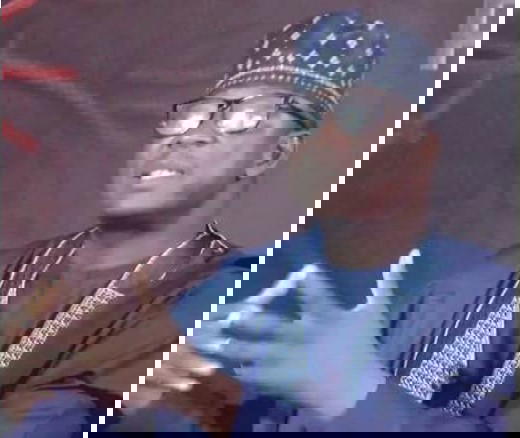
Chairman of the Christian Association of Nigeria, CAN, in the 19 Northern States and the Federal Capital Territory, FCT, Rev. Joseph John Hayab, in this interview monitored on Arise TV, speaks on the reported abduction of worshippers from churches in Kajuru Local Government Area of Kaduna State, official denials, security response, and wider security concerns. Excerpts:
Read Also: Kaduna: Names of 177 abducted worshippers revealed
There are competing narratives here: claims of mass abductions and official denials. Let’s start with your version. The Christian Association of Nigeria says three churches were attacked during worship and worshippers abducted in Kajuru Local Government Area of Kaduna State. What verifiable information do you have that confirms that this attack occurred?
I think Nigerians need to know that the association called the Christian Association or Fellowship of Christians in Nigeria is an association that is highly connected and works together. We operate from the national level to the regional, state, local government and grassroots levels.
So our connection and our system of communication—passing information forward—is a very strong one. We do not have difficulties knowing when, where and how things happen.
As someone who served as Kaduna State secretary for a long time and later as chairman of CAN in Kaduna State, and now currently serving at the northern regional level, I have connections and relationships across the entire system. So once anything happens, there is communication.
Currently, there is a chairman of CAN in Kaduna State. Fortunately, on the day this unfortunate incident happened, he was out of the country, but he arrived this evening. When he was away, the practice is that information is sent to him and copied to me.
A message came to my phone at 2:56 p.m., informing me that unverified numbers of worshippers were taken from certain churches—Cherubim and Seraphim One and Cherubim and Seraphim Two, sometimes called Bishara Cherubim and Seraphim, and also Husky Cherubim and Seraphim—in the same town. There is also a nearby location involved.
Because we did not know the exact number of people taken, another message was sent to say that the attackers came, shut the entire church, and then paraded the worshippers to walk in a straight line into the bush. That was what happened. Nobody was there to verify immediately, and the CAN chairman at the local government level does not live there. There was already fear at the time the unfortunate incident happened, so no one could verify exactly who or what happened.
The next morning, we kept praying and alerted the necessary areas that needed to be alerted.
So the information first came to you on Sunday at 2:56 p.m.?
Yes. The next day, Monday, the first group that broke the news to the public was Sahara Reporters because someone posted it on Facebook as it happened. So it was not a framed or cooked-up story. It was posted on Facebook, and that is why Sahara Reporters carried it as breaking news.
Calls were coming in from everywhere — left, right and centre — asking questions: is it true, what really happened, and so on. I put a call again to the chairman of CAN at the local government level, and he responded, saying, “Pastor, I sent this to you since morning.” I told him I did not see it, but at the moment we spoke, the message came in.
More than five media organisations had already called, but we were not ready to speak because we wanted to ensure the issue was handled properly. Some positive developments had happened in Kaduna in the previous week, and we were also trying to avoid truncating those good developments.
Two pastors — a woman evangelist and a reverend — who went for a wedding in Niger State and were kidnapped had just been rescued by security operatives and brought back on Sunday evening. I personally received them. This was widely reported in the media. Also, the wife of the late Venerable Achi and her daughter, who had been in captivity since October last year when Achi was killed, were released.
So there were positive things happening alongside this unfortunate situation. We wanted to manage it with maturity. But when the pressure became overwhelming, we acknowledged that something did happen. We were careful about numbers because numbers can be misleading and still needed verification.
But eventually, some reports mentioned figures of up to 100 abducted persons.
Some of these stories became exaggerated. The figures circulating came from communication meant to refute the story, where people demanded names. What we continue to discuss with government authorities is that we should not focus too much on the numbers but on the fact that the incident occurred.
It is also important to note that some people escaped and returned, which affected the figures being quoted.
At what point did you report the incident to the security agencies?
The moment the incident happened, security agencies were informed. That is why we were worried when statements later suggested otherwise. How could security agencies be informed and then come out to say nothing happened? That creates confusion and sends wrong information.
According to the security agencies, they visited the area and found no evidence of an attack. That is why people are asking why our account differs from the official statement.
Why is your account different from that of the security agencies?
I really sympathise with Governor Uba, who is making efforts to ensure things work properly, but such statements are discouraging. Instead of saying nothing happened, the proper response should have been to investigate further. Let me give an example: the local council chairman was the first person to give us figures. We were shocked to later hear him make contrary statements publicly. He was the first person who went there and gave us figures when we did not even have any.
So many things went wrong in communication, possibly between different levels of authority. However, the foundation of my confidence is that the Christian Association has a fantastic network. Before I speak, I have more than enough evidence to confirm that the incident happened.
Are you suggesting that the security forces are mistaken or withholding information?
I would say they were mistaken. Accusing them of withholding information would damage their image. But if we say there was a mistake, then dialogue is possible to understand what went wrong. Security issues are sensitive.
We need to be careful with our language because we still need security agencies every day, just as they need the public. Sensitive issues like this must be handled thoroughly and not treated lightly.
Since the incident happened on Sunday and you informed the authorities that same day, have you formally engaged Kaduna State Government and federal security agencies since the reports emerged, and what are they telling you now?
I have been engaging with security agencies throughout this process, and we are now on the same page. The unfortunate incident happened, and innocent Nigerians were taken from their church. There is no longer any debate about that. They have acknowledged us as Christian leaders. I was not alone in these engagements.
We discussed with them, including senior officials, and they acknowledged that people were taken. There was a promise that efforts would be made to go after the perpetrators.
Did they question why you went public?
Who went public first? It was the reporters, not me or any government official. We were reacting to a story that was already in the public domain. When Sahara Reporters published the story, we were put under pressure because everyone was asking us questions.
Imagine the families of those abducted hearing official statements saying nothing happened. How would they feel? That is playing with people’s emotions and sensitivities.
What standard of proof does CAN apply before going public with such claims?
If anyone makes a claim and later discovers it is false, they should be bold enough to admit the mistake, apologise and take responsibility. That is the problem with leadership today—leaders who cannot admit when they are wrong. For us, we were sure of our information. That is why we challenged anyone to ask for names.
We provided names and even presented some of those who escaped with injuries. We did not speak out to embarrass the government. It is like someone in a house shouting “fire” when there is a fire. First, you check whether it is smoke or fire. When you confirm it is fire, you raise the alarm.
Do you see this as part of a broader pattern of attacks on Christian worshippers in the Northwest?
It is not limited to the Northwest. In recent weeks, we have credible intelligence of plans to attack Christians in Niger, Kogi, Kwara and other vulnerable states, with the aim of provoking anger and confusion. We have shared this information with security agencies. Terrorists are no longer hiding their identities.
The President himself has said that anyone who takes up arms against Nigeria is a terrorist. Downplaying such acts by calling them banditry weakens the seriousness of the issue.
Are you concerned that this incident could be internationalised?
This is an opportunity for Nigeria to correct narratives and show commitment to protecting citizens. Nigerians want assurance and action. If they see action, confidence will return.
What long-term strategy is needed to make communities safe?
What we want is for every Nigerian community to be safe. If my neighbour is not safe, then I am not safe. Security must be holistic and inclusive. Citizens must be carried along, trust must be built, and collaboration must be genuine. If we do that, we will succeed.
The post Why we insisted Kaduna Church abductions happened — Hayab, Northern CAN Chairman appeared first on Vanguard News.
