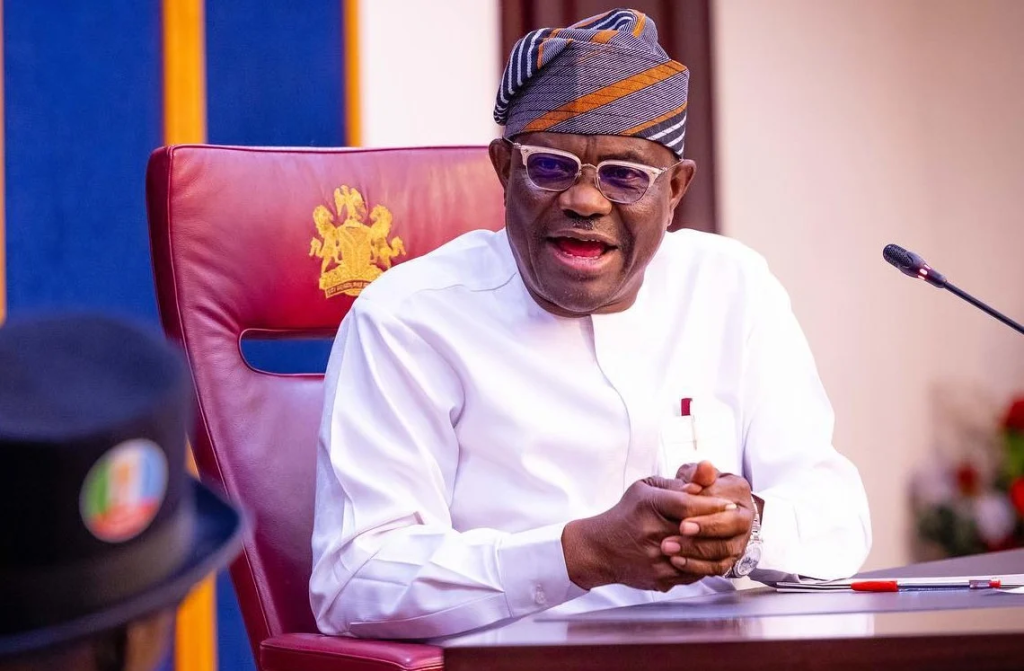
Socio-Economic Rights and Accountability Project (SERAP) has filed a lawsuit against Nigeria’s governors and the Minister of the Federal Capital Territory, Abuja (FCT), Mr Nyesom Wike “over their failure to account for the spending of billions of naira of public funds in the name of ‘security votes’ by them since 29 May 2023 to guarantee and ensure the security of life and property of Nigerians.”
The suit followed reports of the Benue massacre and well-documented ongoing cases of insecurity in several states and FCT, despite the over N400 billion budgeted yearly as ‘security votes.’ 10 governors reportedly budgeted about N140 billion as security votes in 2026.
In the suit number FHC/ABJ/CS/95/2026 filed last Friday at the Federal High Court in Abuja, SERAP is asking the court to “direct and compel the governors and Mr Wike to disclose the details of the spending of security votes by them since 29 May 2023 to date, which are intended to ensure the security of life and property of Nigerians.”
SERAP is also asking the court to “compel the governors and Mr Wike to provide detailed reports on the allocation and spending of security votes by their states and the FCT, including the information on implementation status and completion reports, and the plans, if any, for improving the security infrastructure in the states and FCT.”
In the suit, SERAP is arguing that, “Nigerians ought to know in what manner public funds including security votes meant to ensure the security of life and property of Nigerians, are spent by the governors and FCT minister.”
SERAP is arguing that, “the escalating insecurity in several states and FCT is taking a devastating toll on socially and economically vulnerable Nigerians, driving up extreme poverty, intensifying hunger and leading to other grave human rights violations.”
SERAP is also arguing that, “Several state governors and FCT minister continue to fail to effectively discharge their primary and constitutional responsibility to protect the lives and property of the Nigerian people.”
According to SERAP, “The framers of the Nigerian Constitution 1999 [as amended] never contemplated opaque spending of public funds as security votes.”
SERAP said, “The constitutional principle of democracy also provides a foundation for Nigerians’ right to know the spending details of the money collected in the name of security votes meant to ensure the security of life and property of Nigerians.”
SERAP is arguing that, “Citizens’ right to know promotes openness, transparency, and accountability that is in turn crucial for the country’s democratic order.”
The suit filed on behalf of SERAP by its lawyers Oluwakemi Agunbiade, Andrew Nwankwo, and Valentina Adegoke, read in part: “There is a significant risk of embezzlement, misappropriation or diversion of public funds collected by the states and FCT as security votes.”
“Despite the billions of naira yearly budgeted as security votes, many governors and FCT ministers are grossly failing to guarantee and ensure the security and welfare of the Nigerian people, contrary to section 14(2)(b) of the Nigerian Constitution.”
“Directing the governors and FCT minister to account for security votes spending would serve to engage Nigerians in an honest conversation about the security problems and what the governors and minister are doing to respond to them.”
“The intense secrecy and lack of meaningful oversight of the spending of security votes by governors have for many years contributed to large-scale stealing of public funds.”
“Years of secrecy in the spending of security votes have also limited the ability of the people to hold high-ranking public officials to account for their constitutional responsibility to ensure the security and welfare of the people.”
“There is a legitimate public interest for the governors and the FCT minister to explain how they have spent the security votes they have so far collected.”
“The obligations of state governors and FCT minister to guarantee and ensure the security and welfare of the Nigerian people are interlinked with their responsibility under section 15(5) of the Nigerian Constitution to ‘abolish all corrupt practices and abuse of office’.”
“While authorities may keep certain matters of operational secrets from the people in the name of national security, there is no constitutional or legal basis to hide basic information on public spending from the people.”
“The Supreme Court in a groundbreaking judgment declared that the Freedom of Information Act ‘is applicable and applies to the public records in the Federation’, including those on security votes spending kept by the states and FCT.”
“With the landmark judgment, the Supreme Court has made clear that state governors can no longer hide under their unfounded claim that the Freedom of Information Act does not apply to them.”
“As the Supreme Court has eloquently stated, any freedom of information law by the state is subject to the Freedom of Information Act.”
“The failure by state governors and FCT minister to disclose and account for the spending of security votes is a grave violation of the public trust and the provisions of the Nigerian Constitution, national anticorruption laws, and the country’s international human rights and anticorruption obligations.”
“Pervasive tendency by governors to regard or treat security votes as their personal entitlement or funds is antithetical to the Nigerian Constitution and international standards. Security votes should be used for improving the security situation in the states or returned to the public treasury.”
“Section 13 of the Nigerian Constitution further imposes clear responsibility on the states and FCT to conform to, observe and apply the provisions of Chapter 2 of the constitution.”
“The public interest in publishing the information sought outweighs any considerations to withhold the information.”
“The World Bank recently classified Nigeria as ‘economy in fragile and conflict-affected situations (FCS)’, which explains why the country continues to face severe and persistent development challenges.”
“Other 38 countries classified as FCS alongside Nigeria include Afghanistan, Burkina Faso, Cameroon, Ethiopia, Libya, Mali, and Sudan. The World Bank noted that insecurity is contributing to extreme poverty in Nigeria.”
“According to the Bank, ‘the outlook for poverty in Nigeria is sobering. Millions of people are currently experiencing acute food insecurity. Severe gaps in education and health undermine human development in the country.’”
“Weak state capacity, insecurity, and conflict-related disruptions contribute to poor outcomes across basic services. Insecurity is escalating and inflicting grave economic damage while contributing to violations of human rights across several states and FCT.”
No date has been fixed for the hearing of the suit.
The post SERAP sues governors, Wike ‘over failure to account for security votes spending’ appeared first on Vanguard News.
