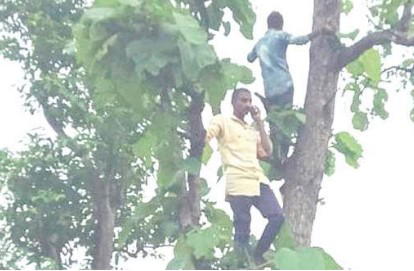
*As Urban internet grows 57%, rural Nigeria lags at 23%
By Juliet Umeh
I felt my heart sink every time his phone didn’t ring,” Mrs. Doris Okafor said quietly, recalling the two days her son vanished into digital silence.
“Two days after her son, Onyedikachukwu, left home to process his admission to study Environmental Health Science at Nnamdi Azikiwe University, Awka, panic sets in.
“All calls and messages failed to deliver. Even WhatsApp calls rang endlessly before dropping,” she recalled.
“At first, I tried to stay calm, telling myself maybe his battery was dead or he was just settling in. But every hour that passed without hearing his voice made the fear worse.”
When the call finally came, relief quickly turned to disbelief.
“Mummy, the network here is very poor,” she said Onyedichachi told her. He was staying in Ifite, Awka, barely 10 minutes by bike from the university and less than a 30-minute walk.
In a country that has digitised admissions, registration portals, and tuition payments, a young student became unreachable simply because broadband failed.
“For us, it wasn’t just frustration,” Mrs. Okafor said. “It was fear. A simple thing like knowing my child was safe became impossible. It makes you wonder how many people are quietly cut off like this every day.”
Her experience mirrors a wider national reality; across Nigeria, poor broadband does not merely inconvenience users, it actively excludes them. It actively excludes them from education, work, finance, healthcare, and government services. Increasingly, where you realised that poor connectivity isn’t just annoying; it’s an invisible barrier to survival. Calls drop mid-conversation, mobile data crawls or disappears entirely.
“Many times, I avoid joining virtual events I’m meant to cover because I know the network will embarrass me. Downloading reports can take forever; sometimes nothing happens for a long time.
She noted that connectivity challenges extend far beyond her community.
“It’s frustrating that in Lagos, often called Nigeria’s digital capital, many areas are still poorly connected. Places like Ijanikin in Ojo and Oko-Afo in Badagry face constant connectivity issues. I know this firsthand because my parents live there. Igbogbo in Ikorodu also suffers terribly, and riverine communities such as Petekun in Olorunda local council development area, LCDA experience even greater challenges.
“For professionals whose livelihoods depend on being online, these gaps are not minor inconveniences but serious setbacks. Your productivity ends up being determined by where you live, not your skills,” Mrs Segun added.
Small businesses on pause
For small business owners, poor broadband translates directly into lost income.
“I run SUNNKY Digital Enterprises in Aba,” said Mrs. Annah Nso, who offers POS services and digital bill payments.
“This business puts food on my table. Whenever I leave Aba for my village, Isuochi in Umunneochi LGA, which I do frequently, my business comes to a standstill.
“During a recent three-day trip for a burial, one of my regular customers needed to recharge his electricity bills. They kept calling me, but I was helpless. I had to move constantly searching for a better network. In the end, transactions were done haphazardly.”
In an economy increasingly driven by cashless payments and digital services, unreliable broadband means income loss, customer dissatisfaction, and stalled local commerce.
Families cut off from banking and care
For Mr. Frank Ikpeme, who lives in Lusada along the Agbara axis of Ogun State, digital exclusion begins the moment he gets home.
“Even buying data becomes a struggle. You click, and the screen just keeps rolling. Transfers rarely go through. At home, I can’t rely on my phone for anything digital,” Ikpeme said.
Chidinma, a mother of two in Enugu, recalled how poor connectivity once triggered fear within her church community.
“A member who relocated to Umuagwa, near Port Harcourt airport, fell ill, and nobody could reach her. I had to travel there just to confirm she was safe. Poor network deepens fear and emotional distress,” she told Vanguard.
Broadband: The foundation of Nigeria’s Digital Public Infrastructure
Nigeria’s Digital Public Infrastructure DPI – including the National Identity Number, NIN, online government portals, cashless payments, financial technology, fintech platforms, cloud services, and artificial intelligence, AI, tools – depends entirely on broadband connectivity.
Analysts warn that when connectivity is weak or absent, DPI systems do not merely slow down, they fail completely.
Digital identity enrollment and verification platforms go offline, preventing people from completing NIN essential processes.
Online government services, including admissions, pensions, and tax filings, become inaccessible.
Cashless payments and fintech services suffer disruptions, leading to POS failures, stalled transfers, and frozen wallets.
Cloud platforms and AI tools collapse, making remote work, data access, and automation impossible.
Without reliable broadband, DPI risks becoming an urban privilege rather than a national utility, excluding millions from essential digital services.
The scale of the broadband gap
According to the Executive Vice Chairman of the Nigerian Communications Commission, NCC, Dr. Aminu Maida, urban areas record about 57 percent broadband coverage, while rural communities lag at just 23 percent.
Speaking at a recent Rural Connectivity summit held in Lagos he said, “Cities like Lagos, Abuja, and Port Harcourt account for 75–80 percent of total data usage, driven largely by better infrastructure and affordability.”
“Rural areas face limited fibre-optic networks, high deployment costs, and infrastructure vandalism, resulting in lower penetration and slower adoption. This hampers economic potential in agriculture, education, and health, while widening gaps in digital skills and opportunities.”
The urban-rural divide is stark: those with the least income often pay the highest price for the worst connectivity.
Policy promises vs reality
The National Broadband Plan (2020–2025) set an ambitious target: minimum speeds of 25 Mbps in urban areas, 10 Mbps in rural areas, and at least 70 percent penetration across 90 percent of the population.
Five years later, those targets remain largely unmet. Data from the NCC website shows that broadband penetration as of November 2025 stood at 50.58 percent, still below national targets.
Industry voices on rural broadband gaps
Telecom industry bodies say the challenges are structural.
The Association of Licensed Telecom Operators of Nigeria, ALTON, pointed to persistent vandalism and sabotage.
“Network sabotage and vandalism, such as stolen fibre cables and base station equipment, continue to degrade connectivity for millions,” said ALTON Chairman, Engr. Gbenga Adebayo.
Similarly, the Association of Telecommunications Companies of Nigeria, ATCON, Mr. Tony Emoekpere cited inadequate last-mile connectivity and limited fibre penetration as major reasons rural areas lack high-speed internet.
Both associations emphasised that the broadband gap is not merely technological but structural, leaving millions on the wrong side of Nigeria’s digital transformation.
Closing the gap: Path to a connected Nigeria
Dr. Maida stressed initiatives such as the Universal Service Provision Fund, USPF, community networks, and zero right-of-way policies in some states offer hope to millions who remain offline.
“Until broadband is treated as essential infrastructure, on par with roads and electricity, Nigeria’s digital economy will continue to exclude the very citizens it promises to empower,” NCC EVC said.
Until that day, millions of Nigerians live in silence, disconnected not by choice, but by infrastructure.
*This report is supported by the DPI Africa Journalism Fellowship Programme of the Media Foundation for West Africa and Co-Develop
The post Silent signals: How poor broadband leaves many Nigerians digitally disconnected appeared first on Vanguard News.
