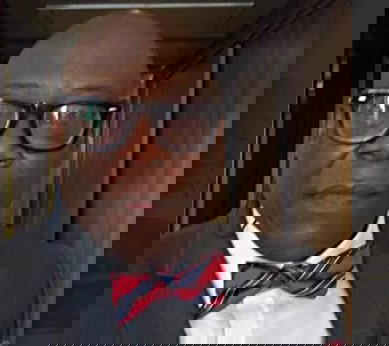
In his seminal work, Fellow Countrymen – the story of Coup D’etats in Nigeria, veteran journalist, human rights activist and ‘welfarist’, Richard Akinnola explores the journey of military interventions in Nigeria. Below is a thematic presentation of the prologue to the book.
Read Also: 60 Years After: Why Nzeogwu coup was inevitable — Major-Gen. IBM Haruna
Why an update and a revised version
This is an update and a revised edition of this book, first published in the year 2000. In view of the unprecedented interest the first edition of the book generated, leading to five re-prints within 19 years, this revised edition, which incorporates additional information based on extensive research, becomes imperative.
Tracking back on coups
The change of guards from the military to democratic rule on May 29, 1999 put a seal on a 15-year military rule in Nigeria between 1984 and 1999. Prior to this, the country was under the jack boots of the military between January 15, 1966 and October 1, 1979. In other words, within her years of existence, Nigeria was under military rule for 28 years, witnessing twelve known coup d’etats and attempted coup d’etats.
As a researcher and writer of over 40 years and having actively reported most of the coups, except those of 1966 and 1975, I felt it was necessary to research, document and put in historical context, the evolution and statistics of coup d’etats in Nigeria. I have consciously tried not to go into real details of the planning of each of the coups, but merely presented the facts and statistics as they are.
Rationale for coups
For any discerning individual that goes through all the coup speeches in this book, one thing is very clear. The tone and tenor of the speeches are identical. The same rationale is given for pillaging our country. They make Nigeria look like a woman who had been consistently raped, with the rapists giving the same excuse.
Consequences on military resource
And to our collective shame, I found out that the ranks of the military have been decimated, with Nigeria losing most of her brilliant officers to coups and counter-coups, either by way of execution by firing squad, death in the course of the putsch or outright premature retirements. We, both the military and civilians, all share in this collective shame. Or is it not the civil populace that sometimes scream “Halleluya” when some coupists come to the scene?
Why we should not lionise coupists
In spite of the imperfection in the democratic set-up of India, there has never been anything like a coup in the country. We need to imbibe this democratic spirit and say no to coups, irrespective of their colouration, real or imagined.
We should also stop lionising successful putschists. Doing so would be equating coups to the level of suicide, which if you fail, you would be charged to court for attempted suicide and convicted but if it succeeds, nobody can charge a dead body to court. The same way that successful coupists go to the State House, while failed ones end up at the stakes.
The grandmaster of coups himself, General Ibrahim Babangida once said:
“If you stage a coup d’etat, you run the risk of the consequences of failure. Let me tell you a story. One of my juniors, late (Colonel Ibrahim Taiwo), who was travelling with me on board a plane, saw a young officer reading a book, ‘How to stage a coup’.
“So, he went to the young officer, tapped him at the back, got the book opened up to a page for him and said: ‘By all means read this book but when you get to this chapter, cram it.’ The chapter he opened was on the consequences of failure… A coup never succeeds; if it does, nobody calls it a coup… When you stage a coup, you have to tell the people what they want to hear so that you can be accepted.”
The danger the political elites constitute
This despicable political demon needs be exorcised from our political life, particularly in our young political experience as exemplified by the May 29,1999 transfer of power to the civilians. It is however, particularly disturbing that many of our politicians do not seem to have learnt much from the experiences of our immediate past.
It is my hope that this book would serve as a catalyst that would spur our politicians to guard the new democratic experience jealously, lest we played into the hands of the military adventurists once again.
Having said this, we should all gird our loins and make sure military adventurists never again mount the saddle of governance in Nigeria, as the worst civilian government is much better than the so-called benevolent military government.
The post The story of coups in Nigeria — Richard Akinnola appeared first on Vanguard News.
