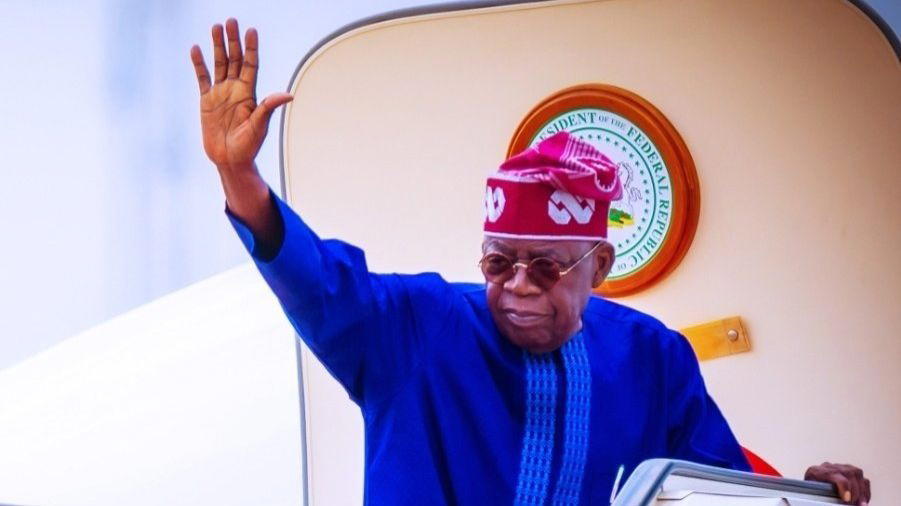
For the first time since crude oil was discovered in Oloibiri in 1956, Nigeria removed petrol subsidy. On May 29, 2023, President Bola Ahmed Tinubu stood before the nation and uttered a sentence that would instantly alter the rhythm of Nigerian life. Fuel subsidy is gone.

Many Nigerians did not need economists or policy analysts to interpret what that meant. The trader who depends on buses to move goods, the farmer transporting produce, the civil servant stretching an already fragile salary, the student counting naira with mathematical precision,all of them understood, instinctively, that life was about to become harder.
Fuel subsidy, in simple terms, meant the government absorbed part of the cost of petrol so citizens could buy it below its actual market price. Its removal meant the opposite: Nigerians would now pay the full cost, shaped by global oil prices, exchange rates, logistics, and inefficiencies. Overnight, the cushion disappeared. The shock landed squarely on ordinary people.
The days that followed confirmed every fear. Transport fares doubled, sometimes tripled. Food prices climbed with alarming speed. School fees rose. Rent followed. Every journey became a calculation. Every meal a negotiation. Every household a site of quiet but relentless adjustment. Families skipped meals. Hospital visits were postponed. Children were withdrawn from private schools. Small comforts vanished. Subsidy removal stopped being a policy debate and became lived reality.
But while Nigerians were learning new survival strategies, state governments were learning something else entirely: how to spend unprecedented sums of money.
Subsidy removal shifted the financial burden from government to the people, but it also unlocked a flood of revenue for the states. Monthly allocations from the Federation Account ballooned by some estimates, up to eight times what states received before May 2023. A state that once received about N4.5 billion monthly now collects well over N40 billion.
This is not speculation. It is public knowledge. Imo State Governor Hope Uzodimma openly described subsidy removal as “a direct blessing” to sub-national governments. He merely said aloud what others quietly celebrate.
There is nothing inherently wrong with states receiving more funds. In fact, that was part of the argument for subsidy removal: that savings would be redirected to development closer to the people. But for millions of Nigerians, that promise remains unfulfilled, almost mythical. From Abuja to the states, there is little evidence that the extra revenue has translated into cheaper transport, better hospitals, improved schools, functional public services, or meaningful support for small businesses suffocating under inflation.
Instead, what many Nigerians see are flashy “legacy projects,” grandly branded and politically convenient, but socially hollow. Projects that photograph well, but heal little. Projects that announce power, not compassion. Meanwhile, primary healthcare limps along. Public schools deteriorate. Agriculture remains under-supported. Social welfare is treated as an afterthought. The priorities suggest that political image has outweighed human need.
The disconnect has grown so stark that President Tinubu himself felt compelled to urge governors to “wet the grass” to ensure that the benefits of increased revenue reach the grassroots. That appeal is telling. It is an acknowledgment that the pain is real, widespread, and inadequately addressed by those now holding the resources meant to soften the blow.
What Nigeria is witnessing is not shared sacrifice, but uneven reward. Subsidy removal has created a cruel imbalance,governors are financially better off, while the people they govern are materially worse off. The policy has transferred economic pain from government balance sheets to household kitchens, while financial relief has stalled at the gates of Government Houses.
For the market woman paying more to bring goods to her stall, the commuter spending half of daily earnings on transport, and the family choosing between food and medicine, subsidy removal feels less like reform and more like abandonment. It raises a troubling question: how can a policy be called successful when it enriches those in power while deepening the suffering of the governed?
Until state governors can show clearly, transparently, and tangibly that the money gained from subsidy removal is being used to reduce hardship and restore dignity to everyday life, the policy will remain deeply unpopular, regardless of its economic logic.
President Tinubu deserves credit for confronting a corruption-riddled system that had long distorted Nigeria’s energy sector. Removing subsidy required political courage. But courage must be matched with compassion, and reform must be accompanied by accountability. The resources freed by subsidy removal must not become souvenirs for governors or private extensions of state power.
If subsidy removal is to mean anything beyond pain, its proceeds must be felt where the suffering is deepest in homes, markets, hospitals, classrooms, and farms. Anything less turns reform into punishment, and leadership into indifference.
The post Subsidy Removal: Bonanza to governors, burden to Nigerians, by Stephanie Shaakaa appeared first on Vanguard News.
