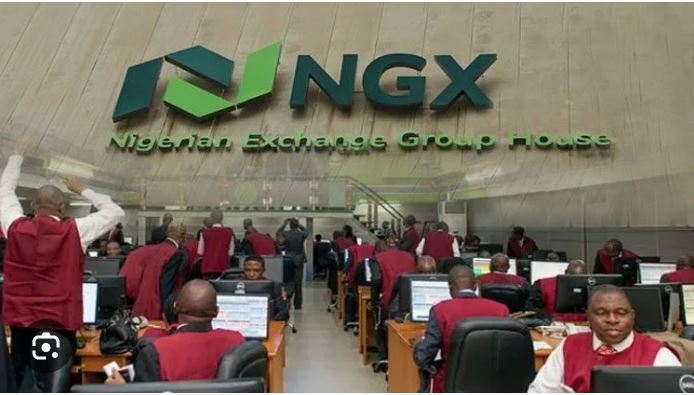
The Nigerian stock market’s performance in 2025 stands as one of the most compelling economic successes of the year. At a time when many households struggled with high living costs, the capital market quietly delivered record-breaking returns. The Nigerian Exchange’s, NGX, All-Share Index rose by over 50 per cent, while market capitalisation expanded to nearly N100 trillion, adding more than N30 trillion in value within twelve months.
This rally placed Nigeria among the best-performing equity markets globally in 2025, restoring confidence in the country’s investment landscape.
Several factors were responsible for this success, including improved macroeconomic management, clarity in foreign exchange policy, tighter monetary discipline, and renewed efforts to restore fiscal credibility, resulting in reduced uncertainty for investors. As inflationary pressures showed signs of easing and exchange rate volatility moderated, long-term investors began to re-enter the market.
Equally important was strong corporate performance. Banks, buoyed by higher interest income and recapitalisation expectations, recorded robust earnings. Industrial goods companies benefited from infrastructure spending and construction demand, while insurance and select consumer stocks also posted notable gains. These fundamentals helped distinguish the 2025 rally from past speculative bubbles.
Market reforms also played a decisive role. The NGX and the Securities and Exchange Commission strengthened transparency, improved trading infrastructure, and expanded investment products such as exchange traded funds, REITs and bonds. Capital raising on the Exchange reportedly exceeded N6 trillion, enabling companies to fund expansion and positioning the stock market as a credible alternative to debt financing.
The implications for the economy in 2026 and beyond are far-reaching. A vibrant stock market supports economic growth by lowering the cost of capital, encouraging corporate expansion, and creating jobs. It also helps government diversify funding sources, easing pressure on public debt. If sustained, the momentum of 2025 could support industrial growth, infrastructure financing, and long-term economic stability.
Yet, the critical challenge of narrow based participation remains. Despite impressive numbers, about 38 per cent domestic retail investment, most ordinary Nigerians remain spectators. To truly consolidate these gains, inclusion must be prioritised. Financial literacy campaigns should be scaled up nationwide, using simple language to explain investing, risks and long-term wealth creation. Digital and micro-investment platforms should be encouraged, allowing Nigerians to invest small amounts through mutual funds, ETFs and fractional shares. Transaction costs must be reduced, and regulatory protections strengthened to build trust among first-time investors.
In addition, policies that reward long-term retail investors such as tax incentives and stable dividend frameworks, can help shift savings from idle consumption to productive investment.
The 2025 bullish market proved that Nigeria’s stock exchange can thrive even in challenging times. The task ahead is to ensure that this success is not confined to institutional players and high-net-worth individuals. A truly successful market is one that allows ordinary Nigerians to share in national prosperity. Consolidating the gains of 2025 means transforming stock market growth into inclusive wealth creation and sustainable economic progress.
The post Consolidating gains of the 2025 Bullish Market for ordinary Nigerians appeared first on Vanguard News.
