From last week continues the narrative on the constitutional roles of traditional rulers in the first republic. It also highlights their little recognition in the 1979 constitution and the non recognition in the 1999 constitution .
While the 1979 Constitution gave a little role to the traditional rulers, the 1963 Constitution gave free role to them. Section 41 of the 1963 Constitution states that (41) There shall be a Parliament of the Federation, which shall consist of the President, a Senate and a House of Representatives. (42) —1. Without prejudice to the provisions of section 46 of this Constitution, the Senate shall consist of—- twelve Senators representing each Region, who shall be selected at a joint sitting of the legislative houses of that Region from among persons nominated by the Governor; four Senators representing the Federal territory; c. four Senators selected by the President, acting in accordance with the advice of the Prime Minister.
(2) The Senators representing the Federal territory shall be (a) the Oba of Lagos, who shall be an ex-officio member of the Senate; (b) a Chief selected in such manner as may be prescribed by Parliament by the White White-Cap Chiefs and War Chiefs of Lagos from among their own number; and c. two other persons selected for that purpose in such manner as be prescribed by Parliament. (3) A joint sitting of the legislative houses of a Region may regulate its own procedure for the purposes of this section. 43. Without prejudice to the provisions of sections 47 and 88 of this Constitution, the House of Representatives shall consist of three hundred and twelve members.
44. Subject to the provisions of section 45 of the Constitution— (a) a person shall be qualified for selection as a Senator if he is a citizen of Nigeria and has attained the age of forty; (b) a person shall be qualified for election as a member of the House of Representatives if he is a citizen of Nigeria and has attained the age of twenty-one years.
In the past traditional rulers served in the government as legislators or as Commissioners or even as Governors. A case in point was that of the Ooni of Ife, Sir Adesoji Aderemi (15 November 1889 – 3 July 1980), who was the only traditional appointed governor.
Oba Titus Martins Adesoji Tadeniawo Aderemi (Atobatele I), (15 November 1889 – 3 July 1980), was the Ooni of Ife from 1930 until 1980. He served as the governor of Western Region, Nigeria between 1960 and 1962.
Sir Adesoji Aderemi was known as a wealthy man and had a large family of many wives and children. One of his children was Princess Tejumade Alakija (17 May 1925 – August, 2013), who later became the head of Service of Oyo state.
During the colonial era, the Ooni gained a considerable amount of power due to the colonial policy of indirect rule and being labelled a first class Oba among traditional rulers in Yorubaland. The policy of indirect rule was used to ensure native awareness and consultations about colonial policies affecting the regions. The British leaned on existing native political structures and hierarchy, particularly the Nigerian traditional rulers, for political consultation and tax collection. Later on, the Ooni with the consent of the leading Yoruba political leaders used his position to close the gaps of exploitation of divisional differences among Yorubas and tried fervently to rally the Yoruba towards a common goal.
In 1962, the king acting as governor, used his power to remove the premier of the region, sensing the premier did not have the support of the majority members of the House of Assembly. The event escalated the political rivalries in the region.
As we contemplate on our never-ending attempt to amend the Constitution, the nagging question is whether or not to give the traditional rulers any role at all. No doubt, the 1999 Constitution has deleted any role for them. Should we continue to allow them to remain idle in their palaces, occasionally attending social events or give them some roles.
Definitely they represent a part of our past.
Many of them are highly educated and wealthy, but because of constitutional limitations they are idle and suffering in silence. Worse still, the greedy and selfish politicians we have don’t want to share power with them. So they are not likely to amend the constitution to give them certain schedules.
What should we do with them?
Should we continue to pretend that they are still relevant?
Concluded
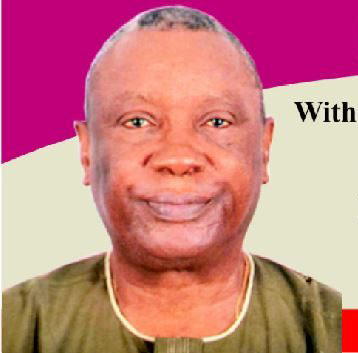
•Teniola, a former director at the Presidency, wrote from Lagos.
The post Assessing the relevance of traditional rulers (6), by Eric Teniola appeared first on Vanguard News.
