
This is an edition of The Atlantic Daily, a newsletter that guides you through the biggest stories of the day, helps you discover new ideas, and recommends the best in culture. Sign up for it here.
One indicator of a polity’s health is whether a citizen can be punished merely for telling the truth about the law. The signs for American democracy are not good.
This morning, Defense Secretary Pete Hegseth announced that he has begun the process to demote Mark Kelly, a retired Navy captain and NASA astronaut, and reduce his pension pay. The operative facts here, naturally, are not Kelly’s past service but his current rank and service: a Democrat serving in the U.S. Senate and a political adversary of President Donald Trump.
“Six weeks ago, Senator Mark Kelly—and five other members of Congress—released a reckless and seditious video that was clearly intended to undermine good order and military discipline,” Hegseth wrote on X this morning. He cited two articles of the Uniform Code of Military Justice; Kelly, unlike the other five, holds retired military status, which makes him subject to sanctions from the Defense Department.
What Hegseth did not cite was what Kelly and his colleagues actually said in the video, and for good reason. Doing so would expose the absurdity of the charge and the abuse of power involved in the attempt to demote him. “Our laws are clear: You can refuse illegal orders,” Kelly said. No one in the Trump administration has disputed that this is true. A more agile or even-keeled administration would have smoothly dismissed the video as irrelevant: This is true, but of course we would never issue an illegal order. (As Kelly and his lawyers have noted, Hegseth has cited the same law about disobeying illegal orders in the past.) Instead, Trump and his aides threw a fit, dubbing the Democrats the “Seditious Six.”
One possible reason for the frantic response became apparent quickly. Not only have U.S. forces been conducting likely unlawful strikes on boats in the Caribbean; late last year, several news sources reported new details about the first attack, in which the initial strike had not killed all those aboard the boat, so a second strike was ordered. The Pentagon’s own Law of War Manual for service members states that “orders to fire upon the shipwrecked would be clearly illegal.” This revelation made the video from Kelly and company not just hypothetical but directly relevant. It also put Hegseth on the defensive, even among Republican members of Congress, and he quickly shifted blame to Admiral Mitch Bradley, who commanded the operation.
In contrast to the language in the Law of War Manual, the UCMJ articles upon which Hegseth rests his decision to discipline Kelly are vague, involving “conduct unbecoming an officer and a gentleman” and “all disorders and neglects to the prejudice of good order and discipline in the armed forces.” As my colleague Tom Nichols has noted, these provisions might apply to Hegseth’s own admitted behavior while in uniform. Punishing Kelly is extremely pernicious political retaliation. It also ought to be embarrassing to Hegseth, though he seems as impervious to shame as his boss.
The censure is appealable in the next 30 days, and Kelly vowed to fight it. (If it goes through, it could cost him roughly $1,000 a month in pay, per Politico.) “My rank and retirement are things that I earned through my service and sacrifice for this country. I got shot at. I missed holidays and birthdays. I commanded a space shuttle mission while my wife,” former Representative Gabby Giffords, “recovered from a gunshot wound to the head—all while proudly wearing the American flag on my shoulder,” he said in a statement on X. “If Pete Hegseth, the most unqualified Secretary of Defense in our country’s history, thinks he can intimidate me with a censure or threats to demote me or prosecute me, he still doesn’t get it.”
Kelly is one of several critics of Trump to be targeted by the administration in the past year. The administration has repeatedly sought to indict New York Attorney General Letitia James and former FBI Director James Comey; launched investigations into a major Democratic fundraising platform and prominent politicians including Senator Adam Schiff; and used administration policy to bully states that don’t fully cooperate with Trump—most recently vetoing a bipartisan bill on a Colorado water project, apparently as punishment for the state’s refusal to free a former local official who backed up Trump’s false claims of voter fraud.
Despite Kelly’s defiance, his attempted demotion sends a message, even if it ultimately doesn’t come to pass. Kelly has the resources and political support to fight for his views, and he’ll get plenty of prominent backers. But if a notable figure like Kelly can be punished, how can any ordinary soldier or sailor who is currently serving hope to refuse an illegal order without facing serious personal consequences?
Members of the armed forces, and retirees like Kelly, are particularly susceptible to Hegseth’s abuse of power, because they can be punished by the Defense Department internally. But the chilling effect does not end with those who are serving or have served, or with the particular question of illegal orders. The administration has told the other five Democrats that it is investigating them as well. The core belief underlying all of this is as plain as it is dangerous: Criticizing Donald Trump and defending the rule of law is sedition.
Related:
Here are three new stories from The Atlantic:
- Anne Applebaum: Trump’s “American dominance” may leave us with nothing.
- Rose Horowitch: The college backlash is a mirage.
- A horseshoe theory of Trump
Today’s News
- Nicolás Maduro and his wife, Cilia Flores, pleaded not guilty in U.S. federal court to drug-trafficking and terrorism charges after being captured in a U.S. military raid in Caracas on Saturday morning. Judge Alvin K. Hellerstein set the next hearing for March 17, and Trump-administration officials said they would brief congressional leaders today.
- Minnesota Governor Tim Walz, the former Democratic vice-presidential nominee, said he will not seek reelection as his administration is coming under heightened attention over welfare-fraud investigations in the state.
- Concerned that President Donald Trump could turn his attention to Greenland after the seizure of Venezuela’s leader, Greenland Prime Minister Jens-Frederik Nielsen said yesterday that the U.S. should have “no more fantasies about annexation.”
Dispatches
- Better With Time: Introducing a newsletter course from The Atlantic by Drew Goins, for anyone who wants to make their days a little more joyful.
- The Wonder Reader: Isabel Fattal compiles our writers’ recommendations for literature that challenges and expands.
Explore all of our newsletters here.
Evening Read
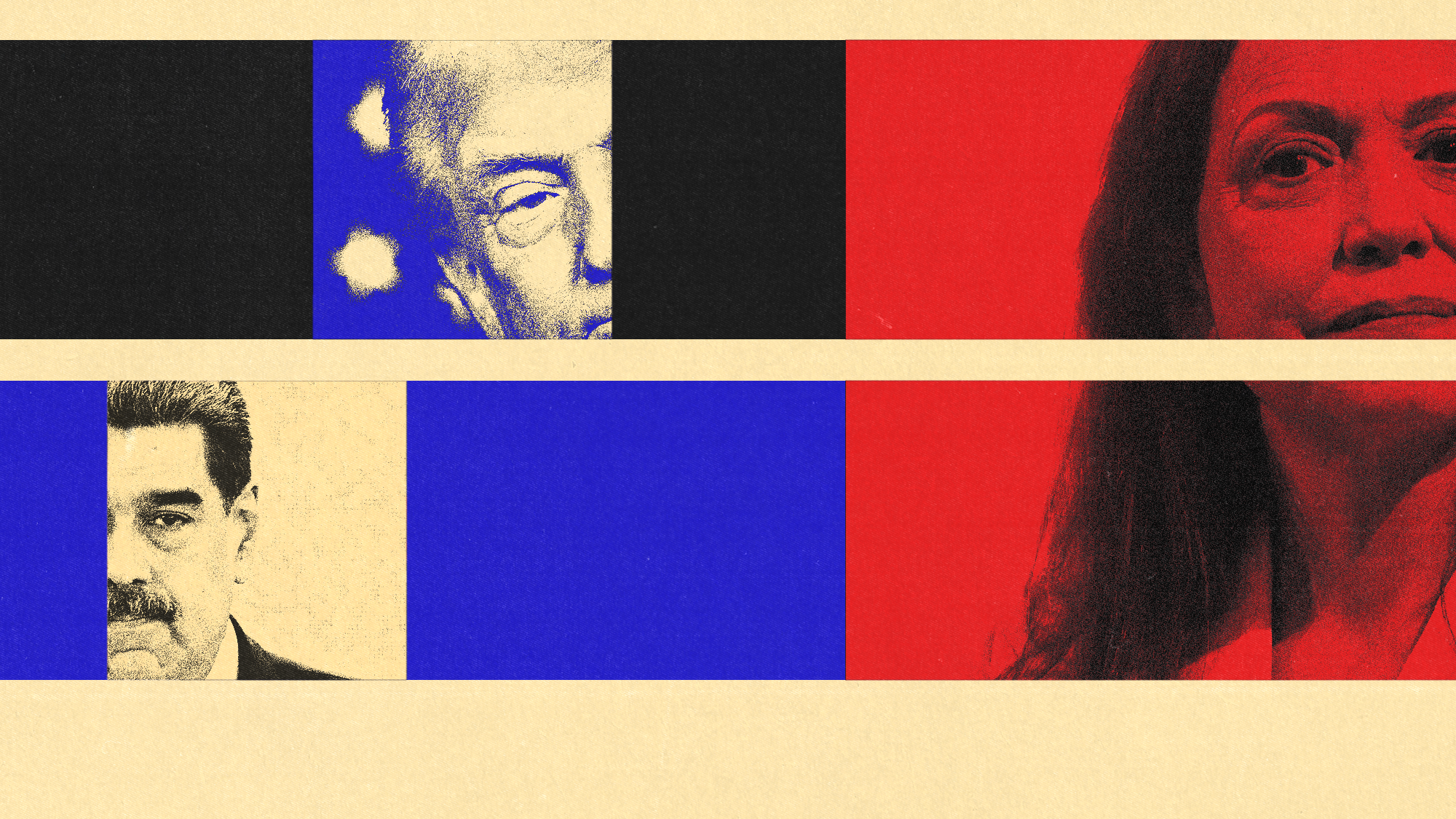
The Venezuelan Opposition’s Desperate Gamble
By Gisela Salim-Peyer
Venezuelans have been through a lot in recent decades: the rise of Hugo Chávez, a ruinous revolution that turned democracy into dictatorship, an economic crisis that became a humanitarian one, the emigration of more than one in four inhabitants. Many people are by now familiar with the smell of tear gas and the sound of gunshots. But the sensory experience of bombs falling from the sky was for the most part novel. The Trump administration hit military bases mainly in or near Caracas; at least seven explosions killed dozens of people.
Many Venezuelans welcomed the strikes. Before Saturday, polls showed that a majority of Venezuelans both inside and outside the country favored U.S. military intervention. María Corina Machado, the leader of the opposition movement, issued a statement following the American operation: “Venezuelans, the hour of freedom has arrived!” she said, adding, “Let’s remain vigilant, active, and organized, until the Democratic Transition is fulfilled.”
The simplest reason for celebration is that Nicolás Maduro is out … But there are reasons to be wary too.
More From The Atlantic
- @Grok, did Venezuela “deserve it”?
- The fuck-around-and-find-out presidency
- Radio Atlantic: Is the U.S. running Venezuela or not?
- The biggest question about Venezuela
- Alexandra Petri: President Trump totally meant to ask Congress before attacking Venezuela.
- Michael Scherer: Trump threatens Venezuela’s new leader with a fate worse than Maduro’s.
Culture Break
Read. Rachel Vorona Cote explains why authors can’t let go of Greek myths.
Watch. In Sentimental Value (out now in theaters), the writer-director Joachim Trier probes the true purpose of confessional art.
Rafaela Jinich contributed to this newsletter.
When you buy a book using a link in this newsletter, we receive a commission. Thank you for supporting The Atlantic.


