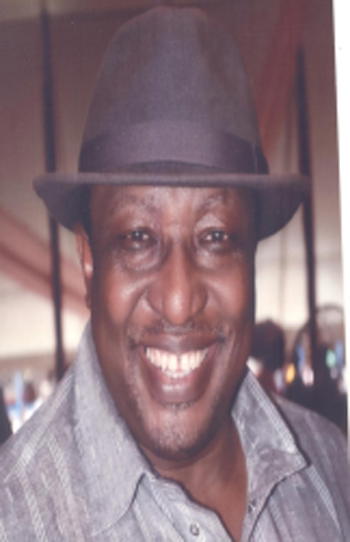
Legal luminary, business man, philanthropist, community organizer and political powerhouse, Andrew Oru has been passionate about the state of the nation for as long as he has been conscious.
“ It is a good thing to progress in life”, Chief Andrew Oru told Vanguard as his recent 65th birthday approached. “As far as I’m concerned, age is a number”.
It is typical of a man who would not wear his achievements on his sleeve but would rather deploy the common touch. Having attended the famous Government College Ughelli, his trajectory towards getting the best education possible in his time was assured. This laid the groundwork towards a philosophy that enabled a brilliant professional and business career.
He chats with MORENIKE TAIRE about why the political and economic playing fields must be leveled in order to accommodate the young generations.
What are your plans regarding politics with 2027 just round the corner?
I know that every human being is a political animal. However, there comes a stage in a man’s life when you begin to ask yourself if you must be personally involved to change things.
I am involved in politics today in my own small way. I have the ears of some politicians and do not have to be the one on the spot. At my age, I have children who are old enough to participate and so do my friends. It is unfair for older folks like me to be the ones still contesting elections, unless exceptional circumstances demand it. I will rather support the younger ones.
As it is, there is going to be a big void and people are not seeing it yet. You can imagine, when those over 60 are still in office, when will it then become the time for those who are over 40 to contest for office? If we are not careful, there is a chance many of these older ones will die at the same time with nobody who is experienced to fill that void. It is dangerous what we are doing and I feel my generation has been unfair to this country.
Some other African countries have sit-tight presidents but they do not have sit-tight politicians. If you observe, most of these countries who have sit-tight presidents have youngsters as their politicians. Nigeria is the only place where you will find a 67 year old man being called a youth president.
I’m in politics by supporting governors who are showing good hands in governance. I support it to the extent where, if there are younger ones who want to contest for elections, I check them. I have no respect for party lines because in Nigeria, there is no partisan politics. We should take a look at candidates and personalities that fit the bill. You do not have to be in government to be in politics. There is a lot of pressure but I haven’t seen that exceptional thing that will demand my throwing my hat into the ring.
You spoke about youth involvement in politics. It’s been said that power is not served a la carte. Do you see the youth of this country making the right moves?
There is no other right move they can make which they have not made. They have spoken on social media, had protests and so forth. The people saying power is not served a la carte are the ones in government already. These youths have shown themselves as good enough for leadership. They spoke out and got frustrated and stifled.
You imputed earlier that your generation failed Nigeria. Can you throw more light on this?
In our days, going back to my secondary school, our school fee was just 60 naira. With that amount, we were given uniforms, sports kit, toiletries on a weekly basis, and the school supplied mattresses, pillows and beddings. Every Friday, we would send our clothes to the laundry for washing. We were cared for to international standards. We had access to food at the cafeteria. We had our power generating system within the school. All the academic and non academic staff stayed within the school. For those who came from far away states, especially the North, the school made provision for transporting them back home during the holidays and brought them back to school. We had a clinic inside the school with qualified nurses.
By the time I got into University of Nigeria, Nsukka, the meal ticket was 50 kobo. With that amount, if you were not satisfied, you could queue up and they would serve you another portion. The tea stand was available 24 hours in the cafeteria. In addition, my state paid us a bursary. We were paid 600 naira as bursary at that time. Let’s not forget that the naira was stronger than the dollar then. Flight tickets back then cost about 80 naira round trip, and that was where I started my retail business from.
When we were paid this bursary, a lot of my friends bought household items. I didn’t come to school as a poor child as my parents took good care of me. I told myself I couldn’t go below the amount I was given from the bursary. I wondered what I could do to have all the things my friends were buying without touching the money. So, I thought of a scheme. I bought a ticket, flew to Italy and bought different small items to fit a suitcase. Things that were not too heavy, and I flew back with them. I went to a shop in Enugu, a major boutique and the owner bought them from me wholesale. I made so much money and repeated the trip. At some point, I felt it was time for me to buy these equipments my friends had. However I felt if I spent all that amount buying those equipment, it would reduce my money again. So, apart from the fridge which was too big to fly in, instead of buying one set for myself, I bought about 11 sets so that one will be free for me from the profit. In the course of these trips, I started meeting these Igbo boys who were doing business abroad and they became my friends. With time, they also started patronising me. I had a business centre in addition to my sales. The business centre produced a taxi and that taxi produced another taxi. That was how I started business as a student at UNN.
My friends didn’t know about any of these because I wasn’t talking about it. I was a very conscious person. I can observe and see things in my environment without talking about them. My friends didn’t know I had so much money. By the time I got to law school, I was able to stay in Eko Hotel, then Le Meridien. These were the opportunities the society gave to us at that time upon which I stepped. That environment is no longer available.
At that time, you could afford to drive from Ughelli to Abeokuta by road at night without fear of armed robbery or kidnapping. All these things that are happening now are happening within our generational imposition in terms of rulership. We have failed this generation and we are not able to give them 10 percent of that opportunity.
Those days, if you went to hospitals, you would see qualified medical practitioners, because even the hospitals had live-in quarters for their nurses and doctors. You had ambulances and wheel chairs all over the place. Everything was working well when we grew up which was the legacy the older generation gave to us. We should be thinking of how to rehabilitate the younger ones and provide a safer environment for them to operate instead of making the environment so tense that they run away.Then after that you begin to talk of taxing those in the diaspora. We are creating an environment that is impossible for the younger ones to survive here.
You attended all these prestigious schools including Government College, Ughelli. Were there any particular teachers, professors and your peers that had a fundamental influence on you?
Firstly, my parents were both teachers, so that was quite inspirational. They brought me up properly and I always looked up to them as role models. As of 1997, my parents won the Family of the y
Year award in Delta state. That is to tell you how they were in terms of family values and all of that.
When I was in Government College, one of the principals we had who really inspired me was Chief Demas Akpore who later became first deputy governor of Bendel state after Ambrose Alli. He became Deputy Governor from being principal. He was highly respected. He believed in leadership by example. He also believed in leadership by personal participation and he was also a good man. During sports, he would put on his shorts and join us. He was very inspirational to me. I didn’t have much student influence as I was a very independent minded person. I knew what I wanted at any point in time. I could stand up to anybody whether you were senior to me or not and make my views known. I was very exposed early in life. By the time I got to the University, I had a few lecturers I looked up to. People like Professor Okonkwo Achike and all those personalities. Coincidentally these are people who are mostly the authors of books that were being used in our faculty and law facilities in other universities. To think that the books that were being used by other universities were being written by my professors who were teaching me directly was a thing to depend upon for confidence.
The post How I built business empire with N600 bursary at UNN — Andrew Oru appeared first on Vanguard News.
