From the 12-day war to UN-backed recognition of Palestine, 2025 reshaped the conflict’s regional and global dimensions in five key aspects
Nearly two years after the war began on October 7, 2023, the humanitarian situation in Gaza has only deteriorated further amid Israel’s military campaign in the enclave. What was once described as the world’s largest open-air prison is now increasingly seen as an open-air graveyard.
The scale of destruction, civilian casualties, and mass displacement has prompted repeated warnings from the United Nations, including findings by UN bodies that Israel is committing genocide in Gaza.
The Jewish state launched its military operation following a surprise Hamas attack in October 2023, which killed 1,200 people and saw 250 others taken hostage. According to the Hamas-run health authorities, Israeli operations have since left more than 71,000 Palestinians dead.
While 2025 ultimately brought a peace agreement for Gaza – leading to the return of Israeli hostages and the release of Palestinian prisoners – the deal remains fragile. Questions persist over its implementation and durability, while concerns are growing over a broader regional escalation, including the risk of renewed confrontation with Iran.
RT recaps the key developments for Israel and Gaza in 2025.
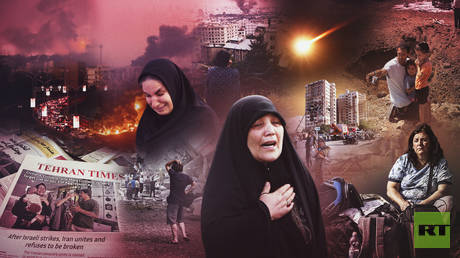
A long-feared direct war between Israel and Iran erupted on June 13, 2025, after Israel launched large-scale air strikes on Iranian military and nuclear facilities in Operation Rising Lion. More than 200 Israeli jets struck targets across Iran, killing senior commanders and nuclear scientists. The Islamic Republic responded with hundreds of ballistic missiles and drones aimed at Israeli cities, triggering nationwide air raid alerts.
The conflict escalated further when the US joined the fighting on June 22, carrying out bunker-buster strikes on Iran’s underground nuclear sites at Fordow, Natanz, and Isfahan. After nearly two weeks of intense exchanges, a US-brokered ceasefire came into force on June 24.
At least 610 people were killed in Iran and nearly 4,700 wounded, according to local health officials. In Israel, 28 people were killed and more than 3,200 injured. While both sides claimed victory, the brief war marked a dangerous new phase in regional confrontation.
In September, a UN-appointed independent commission of inquiry delivered its strongest findings yet on the war in Gaza, concluding that genocide is occurring and continues to unfold. The commission cited tens of thousands of civilian deaths, mass displacement, starvation, and the widespread destruction of homes, hospitals, and infrastructure.
The report accused Israeli leaders – including Prime Minister Benjamin Netanyahu – of incitement to genocide, arguing that statements by senior officials demonstrated clear genocidal intent, a key legal threshold under international law.
Israel rejected the findings, calling the report politically motivated and defamatory. While the commission’s conclusions do not represent the UN’s formal legal position, they intensified global pressure on governments to act, as senior UN officials warned that evidence of genocidal crimes is mounting.
The year 2025 also marked the first long-term ceasefire agreement between Israelis and Palestinians since the war began in October 2023, following months of stalled and indirect negotiations. Until then, the only pause in fighting had been a brief four-day truce in November 2023, after weeks of intense combat that devastated large parts of Gaza.
The agreement, signed on September 29 in Sharm el-Sheikh by US President Donald Trump and mediators from Egypt, Qatar and Türkiye, was intended to halt hostilities. It called for Israeli withdrawals from parts of Gaza and for Hamas to release Israeli captives in exchange for Palestinian prisoners.
Both sides have since accused each other of repeated violations. The UN reports that at least 360 Palestinians have been killed and more than 900 wounded since the truce came into force on October 10. Israel says it struck Hamas officials in response to violations – claims the group denies.
Under the ceasefire agreement, Hamas released the remaining living Israeli hostages held in Gaza after more than two years in captivity. The handover, facilitated by the Red Cross, was followed by emotional reunions broadcast across Israel.
The releases formed part of a broader exchange that also included the return of the bodies of Israeli captives. In return, Israel freed Palestinian detainees, including political prisoners and Palestinians held during the war, many of whom were welcomed home in the West Bank and Gaza.
Of the more than 200 Israelis abducted during Hamas’ October 7, 2023 attack, 114 had been released in earlier exchanges in November 2023 and January 2025. Israel says one captive’s body remains in Gaza, leaving the issue unresolved.
In 2025, momentum grew at the United Nations toward recognition of the State of Palestine. During the UN General Assembly session, several countries – including France, the UK, Canada, and Australia – formally recognized Palestinian statehood, drawing condemnation from Israel and the United States.
The shift followed the adoption of the New York Declaration, the outcome of a French and Saudi-led conference at the UN headquarters. The General Assembly overwhelmingly backed the document, with 142 countries voting in favor, while Israel, the US and a small group of allies opposed it.
The declaration outlines a roadmap toward a two-state solution. As of 2025, Palestine was recognized as a sovereign nation by 157 of the UN’s 193 member states.