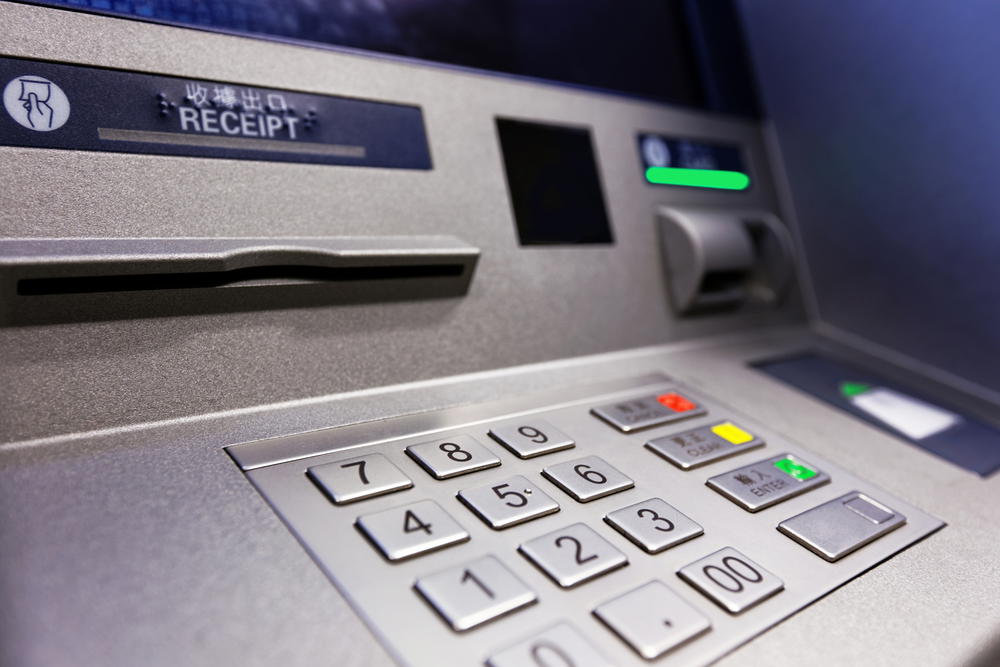
As Nigeria races towards a cashless economy, anchored on payment systems such as mobile money, banking applications, unstructured supplementary service data, USSD, codes and ATMs, a central pillar of its Digital Public Infrastructure, DPI, Nigerians living with disability, especially those who, are visually impaired are being left behind.
By Juliet Umeh
THE night Patience Freedom was stranded still lingers vividly in her memory. She had lost network connection on her phone, she could not transfer money. Worse still, she didn’t have automated teller machine, ATM, card.
“The bank refused to issue me one simply because I am blind,” she told Vanguard.
“I could not get home. That night, I realised how dangerous exclusion can be,” she recalled.
For Freedom, a visually impaired content creator and disability rights advocate, Nigeria’s push towards a cashless economy is not an abstract policy goal discussed in conference rooms. It is a lived experience, one defined by fear, humiliation and forced dependence.
Nigeria’s cashless economy is anchored on payment systems such as mobile money, banking applications, unstructured supplementary service data, USSD, codes and ATMs, a central pillar of its Digital Public Infrastructure, DPI.
DPI promises efficiency, security and financial inclusion, but for persons living with disabilities, the payment layer often delivers the opposite: mobile banking apps that do not support screen readers, USSD channels that time out before transactions can be completed, and ATMs without tactile keys or audio guidance.
For Freedom and many others, the system does not merely inconvenience them, it excludes.
“Some banks refuse to give us ATM cards,” she said. “They tell us, ‘Come to the bank whenever you want your money.’ But who will help us fill the teller? People we don’t know. People we don’t trust.”
She paused before adding quietly: “Our PINs, our signatures, our personal details—everything is at risk.”
At the heart of the problem, she said, is a failure of logic and design.
“Why should blindness decide access to my own money?” she asked pointedly.
“Sometimes, you go through all the stress of opening an account, only for them to tell you at the end, ‘Sorry, we cannot give you an ATM card. It has been stamped from headquarters,’” she said. “Nobody explains why.”
Freedom struggles to understand the rationale.
“If I come to the bank, it is still another person that will fill the form for me,” she explained. “So, what is the difference between that and giving me an ATM card? The best solution is simple, make it accessible.”
In emergencies, the emotional toll is even heavier.
“What if my phone is off? What if I don’t have mobile data?” she asked. “Why should my blindness determine whether I can access my own money?”
Beyond ATMs: when basic banking becomes a barrier
Even beyond cash withdrawals, everyday banking procedures remain hostile to visually impaired customers. While some banks insist on handwritten signatures, many visually impaired customers rely on fingerprints.
“How do I sign what I cannot see?” Freedom asked. “Some banks don’t even understand that this is our reality.”
For Michael Ogunkanmi, a visually impaired music graduate, walking into a bank is often a test of dignity.
“There are banks that told me they cannot give me an ATM card because of my condition,” he said. “They said I might misplace it or someone else would use it,”
Ogunkanmi recalled entering a bank where he was told that his blindness automatically disqualified him.
“I asked them, ‘Is it because I cannot operate the ATM?’ They said no that I could lose the card.”
To challenge the assumption, he pulled out an ATM card from another bank.
“I showed them my Zenith ATM card and told them to take me to their machine,” he said. “I said, ‘I will operate it myself.’”
He did, successfully. Yet the bank still refused to issue him a card.
“After everything, they still said no,” Ogunkanmi said. “I withdrew the little money I had and left.”
Today, he banks with only two institutions willing to issue him ATM cards.
“Others have shut their doors against me,” he said.
Mobile banking apps, a backbone of the digital payment infrastructure, designed to replace physical visits, have offered little relief.
“When I went to open a banking app, they told me I cannot operate it,” Ogunkanmi said. “I showed them my phone and explained that it talks and directs me.”
His smartphone uses screen-reading technology that audibly guides users—a global accessibility standard. But he said bank officials dismissed his explanation.
“I went to the manager,” he said. “He still said no.”
It was only after Ogunkanmi threatened to report the incident that a staff member was instructed to assist him.
“When I operated the app by myself, they were surprised,” he said. “That is how they treat us.”
Digital convenience, analogue exclusion
Nigeria’s cashless policy relies heavily on USSD and mobile banking to deepen financial inclusion, yet these tools are often inaccessible to visually impaired users.
Vice Chairman of the Association for the Blind in Nigeria, Mr. Adeola Aina, describing the frustration, said, “For us, USSD banking is extremely difficult. The time limits are short, and most tokens are not speech-enabled.”
According to him, visually impaired users are often forced to pay for alternative token services, yet even these do not guarantee independence.
“Internet banking is a nightmare.” Aina said, “A few banks have apps that are somewhat accessible, but it is more by chance than by design.”
He disclosed that a survey conducted by the Association for the Blind in Nigeria across 10 banks revealed that most mobile banking apps are largely unusable for PWDs.
“Buttons lack labels, accessibility features are incompatible, and facial recognition further excludes visually impaired users,” he said.
The exclusion, he said stressed, cuts across disability types.
“Persons with albinism struggle with poor colour contrast. Wheelchair users face physical barriers,” Aina said. “The system excludes at every level.”
Freedom believes the problem is not a lack of solutions, but a lack of will.
“In other countries, ATMs talk, apps are accessible, and banks have trained officers,” she said.
“Here, even when a bank official calls me, the first thing I think is scam, because the system has failed us before.”
Accessibility is not charity
For Freedom, advocacy is about safeguarding both the present and the future.
“People become blind every day,” she said. “Disability can happen to anyone.”
Her message to banks, fintech and regulators is unambiguous.
“Accessibility is not charity,” she said. “We should not be forced to bend ourselves to fit into a system that excludes us. We are part of this society. We deserve access, dignity and independence.”
As Nigeria pushes deeper into reliance on digital payments as a public utility, her story raises a critical question: if payment infrastructure is the gateway to economic participation in the future, who exactly is being locked out and why?
Calls for inclusive payment design, enforcement grow louder
Disability advocates and policy experts warn that Nigeria’s cashless drive risks deepening inequality unless accessibility is deliberately built into financial systems.
Executive Director of the Consumer Advocacy and Empowerment Foundation, CADEF, Prof. Chiso Ndukwe-Okafor, said digital financial services must be urgently redesigned to prevent further marginalisation of persons with disabilities.
“This is critical to preventing further marginalisation in the digital age,” she said while speaking at CADEF digital financial literacy workshop in Lagos which saw capacity building for over 80 PWDs.
She said inclusion must go beyond rhetoric, while adding that strong public-private partnerships are essential for sustainable change.
Similarly, Chairman of Theseabilities Foundation, Pastor Ituah Ighodalo, described the exclusion of PWDs from Nigeria’s digital and physical infrastructure as systemic and avoidable.
“People living with disabilities, especially the visually impaired, find it extremely difficult to access banking apps and other digital services,” he told Vanguard. “These are not privileges; they are rights.”
According to him, many components of Nigeria’s Digital Public Infrastructure were built without accessibility in mind.
“This is why Theseabilities Foundation exists, to advocate for everybody,” Iguodala said. “We want inclusivity in everything.”
He called on policymakers, banks, fintech and regulators to intentionally design systems that work for everyone.
“Make a way, somehow or the other, for everybody who has a disability,” he said.
To drive accountability, he disclosed plans to develop a comprehensive accessibility directory outlining minimum requirements institutions must meet, Ighodalo said:
“This is nothing new; it has been done elsewhere. Everybody- the blind, the deaf, wheelchair users, people with albinism- should be able to navigate their way independently,” Igodalo explained.
He also stressed the need for enforcement of existing disability laws, particularly in Lagos State.
“The law has been passed and enacted, but implementation is the issue,” he said. “Where there is no compliance, there must be consequences.”
Laws without access
Nigeria enacted the Discrimination Against Persons with Disabilities (Prohibition) Act in 2018 to guarantee accessibility and protect PWDs from discrimination. Yet, advocates say enforcement remains weak.
Chairman of the Nigerian Association for the Blind, Mr. Lukman Salami, said legal protections mean little when banking systems remain inaccessible.
Speaking at the CADEF workshop, he said: “The law prescribes fines for discrimination. But the real problem is persistent inaccessibility.”
He cited a case in which a woman with a disability sued a bank for maltreatment.
“The Federal High Court in Lagos dismissed the case on technical grounds,” Salami said. “This is how legal protections without practical implementation continue to reinforce marginalisation.”
Scale of exclusion
The stakes are high. The Nigeria Blindness and Vision Impairment Survey, 2021, estimates no fewer than 1.13 million Nigerians aged 40 and above are blind, while broader data from the World Health Organization, WHO, and the National Commission for Persons with Disabilities suggest that tens of millions of Nigerians live with some form of disability.
As Nigeria moves rapidly toward a cash-light, digitally mediated economy, exclusion from payment systems increasingly translates into exclusion from everyday life. A 2025 Sightsavers Nigeria report further estimates that more than 4.25 million Nigerians are blind or visually impaired, based on field surveys and NGO assessments, many of whom now depend on digital financial services to survive in a shrinking cash economy.
Technology accessibility expert at Access, Opeodu Akinola, said the barriers faced by PWDs are both physical and psychological. Speaking at the CADEF workshop, he advocated for the adoption of universal design principles.
Akinola said, “Universal design gives PWDs equal access and opportunity. It also makes business sense. Inclusive services improve customer satisfaction, loyalty and revenue.”
Regulator, industry responses
From the regulatory side, Senior Manager at the Central Bank of Nigeria, CBN, Adeniyi Bunmi, acknowledged the urgency of addressing financial exclusion among PWDs.
She said collaboration between disability groups and financial institutions is essential to achieving Nigeria’s 95 percent financial inclusion target.
“While progress has been made, much more needs to be done,” Bunmi said at CADEF workshop, noting that the Financial Inclusion Steering Committee, chaired by the CBN Governor, prioritises PWDs.
The Nigeria Inter-Bank Settlement System, NIBSS, also reiterated its commitment to inclusivity.
Lead, Operations at the NIBSS, Mrs. Ekeoma Chidi-Ugorji, said accessibility was prioritised from the early stages of Nigeria’s digital identity and payment infrastructure design.
She made the remark while responding to questions during a recent virtual workshop with the DPI 2025/2026 Fellows.
“When you look at our BVN enrolment process, NIBSS was one of the first institutions to recognise the need to accommodate people with impairments,” she said.
According to her, a special BVN enrollment module allows persons who cannot provide full fingerprints to be enrolled using facial capture alone.
“It removes the requirement for complete fingerprints, ensuring people with disabilities are not excluded,” she explained.
She added that while NIBSS does not directly interface with customers, it continues to promote accessibility standards, including voice-over functions, large-text modes and high-contrast interfaces.
NIBSS has also deployed Soundbox devices that audibly announce transaction details.
Chidi-Ugorji said: “Merchants now hear, ‘N10,000 received. This means a visually impaired person does not have to rely solely on visual confirmation.”
Also speaking, Head of Strategic & Research at NIBSS, Mr. Williams Uko, said innovation in disability-focused solutions is largely being driven by banks and fintechs.
“What we do is create systems that innovators can build on,” he said. “In the long run, the entire ecosystem benefits,” Uko clarified during the NIBSS and DPI virtual workshop with the 2025/2026 Fellows.
Inclusion or illusion?
Despite regulatory assurances and pilot interventions, progress remains fragmented.
For Freedom, the issue is simple.
“Accessibility is not charity,” she said, “It is dignity, it is independence, and it is our right.”
As Nigeria builds its DPI, and transitions to a cashless economy, the central question remains, will the payment pillar become a bridge to inclusion or a silent gatekeeper of exclusion?
*This investigation was supported by the DPI Africa Journalism Fellowship Programme of the Media Foundation for West Africa and Co-Develop.
The post How failures in payment pillars, infrastructure, lock out people with disabilities appeared first on Vanguard News.
