Seven leadership decisions that will distinguish institutions built to endure
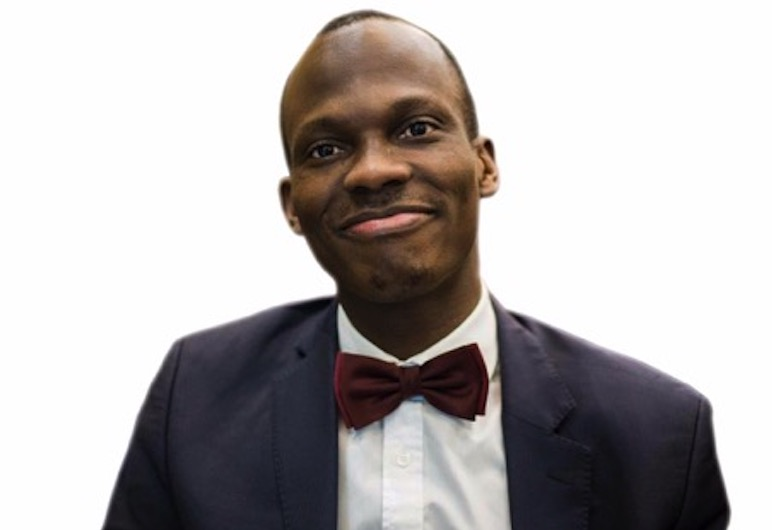
By Alim Abubakre
The defining test of leadership in 2026 will not be whether executives recognise risk. Most serious organisations already do. Risk registers are full, dashboards are sophisticated, and committees meet regularly. The real test will be whether leaders have moved beyond recognition to institutional yet flexible design. The coming year will favour organisations that have translated awareness into operating muscle, where strategy is not a document but a living system that shapes daily decisions under pressure.
This matters acutely for Nigerian organisations. Preparation for the 2027 general elections will quietly but materially affect enforcement behaviour, regulatory interpretation, labour relations, public sentiment and reputational exposure. At the same time, the United States mid-term elections will reshape global risk appetite, foreign policy emphasis, capital flows, sanctions posture and technology governance. For Nigerian boards, these forces do not remain abstract. They surface as exchange-rate movements, tighter credit, investor caution, impact on government revenue and expenditure, policy recalibration and heightened scrutiny. Organisations that treat these as background noise will struggle. Those that have designed for them and is nimble as well agile will quietly outperform.
What follows is not a list of trends. It is a reframing of eight leadership decisions that even advanced organisations must revisit in 2026. The emphasis is not on whether these issues appear on your agenda, but on whether they genuinely shape how your institution allocates capital, time, talent, attention and authority.
The most strategic implication of Nigeria’s tax reform is that taxation has moved decisively from the margins of administration to the centre of leadership judgement. It now shapes pricing power, cash flow durability, investment timing, public legitimacy, and the room leaders have to manoeuvre strategically. As the new tax regime takes effect from January 2026, organisations that approach tax reform as a narrow compliance exercise will experience silent margin erosion and growing friction with stakeholders. Those that approach it as a strategic reset will convert disruption into advantage. Across sectors and sizes, the decisive response is not scale but posture.
Leaders must develop disciplined policy awareness that anticipates shifts rather than reacts to them, embedding scenario thinking into routine decision-making so pricing, contracts, and funding structures can adjust before pressure crystallises. Strategy itself must become flexible by design, allowing offerings, routes to market, and operating models to be reconfigured as rules evolve, a lesson demonstrated by firms that adapted early during India’s GST transition. Hence, leaders must compete on legitimacy, recognising that transparent tax governance, strong documentation, and credible compliance now directly influence trust, access, and reputation. Rwanda’s digital tax systems and the rapid adaptations seen after fiscal reforms in South Africa and the UK show that legitimacy, once established, becomes a source of resilience. For Nigerian leaders, tax reform is no longer a constraint to manage but a capability to master.
Intelligence will no longer be judged by tools, but by how work is redesigned. By 2026, artificial intelligence will be fully embedded in organisational life. The differentiator will not be access to technology. It will be whether leaders have re-engineered decision-making so that human judgement and machine output reinforce one another without eroding accountability. Many mature organisations already deploy AI in pockets. The gap lies in orchestration. Where intelligence remains bolted onto existing processes, value remains fragmented. Where workflows are redesigned end to end, performance shifts materially.
Globally, leading financial institutions illustrate this distinction. The most advanced have moved beyond automation towards judgement augmentation, redesigning fraud management, credit assessment and customer engagement so that staff are trained to interrogate outputs, escalate exceptions and improve models continuously. In Africa, particularly in Nigeria and Kenya, fintechs that pair AI-driven analytics with disciplined human oversight outperform peers that simply acquire new platforms. The lesson for 2026 is subtle but decisive. Intelligence becomes strategic only when it reshapes how decisions are made, reviewed and owned.
Geopolitics will separate organisations that monitor risk from those that operationalise it.
Most boards already acknowledge geopolitical risk. The difference in 2026 will be between organisations that catalogue exposure and those that have embedded geopolitics into operating choices yet are nimble, responsive and agile. Trade, technology, data and energy are now shaped by national interest as much as market logic. The danger is not ignorance. It is strategic inertia, remaining anchored to assumptions formed in a more predictable world. Globally, manufacturers and technology firms that are performing best are not those with the most detailed country reports, but those that have quietly built redundancy into supply chains, diversified jurisdictional exposure and pre-agreed decision triggers for policy shocks. In Africa, the strategic importance of critical minerals offers a telling example. In countries such as the Democratic Republic of Congo, cobalt has become a nexus of industrial policy, ESG scrutiny, global diplomacy and investor expectation. Organisations operating in or around such sectors succeed not by avoiding politics, but by designing governance, partnerships and investment horizons that can absorb political tension without paralysis. In 2026, geopolitical competence will be measured by how quickly and calmly organisations can adjust when assumptions are challenged.
Climate and energy will expose whether resilience is engineered or merely claimed.
Climate risk is no longer a future concern. It is already embedded in cost structures, insurance availability, operational continuity and regulatory pressure. Many organisations speak fluently about sustainability. Fewer have translated climate exposure into disciplined investment decisions that protect productivity and margins. In Europe, energy price volatility have forced many manufacturers to treat efficiency and sourcing not as environmental statements but as survival economics. Those that moved early reshaped their cost base. Those that hesitated absorbed permanent disadvantage. In Nigeria, grid instability has already pushed private firms and public institutions to invest in hybrid energy systems, not out of idealism, but necessity. The strategic question in 2026 will not be whether an organisation has a sustainability report. It will be whether it has deliberately engineered resilience against energy, water and climate disruption in ways that show up in uptime, cost predictability and operational confidence.
Talent strategy will be judged by stamina, not attraction.
The most underestimated risk of 2026 is organisational exhaustion. Economic pressure, uncertainty and rapid change will quietly drain cognitive and emotional capacity. Many organisations will retain people on payroll while losing engagement, creativity and discretionary effort.
Advanced organisations are already shifting from transactional talent management to capability systems that protect stamina. They identify roles that truly matter, invest continuously in skills tied to live work, and cultivate leadership routines that surface risk early rather than punish it. Globally, the struggle to make hybrid work effective shows how quickly trust erodes when expectations are unclear. In Nigeria, the reality of outward migration has exposed a deeper truth. Organisations that offer purpose, development, predictability and fair total reward retain talent more effectively than those that rely on loyalty narratives. In 2026, the strongest organisations will be those whose people can think clearly under pressure because the system supports them to do so.
Trust will function as institutional capital, not reputation management.
Trust is increasingly the invisible asset that determines whether stakeholders give organisations the benefit of the doubt during disruption.
In 2026, disinformation, deepfakes and polarisation will intensify this pressure, particularly during election cycles. The issue is not whether misinformation exists. It is whether organisations have designed the capacity to respond with speed, coherence and credibility.
Globally, corporations are learning that delayed or ambiguous responses to false narratives amplify damage. Those that have rehearsed response protocols and anchored communication in verifiable facts stabilise faster. In Africa, politically charged environments can turn minor allegations into major crises within hours. Organisations that treat communication as a risk discipline rather than a branding exercise preserve legitimacy more effectively. In 2026, trust will not be protected by silence or noise, but by preparedness and consistency.
Cyber resilience will be judged by continuity, not controls. Most serious organisations have cybersecurity frameworks. The question in 2026 will be whether those frameworks protect continuity. The most damaging incidents will not be data breaches alone, but disruptions to payments, operations and decision authority. AI-driven social engineering will increasingly exploit human process weaknesses rather than technical gaps.
Globally, ransomware attacks on hospitals and municipalities have forced leaders to prioritise operational resilience over theoretical security maturity. In Africa, especially in financial services and digital platforms, fraud targeting payment flows and identity has exposed the cost of informal processes. Organisations that protect money flows, rehearse incidents and enforce disciplined approvals recover faster and lose less. In 2026, cyber leadership will be measured by how well the organisation continues to function when defences fail, not by how impressive the defences appear.
Financial discipline will define the credibility of reinvention. Volatility has changed the nature of strategy. In stable environments, leaders could afford to fund many initiatives simultaneously. In 2026, capital allocation will be the clearest expression of strategy. The illusion that reinvention is primarily creative will be costly. Reinvention is, at its core, a disciplined choice about what to protect, what to test and what to stop. Globally, organisations operating in volatile sectors increasingly manage portfolios of uncertainties, balancing efficiency, resilience and growth with explicit decision rules. In Nigeria, firms that survived recent macroeconomic shocks did so not by brilliance alone, but by protecting liquidity, adjusting prices faster than competitors and redirecting resources away from prestige projects towards core value drivers. As the political environment becomes noisier ahead of 2027, leaders who can keep financial decisions rational under pressure will quietly compound advantage.
The real leadership shift of 2026 ? The defining difference in 2026 will not only be foresight. It will also be agile design. Strategy will no longer be judged by how convincingly it is presented, but by how reliably it operates when conditions deteriorate. The winning CEOs and Board Chairs will be those who have built institutions capable of absorbing uncertainty without losing coherence.
For leaders seeking a practical starting point, the discipline is simple but demanding. Identify the three forces that most threaten your organisation’s continuity or legitimacy. Institutionalise two responses to each. Be responsive, agile and deliberate. In an unstable environment, clarity compounds faster than ambition. Nigeria’s election build-up will intensify scrutiny and emotion. Global political shifts will ripple through markets and policy. None of this requires paralysis. It requires agility, design and strategic leadership.
Leadership in 2026 will not only be about predicting what comes next. It will also be about building organisations that remain effective even when the future is laden with disruption.
• Dr Alim Abubakre, Founder, TEXEM, UK | Senior Lecturer in International Business, Sheffield Business School, UK and Member of the Board of Business Council for Africa.
The post 2026 Will Not Reward Experience Alone appeared first on Vanguard News.
