By Folarin Kehinde, Abuja
The Federal Government has reduced its allocation to infrastructure in the 2026 budget by 13.1 per cent, as it shifts focus towards security, education and health.
Infrastructure spending in the 2026 Appropriation Bill dropped to ₦3.56 trillion from ₦4.06 trillion in the 2025 fiscal year, representing a reduction of about ₦500 billion and signalling lower government investment in major development projects.
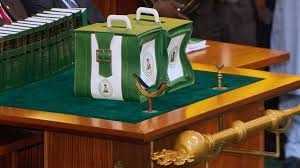
President Bola Tinubu recently presented the ₦58.18 trillion 2026 budget, tagged “Budget of Consolidation, Renewed Resilience and Shared Prosperity,” to the National Assembly, with defence and security, education and health emerging as top priorities.
Findings show that although infrastructure remains a key pillar of government expenditure, the ₦3.56 trillion proposed for 2026 is significantly lower than the amount earmarked in 2025, indicating a year-on-year decline in funding for roads, rail, power and other capital projects.
In the proposed budget, defence and security received the highest allocation of ₦5.41 trillion, followed by education with ₦3.52 trillion, while health was allocated ₦2.48 trillion. Overall capital expenditure stands at ₦26.08 trillion, with infrastructure accounting for a substantial but reduced share.
A further breakdown of security spending shows increased funding for the modernisation of the Armed Forces, intelligence-led policing and joint security operations, enhanced border security through technology-driven surveillance, as well as community-based peacebuilding and conflict-prevention initiatives.
Despite the reduced allocation, President Tinubu reaffirmed the government’s commitment to infrastructure development, stating that projects under the Renewed Hope Agenda are steadily moving from vision to reality across the country.
He highlighted progress in transport and energy infrastructure, port modernisation, agricultural reforms and strategic investments aimed at unlocking private capital, stressing that infrastructure remains critical to reducing the cost of doing business, expanding market access, creating jobs and improving the quality of life of Nigerians.
The 2026 budget is anchored on the 2026–2028 Medium-Term Expenditure Framework and Fiscal Strategy Paper (MTEF/FSP), which assumes a crude oil benchmark of $64.85 per barrel, daily oil production of 1.84 million barrels, and an exchange rate of ₦1,400 to the dollar.
The President also announced plans to end Nigeria’s long-standing practice of operating multiple budgets within a single fiscal year, noting that overlapping budgets have distorted planning and execution.
“There will no longer be the rolling over of budgets from March 2026,” Tinubu said, assuring lawmakers that all concurrently running budgets would be concluded by that date.
The post FG cuts infrastructure allocation in 2026 budget, prioritises security, human capital appeared first on Vanguard News.
