By John Alechenu
An Abuja-based Economist and Public Affairs commentator, Chief Peter Ameh, has warned that Nigeria’s current fiscal trajectory still poses significant risks to long-term investor confidence.
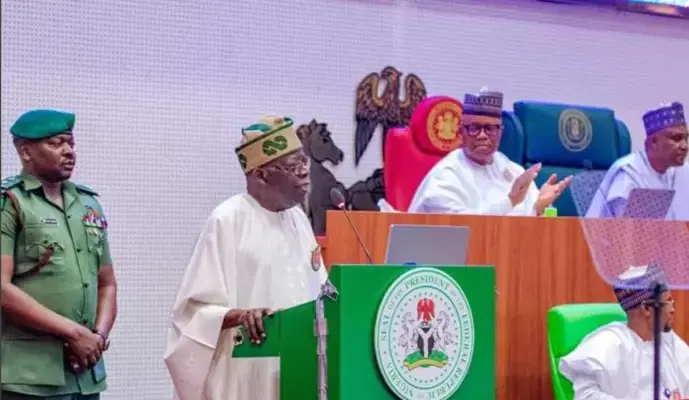
Ameh, who was responding to a question by Vanguard about the 2026 budget proposal presented by President Bola Tinubu to the National Assembly, on Friday, said the gap between figures reeled out and the reality on the ground called for concern.
He said, “I sincerely call for serious caution. The truth is, Nigeria’s current fiscal trajectory—marked by record revenues, ballooning expenditures, and escalating debt service—poses severe risks to long-term investor confidence and sustainable economic growth, even as short-term macro indicators show stabilisation.
“This macro triumph to my mind masks a dangerous disconnect. Explosive budgets—reaching ₦54.99 trillion for 2025 with proposals climbing higher—coupled with debt service consuming vast revenue shares, crowd out productive investments in infrastructure, security, and human capital.
“External debt servicing alone was in the billions in the first half of 2025, while domestic obligations continue to strain fiscal space.
“The implications for investor confidence are stark: While portfolio inflows dominate (over 90% of capital importation in early 2025, chasing high yields), genuine Foreign Direct Investment has plummeted—crashing 70% quarter-on-quarter in Q1—signaling deep caution over policy consistency, transparency gaps, and perceived “flip-flopping” on reforms. Hot money fuels stock market gains and reserve buffers but flees at the first sign of instability, leaving no lasting jobs or factories.
“For the larger economy, the fallout is catastrophic. Despite growth, poverty has soared to an estimated 139 million Nigerians in 2025—over 60% of the population—with food inflation and cost-of-living pressures eroding gains.
Insecurity hampers agriculture, unemployment lingers, and inequality widens, risking social inequality that could deter even speculative investors.”
Ameh further identified that the lack of transparency in budget execution, accountability in fund allocation, and occasional policy adjustments erode trust further.
Investors, he stressed, demand predictability; without it, Nigeria risks volatile capital flows and stalled diversification.
Suggesting a way forward, the analyst said, “There is a clear way forward: Prioritise fiscal consolidation by capping recurrent bloat and allocating 30-40 percent of budgets to capital projects in security, power, and agriculture.
“Enhance transparency through independent audits and digital tracking. Expand targeted social safety nets to cushion the vulnerable, building public buy-in for reforms. Resolve regulatory uncertainties to attract quality FDI in non-oil sectors.”
According to him, without urgent shifts to inclusive, transparent growth, investor confidence will remain fragile, and the economy’s potential will remain untapped. The people cannot wait; neither can sustainable prosperity.
He also expressed worry about the disappointing numbers coming out of the 2025 budget performance.
Ameh said, “With federal revenue severely underperforming in 2025. Finance Minister Wale Edun disclosed that, while the government had projected ₦40.8 trillion in revenue to support the year’s approximately ₦54.9 trillion “Budget of Restoration,” current trends suggest actual inflows will likely total only around ₦10.7 trillion—a shortfall of about ₦30 trillion.
“This gap, attributed mainly to weak oil and gas earnings and underperformance in other revenue streams, has raised concerns over fiscal sustainability and forced rollovers of capital projects into 2026.”
The post 2026 budget: Nigeria’s economy still poses significant risks – Economist appeared first on Vanguard News.
