
Editor’s Note: Find all of The Atlantic’s “Best of 2025” coverage here.
On the small screen, 2025 was all about money—the ostentatious peacocking of wealth on shows such as Sirens, And Just Like That, Selling Sunset, and With Love, Meghan; the spiraling production costs of episodes themselves; the politicized wrestling over which megacorporation will take over Warner Bros. Discovery and its TV arms, including HBO. CBS canceled The Late Show With Stephen Colbert, in what seemed to many critics like an obvious sop to the Trump administration, ahead of Paramount’s $8 billion merger with the production company Skydance. ABC briefly pulled Jimmy Kimmel Live off the air, until public outrage mounted to such an extent that the market value of Disney, its parent company, fell by $4 billion. It’s hard to remember another time when the line between profiteering and entertainment has felt quite so porous.
With all of this in mind, the television series we loved most this year exemplified and defended the medium’s artistry, demonstrating what can be done with serialized storytelling, ingenuity, and ambition. They leaned into topical flash points and dispensed with bland distraction. During a stretch when so much felt resolutely mid, these shows were anything but.
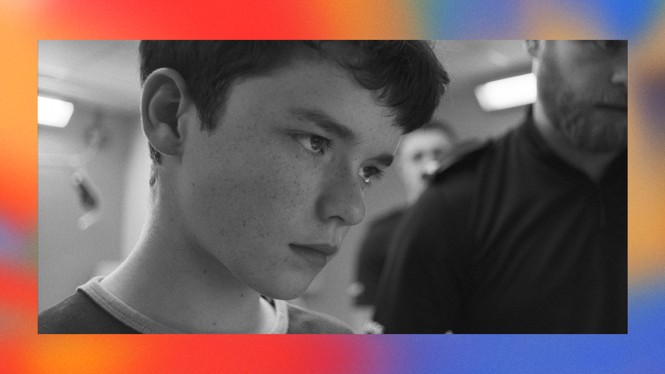
Adolescence (Netflix)
Adolescence opens with a photo of a chubby-cheeked boy posing for a first-day-of-school photo, his hair cowlicked, his face proud. From that image onward, the show insists on the point that this boy—named Jamie (played by Owen Cooper), now 13 and accused of murdering a classmate—could be anyone’s child, even yours. The immersive miniseries, created by the playwright Jack Thorne with the actor Stephen Graham (who stars as Jamie’s father, Eddie), is filmed in a series of continuous shots: We follow the police into Jamie’s bedroom; we watch Eddie recoil from his son after realizing what Jamie has done; we learn more, as children are interviewed and footage is revealed, about what’s happened, but only fragments of why. The third episode, in which Jamie is gently interrogated by a psychologist (Erin Doherty), is excruciatingly tense; it’s also revelatory, in the bleakest way possible. If Jamie is a monster, Adolescence posits, he’s the kind that implicates everyone. — Sophie Gilbert
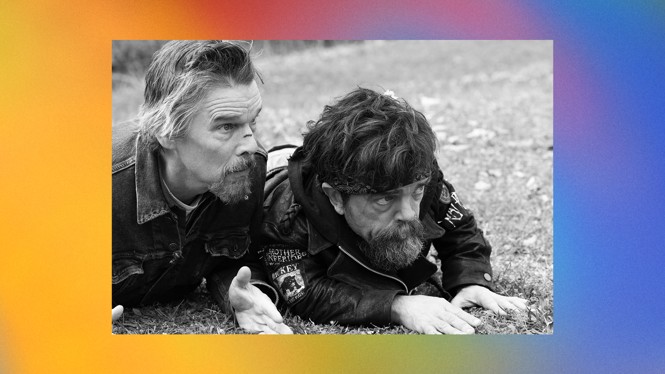
The Lowdown (FX)
With apologies to Ethan Hawke, part of the pleasure of watching The Lowdown comes from seeing how his character takes a beating. Lee Raybon, a used-book-store owner and self-proclaimed “truthstorian,” tends to chase risky scenarios without fully thinking things through, but getting hurt only assures him he’s on the right track. Created by the Reservation Dogs showrunner Sterlin Harjo and set in present-day Tulsa, Oklahoma, The Lowdown is a shaggy neo-noir that understands the appeal of a scrappy troublemaker. During his investigation into what he believes is a murder plot involving a powerful family, Lee pinballs around his surroundings and runs into all kinds of eccentric locals, played by an ensemble of excellent character actors. The result is a kinetic watch, anchored by a top-notch Hawke, bruises and all. — Shirley Li
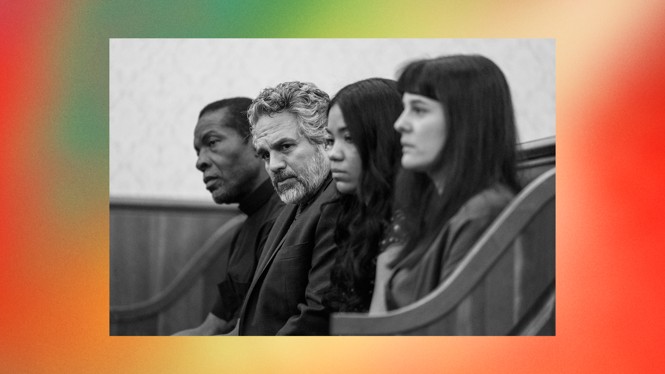
Task (HBO)
What does it mean to be a man? The Mare of Easttown creator Brad Ingelsby’s newest show—also set in Delaware County, and also fascinated with the flaws and vulnerabilities of tight-knit communities—contrasts the lives of two very different male figures set on a collision course. Tom Brandis (Mark Ruffalo) is a former priest turned grieving FBI agent; Robbie Prendergrast (Tom Pelphrey), a single father who robs drug houses, is his latest target. Over seven episodes, Task considers the two antagonists’ oppositional responses to tragedy while also sketching out the world around them: a fentanyl-trafficking biker gang, local and federal law enforcement, a 21-year-old trying to raise her younger cousins as best she can. Beautifully shot, and more propulsive the longer it goes on, Task interrogates masculinity without losing sympathy for any of its adherents. — S.G.
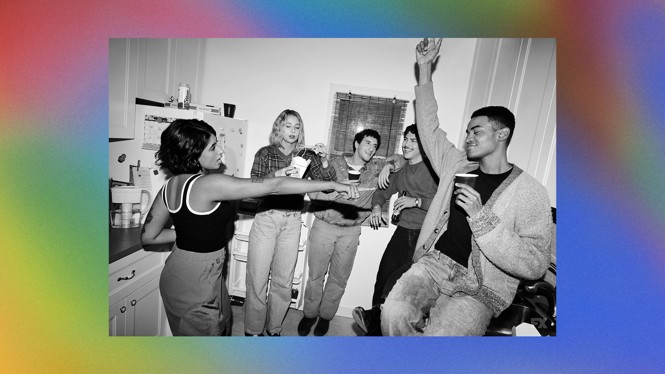
Adults (FX)
The ensemble at the center of Adults could easily be called the Gen Z Ross, Rachel, Monica, Chandler, Joey, and Phoebe. But what differentiates the series from that other New York–set comedy about 20-somethings is the fact that, to borrow a little more from Friends, these characters knew life was gonna be this way. They feel pressured to get serious but struggle to navigate the ever-changing expectations of growing up. Is it more important to stand out or be liked at the office? Which is harder: paying off deep medical debt or getting on the phone to dispute the costs? The season’s highlight involves a character totally unprepared to throw the dinner party she’s hosting, only for a much older guest to be the one who embarrasses himself the most. That’s the fun of Adults: The titular group may be striving for maturity, but the show understands that adulthood can be a moving target. — S.L.
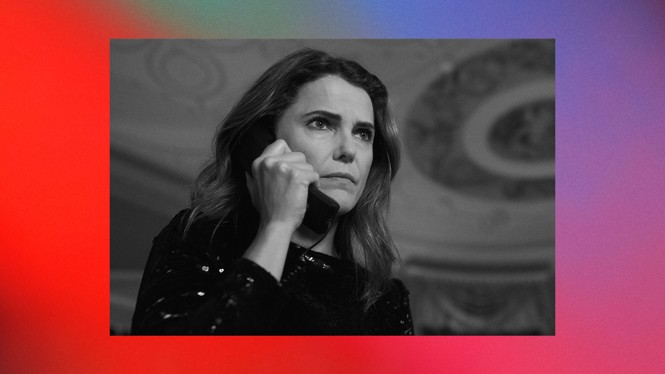
The Diplomat (Netflix)
I have a soft spot for any show willing to consider women in positions of power, and Season 3 of The Diplomat offers up two of them: In addition to Keri Russell’s brilliant, unkempt, impossibly charming Kate Wyler, the American ambassador to the United Kingdom, there’s Allison Janney’s icy Grace Penn, now—thanks to her predecessor’s heart attack—promoted to president of the United States. Can the two find common ground? The Diplomat reliably examines all of our most special relationships, understanding that marriage can sometimes feel no less complicated, ambitious, and humbling than statecraft. There are twists galore, but I liked the smaller moments—such as Bradley Whitford’s wacky contentment as first gentleman, and Kate’s MacGyvered costume change for Grace’s first presidential appearance. — S.G.
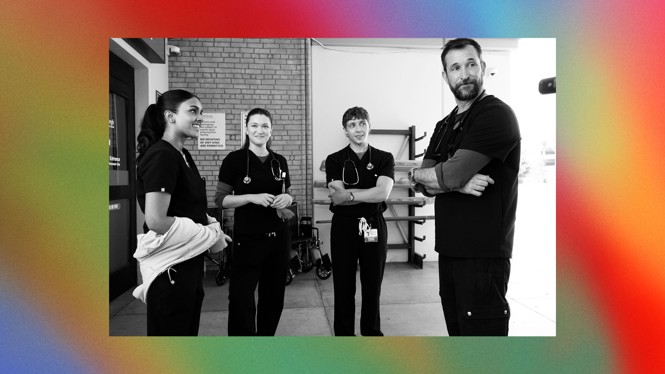
The Pitt (HBO Max)
At their best, hospital procedurals maintain a curious balance: They combine the stress of seeing patients suffer with the pleasure of watching competent doctors. In its first, Emmy-sweeping season, The Pitt perfected that formula. Starring the ER alum Noah Wyle as Dr. “Robby” Robinavitch, a physician still reeling from the trauma of the coronavirus pandemic, the drama follows a sprawling ensemble of emergency-room workers over the course of a single shift. The real-time framework gives viewers an intimate look at the people who trickle in and out of the facility with various maladies—some comical, others terrifying. Through it all, Wyle’s lived-in performance grounds the stakes in the doctors’ emotional reality, keeping The Pitt focused on what it takes to be in the business of saving lives. — S.L.
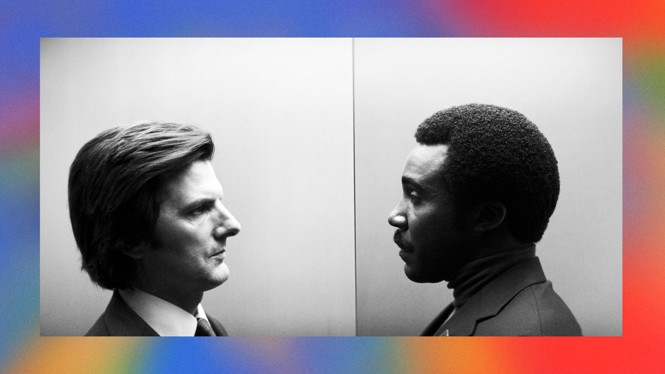
Severance (Apple TV)
Goats. Ether. Doppelgängers. Animatronic deities ushered in to music by the Alan Parsons Project. Severance is a weird trip; Season 2, which came three years after the show’s premiere and took us on frozen waterfall hikes and into secret pastoral laboratories, was no exception. Unlike most puzzle-box shows, though, the series sometimes offers answers as to WTF is actually going on at Lumon Industries. Season 2 develops the relationship between Innie Mark S. (Adam Scott) and Helly R. (Britt Lower) while continuing the investigation into what happened to Mark’s not-actually-dead wife, now imprisoned on a secret floor at Lumon and undergoing a series of agonizing emotional trials. Stylized to a modernist extreme, Severance looks cold to the touch—which is why it’s always surprising when the show reveals a little of its heart. — S.G.
[Read: Severance can’t save you]
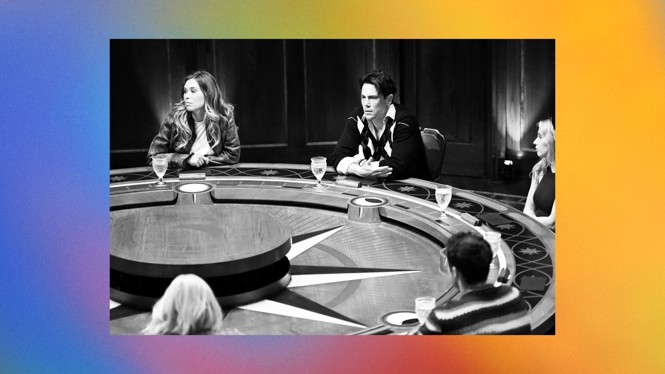
The Traitors (Peacock)
Most reality shows rely on a simple conceit: Dozens of men vie for the affections of one woman; strangers become roommates; a famous-enough family gives audiences a glimpse into their life. The Traitors seems just as uncomplicated at first, thrusting its contestants—many of them veterans of other unscripted series such as Big Brother and the Real Housewives franchise—into a game of Mafia for a cash prize. But the competition toys with reality-TV tropes, borrowing from and satirizing the genre itself. The result, much like the host Alan Cumming’s eye-popping wardrobe, is delightfully over-the-top. This year, many of the designated “traitors” and “faithfuls” entered the castle with established rivalries and reputations—think Tom Sandoval of “Scandoval” fame, or “Boston Rob,” a notoriously crafty Survivor winner—boosting the mischief and melodrama. As my colleague Megan Garber put it, this is “hyperreality TV.” — S.L.
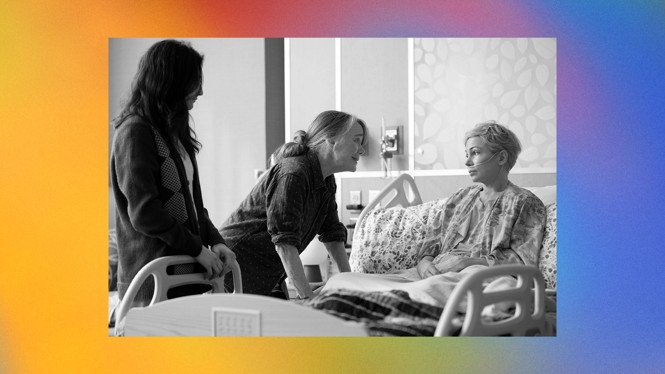
Dying for Sex (FX)
“Are you on some kind of sex quest?” Gail (Sissy Spacek) asks her daughter, Molly (Michelle Williams), midway through Dying for Sex, as the pair sit in a hospital waiting room. And the answer is: yes. Molly, given a terminal-cancer diagnosis, is enraged by how little she’s actually lived—and thus decides to venture out on a boundless journey of sexual exploration, aided by her best friend, Nikki (Jenny Slate). What makes the show work is Williams’s wide-eyed guilelessness as Molly; she is in some ways liberated by the finality of her illness, approaching dating apps and novel kinks with the positivity of a Disney princess and the enthusiasm of a sailor on shore leave. After a lifetime of quieting her desires, she’s finally able to look inward. Molly’s closeness with Nikki also upends ideas about which relationships can mean the most to us in the end. — S.G.

The Rehearsal (HBO)
As a comedian, Nathan Fielder tends to push every gag to its furthest extreme—which is why, in some ways, the fact that he turned the second season of The Rehearsal into an extended attempt to prevent all future airline disasters isn’t that surprising. But the show, in which Fielder stages elaborate practice sessions for ordinary people facing uncomfortable scenarios, offers an array of unexpected twists. In one episode, Fielder has pilots judge a singing competition; in another, he tries to embody Captain “Sully” Sullenberger, who famously landed a passenger jet on the Hudson River. The Rehearsal’s sophomore outing became unforgettable television because it was often hard to tell what kind of television it was: comedy? Drama? Reality TV turned performance art? No one really knows except Fielder himself. Perhaps that’s what made the show irresistible. — S.L.
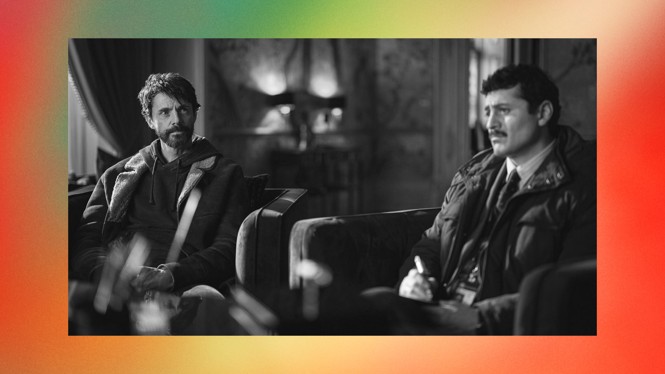
Dept. Q (Netflix)
It feels like not much can surprise me anymore, at the end of this exhausting shocker of a year. But Dept. Q, Scott Frank and Chandni Lakhani’s Scotland-set procedural thriller, delivered a truly jaw-dropping narrative turn at the end of the first episode and then never let up on the suspense. Matthew Goode is in fine misanthropic form as Detective Carl Morck, a police investigator left traumatized and surly after being shot during a case. His boss tasks him with reinvestigating lost-cause cold cases, a thankless job that leads him to a compelling mystery; meanwhile, his therapist (Kelly MacDonald) struggles to get him to open up about his PTSD. Dept. Q’s tone is mordant and its imagination can be monstrous, but like any good crime show, it knows who its heroes are and the reassurance we get from them. — S.G.
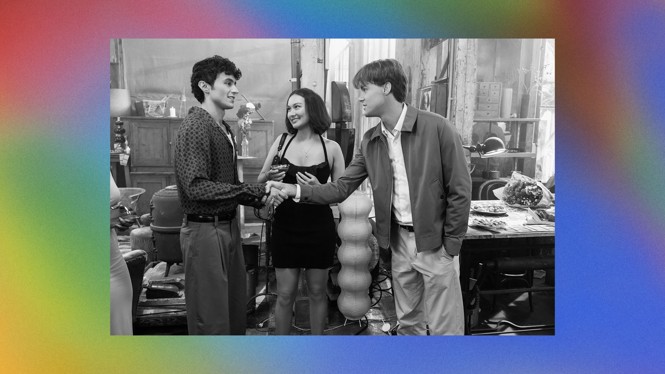
The Summer I Turned Pretty (Prime Video)
The 21-year-old college student Belly (Lola Tung) is just so torn: between marrying the hot but immature Jeremiah (Gavin Casalegno) and reigniting her relationship with his hot but moody brother, Conrad (Christopher Briney); between staying in a picturesque vacation town and studying abroad in the equally picturesque Paris. Her turmoil may seem inconsequential, but in its final season, The Summer I Turned Pretty turned into appointment viewing, even for many older viewers. This adaptation of Jenny Han’s best-selling young-adult novels scratched an itch for the teen melodramas of yesteryear—The O.C., Dawson’s Creek. The series takes its heroine’s emotional crossroads seriously while offering the fantasy of life lived in a perpetual glow, as sweet as a peach bought off a stand on the side of the road. — S.L.

North of North (Netflix)
Siaja (Anna Lambe)—plucky, loving, and prone to pratfalls—is a classic sitcom heroine in an underutilized setting: Canada’s Arctic territories, where she lives in a tiny Inuit community with her vain, selfish husband (Kelly William) and her young daughter. By the end of the series premiere, after realizing how small her life has become, Siaja leaves her husband (in painfully public fashion) and sets out on a mission to make something of herself. “You’re acting like a white girl with options,” her mother, Neevee (Maika Harper), tells her. Nevertheless, Siaja is convinced that she can forge her own path. North of North pays painstaking attention to the details of life in Nunavut, and the icy landscapes are gorgeous on-screen. But Siaja’s relatability, and her unflagging optimism, is what really sells the series. — S.G.
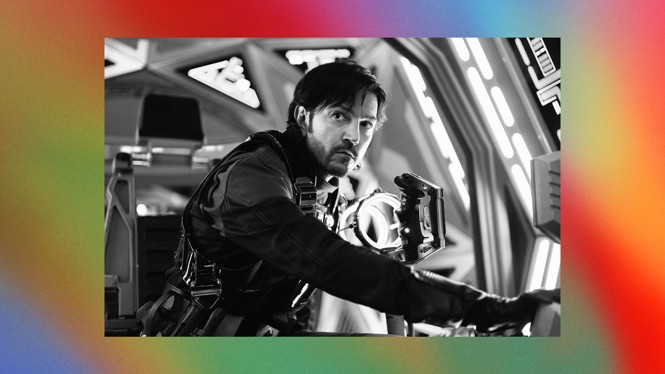
Andor (Disney+)
The second and final season of the most mature Star Wars show moves at light speed compared with the first, the plot leaping forward a year in time every three episodes: Newly introduced characters disappear; planets that seem pivotal to Cassian (Diego Luna) and his mission to help the Rebellion aren’t visited again. Yet Andor never feels unsteady. The Rogue One co-writer Tony Gilroy’s extended foray into a galaxy far, far away offers a stronger thesis than the average Star Wars spin-off: that the line between the dark side and the light can be terribly blurry. Perhaps the series, with its spy-thriller stylings, bold speeches, and lack of anything Jedi-related, isn’t really a conventional Star Wars story. It thoughtfully contemplates the painful reality of a conflict’s anonymous foot soldiers, who believe in, fight for, and sacrifice themselves for an ideology. In that sense, Andor conveys a force—lowercase f—all its own. — S.L.


