By Kennedy Mbele
President Bola Tinubu’s request for approval to deploy Nigerian military forces for peace mission in Benin Republic has been approved by the Senate.
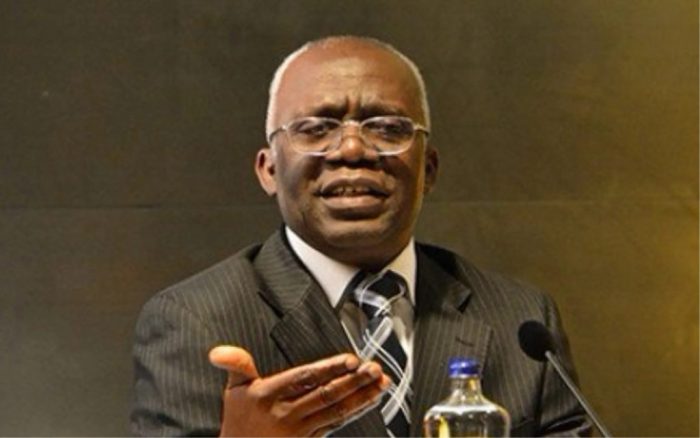
In this interview, first aired on Channels TV Politics Today, Mr. Femi Falana, SAN, takes a look at the legal, political and moral implications of the peace-keeping mission, noting that the environment must be conducive for coups to be stopped in Africa. Excerpts:
Legally speaking, is it proper for Nigeria to send troops to save the situation in Benin Republic?
I think there are two issues here. Whereas the Constitution has empowered the president to seek the consent of the Senate before declaring war against any country, what we are told now is that this is in line with the protocol on democracy and good governance of ECOWAS. Even at that, Section 12 of the Constitution equally requires the president to seek the authorization of the National Assembly to have any agreement domesticated. But, I think what has happened here is the situation whereby the events in Benin Republic have implications for the security of Nigeria. Therefore, Nigeria will intervene, but there are very serious moral and political problems.
Whereas the Senate has certified the intervention of Nigeria in Benin Republic, can you promote peace without justice? We had a meeting in Ghana last Saturday. We were celebrating Mohamed Ibn Chambas, a former president of ECOWAS, and a commissioner made a point that apart from Cape Verde and Senegal that have not experienced coup in West Africa, Ghana has joined the list of the few stable democracies in the region. Now for others, we have serious problems.
Therefore, if we are going to help another country to stabilize, you must ensure that democracy in your own country is institutionalised. What is going on in West Africa today is not just enough for the Senate to vote without analyzing what happened in Benin Republic. How did that country experience a coup in 2024 and a coup in 2025? In these neighbouring countries, even in Nigeria in October this year, there was an attempted coup, in Sierra Leone in December 2023, there was an attempted coup. Today, Guinea-Bissau, Mali, Niger, Burkina Faso are under the military.
Now, Benin Republic almost joined them. The rickety democratic systems in these countries might collapse and I mentioned Benin Republic where all the opposition figures are either in jail, on exile or in their graves. In Togo, since 1963, Eyadema the first and Eyadema the second have been in power. In July this year, Paul Eyadema or Nasigbe amended the Constitution of that country and removed term limit completely; no limitations as to how long he can be in power.
His father was in power from 1963 to 2005 and he has been in power since 2005; now 20 years. He has now amended the Constitution to allow him to remain in power indefinitely. The guy in Cote D’Ivoire, at the age of 83, has just been sworn-in for a 4th term. He manipulated the Constitution of that country to get himself in power for a 4th term.
How did he do it? He chained his opponents and banned them for contesting the election with him. This is the picture. Nigeria clearly has its job cut for it. If we want to stop coups, we must ensure that we allow political pluralism in Nigeria. You cannot have a situation where the country is becoming a one-party state. You want to explore democracy as it works.
There are more problems. So Nigeria has to put its house in order by allowing political pluralism. You must allow the opposition to be able to contest election in a credible manner, and this is the problem today in Africa, where you have a situation whereby the ruling parties, directly or indirectly, ban opposition political parties, render them impotent so that they cannot challenge you.
You know what has just happened in Zambia where Madam Hassan charged the opposition leader for treason. In Uganda, Museveni, who has been in power since 1986, decided to abduct the opposition leader and have him driven recklessly to Kampala where he was charged before a tribunal.
Are you worried that the coup in Benin Republic may not be the last?
No, it won’t be the last. I am familiar with the political terrain. I am telling you,
once you put your opposition leaders in jail, you send them on exile or you kill them, you cannot have political stability and that is what is going on in Benin Republic where those in power have driven opposition political parties out of …
Is there any similarity to what is happening in Nigeria?
Nigeria has a challenge more than any of these countries to stabilize the region and, it has to do that effectively as Nigeria has done in the past, whether you want to talk about Sierra Leone or Liberia where Nigeria contributed immensely to the restoration of democracy or even in Gambia where Nigeria, in 2017, intervened and ensured that the man involved was treated like a bull in china shop.
Even currently there is a new development in Africa whereby one president saw that he was losing election, and what did he do? He called his friends in the military, the military wing of his political party to take over power. Right now, the opposition leader in that country, Fernando Dias da Costa is currently holed up in our embassy in that country.
Nigeria has insisted that his life must be saved, but we are also insisting that the result of the election that has been concluded according to former President Jonathan must be released. In the case of Nigeria, because we are part of the region, the military guys meet regularly in conferences and whenever they discover that the economy is in a bad shape, they discuss them.
So, the people are unhappy, what saved Patrice Talon for now was that people did not troops to the street, if that had been so, it would have been difficult for French and Nigerian troops to stop the coup whereas in the cases of Niger, Burkina Faso and Mali, even Guinea, people trooped to the street to welcome the political opportunists in uniform.
So, if we want to have political stability in Nigeria, you must address crisis of the economy, you must address poverty, you must address illiteracy, you must address security of lives and property. You must ensure that the political space doesn’t shrink.
As it is now, we have the shrinking of political space; that must stop. There must be freedom of expression. You can’t be charging people with all manner of offenses just for expressing their views about the affairs of their country. And, more importantly, the Independent National Electoral Commission, INEC, must open the political space and allow ideologically based political parties to be registered and challenge the status quo. Right now, INEC is not prepared to open the political space.
Why is President Tinubu giving special attention to the coup in Benin Republic unlike the previous ones in the neighbouring countries?
This is not the first time it has happened. In 2010, then Prime Minister of Sao Tome and Principe was visiting Nigeria when President Obasanjo was in charge. He was in Abuja when there was a report of a coup in that country. President Obasanjo told the coup leaders: “You had better hand over and disappear from the Presidential Villa, otherwise I will send a battalion to remove you and other rascals from power”. They had to leave for fear that Nigeria might invade their country.
Already, you are aware of Sierra Leone and Liberia, Charles Taylor was brought to Nigeria before he was handed over to the special court. He was brought to Abuja. Nigeria has been playing this role. So, we intervened in all cases. But, what has happened like I said is that Benin Republic is different from Niger, different from Burkina Faso and different from Mali.
Once the people troop out, it is difficult for the invader to invade any country because you are to fight the people who are on the street, not just the coup plotters isolated on Sunday. So you need to study what happened on Sunday. In the case of Niger, in the case of Burkina Faso, in the case of Mali, people were on the streets to protest against any invasion.
So, the challenge before our civilian governments, democratic governments is to ensure that you don’t play into the hands of military opportunists who are waiting to take advantage of mass discontentment and disenchantment to take over power.
The post Benin Republic: How African leaders play into the hands of coup plotters —Falana appeared first on Vanguard News.
