From last week continues the narrative on the emergence of Dr Moses Majekodunmi as administrator of Western Nigeria following the declaration of emergency rule. It also highlights the intrigues involved in the emergence of Olu of Warri, as well as the rivalry between NCNC and the Action Group.
Olu of Warri Kingdom with the title Ogiame Erejuwa II. He succeeded his father Ginuwa II as Olu. Ginuwa II was a great grandson of Olu Akengbuwa the last Olu who died in 1848, he was crowned in 1936 after an interregnum that lasted 88 years when Warri’s political leadership was dominated by merchant princes.
Erejuwa was born in 1908 as Wilson Gbesimi Emiko, he attended a CMS missionary school at Ogbesse, thereafter he did business with United African Company rising to become a provincial cooperatives president. Warri was the capital township of Warri Province, a colonial administrative unit with Warri Division as a sub-unit consisting of Warri Township, Sapele and Forcados.
The government decision led to protest led by non-Itsekiri groups within Warri Division who feared the title could lead the Olu to lay claim as paramount authority within Warri Division. The title had always been “the Olu of Warri before it was changed to Olu of Itsekiri in 1936 to pacify the Itsekiri neighbours who had always feared Itsekiri domination by their very influential king. But the Itsekiri had used every civilized forum to protest this anomaly until 1952 when the title was reverted to its original status of Olu of Warri.
As Olu of Warri, he was appointed regional Minister without portfolio and president of the Warri Divisional Traditional Council.
Following unhealthy rivalry between prominent Itsekiri leaders in the Action Group and the NCNC in the lead to the creation of a Mid-West region, Erejuwa, who perceived to have backed Action Group, was deposed by the NCNC led regional government in 1964 and deported to Ogbesse. He was re-appointed in 1966 by the new military government of David Ejoor after some of the prominent Itsekiri leaders in the NCNC had been taken out by the emerging military government.
On September 26, this year, President Bola Ahmed Tinubu, GCFR, attended the coronation of the Olubadan of Ibadan, Oba Rashidi Adewolu Akanmu Ladoja, ARUSA I. The governor of Oyo state, Seyi Makinde gave the Oba, the staff of Office. Laudable words were uttered by both the President and the governor on the preservation of the institution of traditional rulers in the country. They are mere words. Traditional rulers have no role in our present-day democracy. Let any of them cross the redline, he will be reminded instantly that he is under a director in the state’s Ministry of Local Government and Chieftaincy Affairs and he will be queried accordingly. That is the sad aspect of our constitution.
An example was when the Central government took action on the Ooni of Ife, Oba Okunade Sijuwade (1 January 1930 – 28 July 2015) and the Emir of Kano, Alhaji Ado Bayero (25 July 1930- 6 June 2014) in 1984. They were restricted to their domain and had their international passports seized by the military government of General Muhammadu Buhari.
This action was taken after the Ooni and the Emir of Kano, Alhaji Ado Bayero, made an unauthorized trip to Israel in 1984, which was against the policy of the military government at the time. They were essentially placed under a travel ban and confined to their respective local government areas for a period of six months as a form of government sanction.
The Deji of Akure, Oba Oluwadamilare Adesina was removed by the then Ondo state governor, Olusegun Rahman Mimiko, for allegedly smacking his wife, Eze of Akaeze, Joseph Okor was dethroned in 2022 by the Ebonyi State Government for drunkenness, Onojie of Uromi, Anslem Aidenojie was suspended and later dethroned in Edo State for abusing a woman and showing disrespect to constituted authorities, Baabe Kingdom Chief, Monday Frank Noryea was removed by the Rivers State Governor for alleged cult-related activities, etc.
While in other countries of the world, the culture of the people is being sustained by the role of their traditional rulers ours has been completely deleted. They numerous with no schedule.
To be concluded
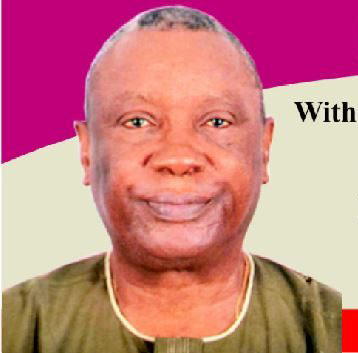
•Teniola, a former director at the Presidency, wrote from Lagos.
The post Assessing the relevance of traditional rulers (4), by Eric Teniola appeared first on Vanguard News.
