*60 princes jostle for the stool
By James Ogunnaike, Abeokuta
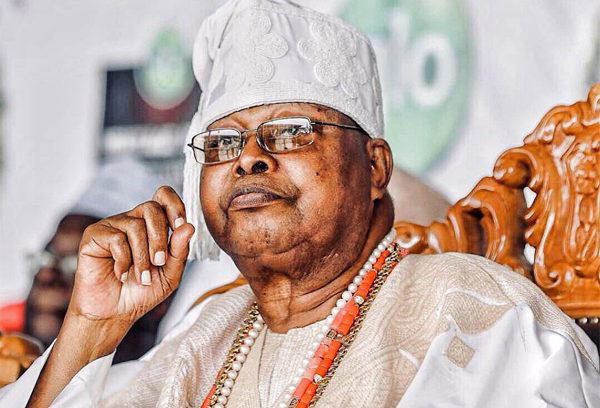
Five months after the passing of Oba Sikiru Kayode Adetona, the revered Awujale of Ijebuland who ruled for 65 years, the ancient city of Ijebu-Ode remains in anxious anticipation of his successor. The question is not merely who will ascend the vacant throne, but how a deeply respected institution—one that has shaped Ijebu identity for centuries—will navigate succession in a modern, legally complex era.
What should ordinarily have been a dignified and orderly transition has instead evolved into a maze of legal interpretations, government intervention, intra-family rivalry and public speculation. At the centre of the storm is an unprecedented surge of interest: no fewer than 60 princes from the Fusengbuwa Ruling House are reportedly vying for the Awujale stool.
The throne became vacant on July 13, 2025, following the death of Oba Adetona at the age of 91. His reign, one of the longest in Nigeria’s traditional history, brought stability, prestige and global recognition to Ijebuland. But its sheer length also meant that many procedural memories of succession faded into the archives, leaving gaps that have now fuelled confusion and controversy.
The succession process formally commenced on December 2, when the Ijebu-Ode Local Government Area issued a letter directing the Fusengbuwa Ruling House—whose turn it is under the rotational system—to submit names of candidates within 14 days. Interest surged almost immediately. Meetings were scheduled, consultations intensified, and the list of aspirants grew daily.
However, just as the ruling house fixed December 15 for its nomination meeting, the process was abruptly halted. The Ogun State government intervened, suspending the meeting and later ordering a complete restart of the selection process.
According to the State Commissioner for Local Government and Chieftaincy Affairs, Hon. Ganiyu Hamzat, the move was not interference, but a corrective step, explaining that due process was not followed, as the ruling house ought to have formally notified the local government of its readiness, which would then inform the relevant ministry for authorisation before the process could commence.
Those procedural lapses, the government argued, could lead to litigation. That concern was echoed by the Chairman of the Fusengbuwa Ruling House, Otunba Abdulateef Owoyemi, a former president of the Institute of Chartered Accountants of Nigeria (ICAN), who said the postponement was necessary to avoid mistakes that could drag the stool into prolonged court battles.
“This is about getting it right. It has nothing to do with any individual,” Owoyemi said.
The Vice Chairman of the ruling house, Prof. Fassy Yusuf of the University of Lagos, confirmed that the government convened a meeting involving the ruling house, kingmakers, the local government and the Awujale Interregnum Committee to ensure strict compliance with the 2021 Obas and Chiefs Law and the 1957 Chieftaincy Declaration governing the Awujale stool.
At the heart of the unfolding drama is the sheer scale of interest. The reported 60 aspirants—an unprecedented number in recent memory—include professionals, politicians, technocrats and traditional figures, underscoring both the prominence and diversity of the Fusengbuwa lineage.
Among those said to have signified interest are Adewale Alausa, Prince Ademola Aderibigbe, Prince Taiwo Otun, Hon. Olaseni Otun, Otunba Sakiru Bello, Prince Olawale Yusuf Oriola, Prince Adeleke Adeyemi Akeem, Prince Adekunle Agbasale, Prince Adewale Adekoya Ayodele, Otunba Fatai Arowolo, Prince Adeleye Lateef, Prince Adeyemi Oduwole, Prince Onabanjo Oladayo, Prince Odunowo Adebowale Emmanuel, Prince Adegbenro Bello and Prince Adewale Ayoola Olasupo Bello, among others.
Strict protocols were outlined for the postponed nomination meeting, including accreditation of family members, proper nomination and seconding of aspirants, and conduct befitting the sacredness of the process. Yet even before nominations could begin, speculation and controversy took centre stage.
An interesting development in the process was the declaration of interest of popular Fuji musician, Alhaji Wasiu Ayinde (KWAM1). The Fusengbuwa leadership however declared he is not a member of the ruling house and therefore ineligible. More troubling were allegations that the state government and some actors within the ruling house were attempting to impose a predetermined candidate. Government officials have however strongly denied the claims.
Just as the selection process was stalled, another dramatic twist emerged. The Fidipote Ruling House wrote to the Ijebu-Ode Local Government, arguing that Fusengbuwa had forfeited its turn by failing to submit candidates within the stipulated 14 days. Citing the Ogun State Chieftaincy Law 2021 and the Awujale Chieftaincy Declaration, Fidipote claimed the right to present its own candidates.
The state government, however, swiftly rejected the claim. Commissioner Hamzat stated unequivocally that the selection process had not commenced and that the government would formally reply to Fidipote’s letter.
Amid the uncertainty, respected voices in Ijebuland have called for restraint. The Baamofin of Ijebuland, Barrister AbdulWasiu Oduwole, urged government neutrality and warned kingmakers against corruption. “Their responsibility is sacred,” he said. “No moneybag should be allowed to hijack the process.”
He reaffirmed that the law clearly outlines rotation among the four ruling houses and recognises legitimacy, not gender, as the determining factor. He also disclosed that he had released archival documents entrusted to him decades ago to guide the Fusengbuwa family at a time such as this.
Beyond personalities and rumours, the Awujale succession has become a test case for balancing tradition with modern governance. Critics fear erosion of autonomy but the government insists the law must prevail.
For now, everything is on hold. The initial directive has been withdrawn and a fresh authorisation is being awaited while the princes, kingmakers and people of Ijebuland watch closely.
When the drums finally sound for a new Awujale, many hope the rhythm will speak not of division, but of unity, legitimacy and honour—worthy of a throne whose history is still unfolding.
The post After 65 years of stability, Awujale throne triggers unprecedented succession storm appeared first on Vanguard News.
