5 min read
US Supreme Court declares Trump’s tarrifs on Nigeria, others illegal
vanguardngr.com
Friday, February 20, 2026
By Nkiruka Nnorom In a landmark judgment, the US Supreme Court yesterday struck down the sweeping global tariff imposed by President Donald Trump last year, declaring the duties imposed on Nigeria and 184 other countries as illegal.Trump had on April 2, 2025, in what he tagged Liberation D...
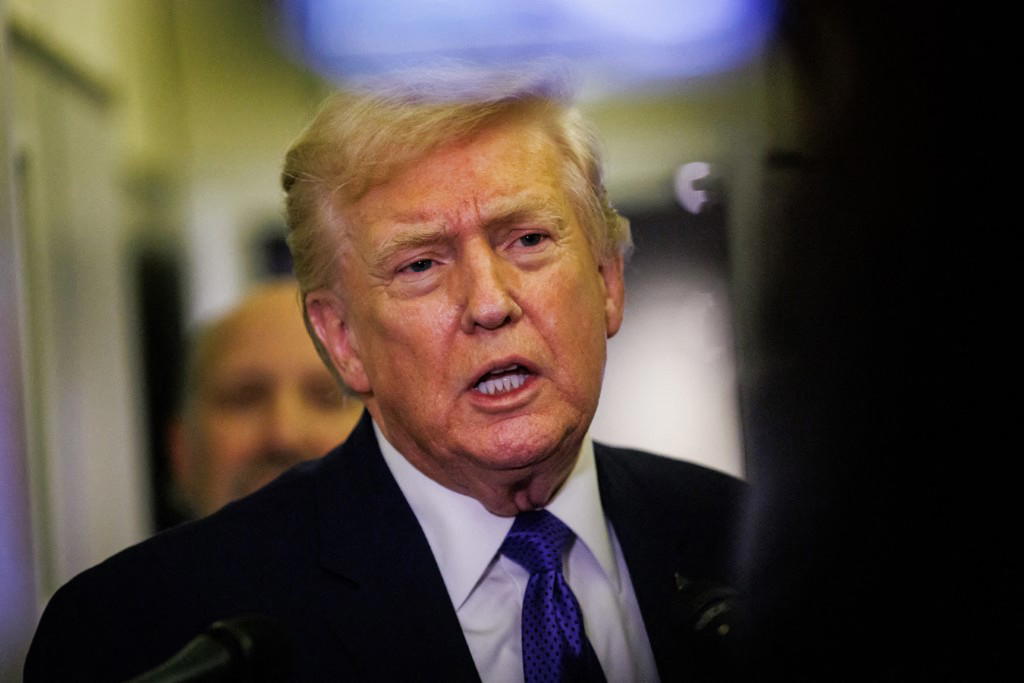
By Nkiruka Nnorom
In a landmark judgment, the US Supreme Court yesterday struck down the sweeping global tariff imposed by President Donald Trump last year, declaring the duties imposed on Nigeria and 184 other countries as illegal.
Trump had on April 2, 2025, in what he tagged Liberation Day, imposed a 10 percent baseline tariff on imports from all countries, with additional country-specific “reciprocal” tariffs ranging from 11 percent to 50 percent on countries with significant trade deficits with the US, relying on a 1970s-era emergency law, the International Emergency Economic Powers Act (IEEPA), which allows a president to regulate importation during emergencies.
The administration imposed 15 percent tariffs on Nigeria.
The tariffs were aimed at countering what Trump saw as unfair trade practices, targeting countries such as China (34%), Cambodia (49%), and Japan (24%).
The tarrif war that later ensued, Trump raised duties as high as 50 percent on key trading partners, including India and Brazil, and as high as 145 percent on China in 2025.
The administration had argued that the word plainly includes the power to impose tariffs, but the businesses that sued on the legality of the duties noted that the words tariff or duty never appear in the law.
However, under a 6-3 majority, the Supreme Court held that Trump exceeded his authority when he relied on a law reserved for national emergencies to impose the tariffs.
They held that the president required Congressional approval to impose import levies, arguing that the emergency authority Trump sought to rely on “falls short.”
They, however, stated that the ruling applied only to his Liberation Day tariffs, rather than to the individual tariffs he imposed on specific countries or products.
Delivering the ruling, which has now been described as a major setback to Trump’s second-term agenda and economic policy,
Chief Justice John Roberts, who delivered the main opinion, said that allowing Trump’s administration to prevail with its tariff agenda “would replace the longstanding executive-legislative collaboration over trade policy with unchecked Presidential policymaking”.
He dismissed the argument from the administration that the president had the power to use tariffs to regulate commerce
“The president asserts the extraordinary power to unilaterally impose tariffs of unlimited amount, duration, and scope,” Roberts wrote for the court. “In light of the breadth, history, and constitutional context of that asserted authority, he must identify clear congressional authorization to exercise it.
“The President must point to clear congressional authorization to justify his extraordinary assertion of the power to impose tariffs. He cannot,” Roberts said.
“When Congress grants the power to impose tariffs, it does so clearly and with careful constraints,” Roberts wrote. “It did neither here.”
“We claim no special competence in matters of economics or foreign affairs,” Roberts wrote. “We claim only, as we must, the limited role assigned to us by Article III of the Constitution. Fulfilling that role, we hold that IEEPA does not authorize the president to impose tariffs.”
No clarity on returning money collected
Meanwhile, the court did not offer any clarity on the return of money already collected through the tariffs.
As of December 14, the federal government has collected $134 billion in revenue from the tariffs challenged by over 301,000 importers, according to United States Customs and Border Protection data and a recent filing submitted by the agency to the US Court of International Trade.
In his dissent, Justice Brett Kavanaugh noted that the court said “nothing today about whether, and if so how, the government should go about returning the billions of dollars that it has collected from importers.”
“That process is likely to be a ‘mess,’” Kavanaugh wrote.
Most significant case on the US economy in years
The case was the most significant involving the American economy to reach the Supreme Court in years, challenging the legality of Trump’s “Liberation Day” tariffs and the duties he imposed on imports from China, Mexico and Canada.
At stake were tens of billions of dollars in revenue that the government has already collected.
Trump and Justice Department officials framed the dispute in existential terms for the country, telling the justices that “with tariffs, we are a rich nation” but that without them, “we are a poor nation.”
A group of small businesses that challenged the duties similarly warned that Trump’s position represented a “breathtaking assertion of power” to effectively levy a tax without oversight from Congress.
Trump offered several counterarguments, most notably that the tariffs implicate foreign affairs, a realm in which courts have traditionally referred to the executive branch.
Other options open to Trump to levy tariffs
The president has other, more established authorities to levy tariffs without congressional input. But each of those comes with strings attached, such as time limits, that would make it harder for Trump to pursue his on-again-off-again strategy of raising and then lowering barriers as a negotiating tactic.
A provision of law, for instance, clearly allows a president to raise tariffs, but only up to 15 percent for a maximum of 150 days.
Another authority gives the president the power to impose higher tariffs for national security reasons, but it can only be used to target specific industries and requires an investigation by the Commerce Department.
Every lower court that has reviewed Trump’s emergency tariffs found they violated federal law, though for different reasons. In one case, led by a New York-based wine importer called V.O.S. Selections, the US Court of International Trade concluded in May that IEEPA didn’t authorize Trump’s emergency duties. That decision was affirmed months later by an appeals court in Washington, DC.
In a separate case, an Illinois-based educational toy company, Learning Resources, sued in a federal district court in Washington, which also ruled against Trump. The case quickly went to the Supreme Court, leapfrogging the DC Circuit.
The courts in both cases temporarily put their rulings on hold, allowing the administration to continue collecting the tariffs while the appeals played out.
The post US Supreme Court declares Trump’s tarrifs on Nigeria, others illegal appeared first on Vanguard News.
Read the full article
Continue reading on vanguardngr.com
More from vanguardngr.com

6 minutes ago
В МВД сообщили о борьбе с площадками по распространению персональных данных

7 minutes ago
Prefeitura instala armadilhas contra o mosquito da dengue

7 minutes ago
На ГУМ-Катке в Москве прошел благотворительный хоккейный матч

8 minutes ago