13 min read
Electoral Act: Hide-and-seek game in Abuja as Reps avoid joint meeting
vanguardngr.com
Tuesday, February 17, 2026
By Prince Osuagwu, Clifford Ndujihe & Henry Umoru ABUJA — The meeting of the Conference Committee of the Senate and House of Representatives on the Electoral Act (Repeal and Re-enactment) Bill, 2026, was suddenly shifted to late night yesterday, following the failure of members of the Hous...
By Prince Osuagwu, Clifford Ndujihe & Henry Umoru
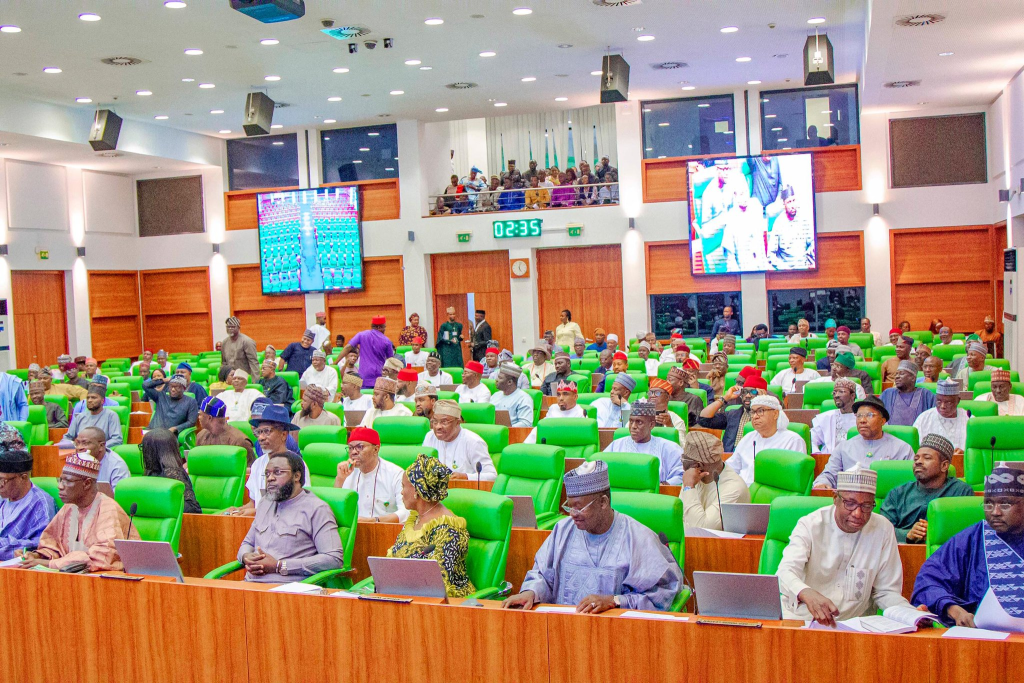
ABUJA — The meeting of the Conference Committee of the Senate and House of Representatives on the Electoral Act (Repeal and Re-enactment) Bill, 2026, was suddenly shifted to late night yesterday, following the failure of members of the House of Representatives in the committee to formally sit and brainstorm to reach any conclusion, ahead of today’s plenary.
This comes as pressure mounts on the Independent National Electoral Commission, INEC, exactly 368 days to the February 20, 2027, general elections, to ensure that electronic transmission of results is seamless, transparent and legally unassailable, unlike the controversy that trailed the 2023 presidential poll.
Vanguard gathered that the meeting did not take place as planned for 11am due to the absence of key members, particularly from the House of Representatives.
A highly-placed member of the committee told our correspondent bluntly: “How can there be a conclusion when the meeting failed to hold?”
The lawmaker, however, declined further comments before members present finally left the venue.
According to a source, some senators arrived at the venue at the scheduled time of 11:00 am and waited, but no Reps member was present.
It was learned that the two chairmen of the Electoral Committees, Senator Simon Lalong, for the Senate and Adebayo Balogun for the House were, however, present.
After waiting for several minutes, the senators were said to have moved to Senator Lalong’s office and 20 minutes later, reconvened and agreed to reschedule the meeting for 3:00 pm.
By 3:30 pm, some senators, including Jibrin Isah, Abba Moro, and Tahir Monguno, were seated, but there was still no member of the House of Representatives at the venue. Vanguard gathered that at about 4:00 pm, Senator Lalong arrived, and was later joined by Balogun, his counterpart in the House of Reps, still without other House committee members.
The two leaders briefly entered a closed-door discussion lasting about 10 minutes before dispersing, effectively ending the day without any harmonised position.
Night meeting convened
A source told Vanguard that with this development, a night meeting was convened outside the National Assembly complex, precisely at the Senate President’s Lodge in Maitama late last night in a last-minute rush to align positions before today’s plenary session.
The harmonisation committee is expected to reconcile differences on 20 clauses, as well as the explanatory memorandum and the long title of the bill.
The most contentious of the clauses remains Clause 60(3), which addresses the electronic transmission of election results.
Meanwhile, following controversies generated by the National Assembly’s ongoing amendment of the Electoral Act that is expected to be resolved today by the National Assembly. One question on the lips of observers is: Can INEC deliver glitch-free electronic transmission of results?
This issue overshadows campaign rhetoric and coalition talks as political alignments gather momentum ahead of the 2027 general elections.
Indeed, the renewed debate on electronic transmission of election results has returned Nigeria to where it was in 2021, prior to 2023 elections that brought in the administration of President Bola Tinubu.
The pessimism from the National Assembly at the time was that Nigeria was not ready in terms of telecommunications infrastructure to provide the country with a good national spread for the electronic transmission of election results.
The National Assembly, argued that adequate telecoms infrastructure was a sine qua non to achieving seamless electronic transmission of results.
It even went as far as getting the Nigerian Communications Commission, NCC, to corroborate its stand.
When invited by NASS to give insight on the issue, the Executive Commissioner, Stakeholder Management, Adeleke Adewolu, said less than half of the polling units in the country had the needed network coverage for election results.
His counterpart and Director, Technical Services, Ubale Maska, corroborated his stand, revealing that a 2018 NCC survey discovered that 50.3 per cent of the polling units in the country had 3G network and others were in 2G, while some didn’t have coverage at all.
However, telecom operators insisted that based on their network investments, Nigeria can do a successful electronic transmission of election results.
Some telecom engineers also berated both Adewolu and Maska, labelling their positions inaccurate and deceitful.
In fact, some telecom engineers told Vanguard then that it requires just a 2G network, which was pervasive in the country, to do an effective transmission of election results.
At the end, the voice of those who favoured that the country is ready for electronic transmission of election results prevailed and the National Assembly passed into law the bill to adopt electronic transmission of election results.
However, barely five years later, the debate has resurfaced. This time, while the House of Representatives passed the bill making electronic transmission of results from polling units mandatory, the Senate took a cautious stand that due to inadequate spread of telecom infrastructure and incessant electricity grid collapses, making electronic transmission mandatory would disenfranchise many eligible voters.
Nigeria has capacity for real-time e-transmission – Telcos
Here again, the telcos, including MTN Nigeria, Airtel, Globacom and T2 Mobile, have dismissed the excuses as half-truth.
They challenged the Senate to get accurate information from the telcom regulator, the NCC, rather than dishing out information that would not hold water in today’s telecom development.
Senate’s claim’s incorrect – ALTON
Chairman of the Association of Licensed Telecom Operators in Nigeria, ALTON, the umbrella body of the telcos, Engr Gbenga Adebayo, told Vanguard that any information about the telecom infrastructure and country coverage not emanating from the NCC could not be relied upon.
His words: “Upon which survey or statistics is the Senate coming up with its position of inadequate telecom infrastructure? As we speak today, over 70% of the country is covered with 3G and 4G, and 5G have about 11% coverage and the rest is 2G.
“Even in reality, 2G is strong enough to transmit results electronically. I do not know where the Senate is getting its information but we can’t take that blanket ban on electronic transmission based on a half-truth about our infrastructure and investments.
“We agree that there are just maybe about two states that, due to insurgency, that our members cannot risk going to maintain facilities. But that is what all stakeholders can sit together and decide how to cover those places. It’s not enough to say the country is not ready for electronic transmission.’’
Adebayo‘s position tallies with that INEC, which in 2022 dismissed the fears, saying where there were network challenges, results uploaded to iREV would transmit once the machines were within areas with network coverage.
INEC has funds to make e-transmission seamless – Wey
Also, renowned tech expert, Ebenezar Wey, in his comment on the issue, said: “The Senate knows very well that if they call on a tech person, whether a corporate tech expert or one that works as a government official, to confirm the viability of the networks and the possible alternatives that exist, no tech person will say electronic transmission cannot be done.
“There are various alternatives to the GSM Networks, and the funding that INEC receives is more than enough to make it happen.
“There are satellite networks, Starlinks, and even the old-fashioned WAN, which can be built to connect all polling units to the central server
“Also, every tech person knows you must build redundancies into anything you are building, ask any serious bank with multiple branches and millions of bank account holders in Nigeria, and they will confirm that they have multiple alternatives when it comes to making their networks and services available to their customers via broadband, and they do these things at a fraction of the budget of INEC.
“So, why can’t INEC do the same for far more connections/people who would be on the networks on election day?
“There’s no excuse that can stand from the point of technology at this time, none. The game being played by the politicians is that of self-preservation because they know that the social contract between themselves and their constituents has been shattered a long time ago.”
When Vanguard sought the opinion of the regulator, the NCC, the commission refused to join issues with either the position of the Senate or the telcos.
However, a senior official of the commission, who pleaded anonymity, said: “These are political times and you can expect political statements and we are apolitical. But between you and I, the telcos have made enough investments that can get the country to do many things better than other countries we are emulating.”
The Nigerian telecom sector has seen significant improvements since 2021, driven by investments and government initiatives, including Network Optimisation and Base Station Deployment.
Operators, such as MTN Nigeria and Airtel Nigeria, have invested heavily in network expansion, with MTN committing N565.7billion in H1 2025 for fibre-to-the-home expansion, rural connectivity, and network densification. Airtel Nigeria activated 2,300 new telecom sites in Q1 2025.
In terms of area coverage, they have seen broadband penetration cross the 50% mark, with over 109.6 million subscriptions by December 2025, up from 96.3 million in 2024.
The Federal Government says it aims to achieve 80% national connectivity by 2027.
The telcos have also spurred investments industry-wide, exceeding $1billion in 2025, targeting fibre roll-out, new base stations, and upgrades to 4G and 5G networks. They have also promised to invest even more this year
The driving factor to some of these developments include the government’s project bridge, which is a national effort to expand fibre-optic infrastructure from 35,000 km to 125,000 km.
The Local Government 774 Connectivity Programme is another driving factor, and aims to support telemedicine, e-education and fintech services.
The integration of satellite broadband with the national fibre backbone to reach under-served areas also directs telcos’ investments into the satellite market.
The telcos are saying instead of agonising over inadequate telecom infrastructure, which in itself is a false narrative, the Senate should spur policies and legislation that would see several of the sector’s myriad of challenges mitigated, so election result transmission would not become a subject of debate again in the future.
Some of the solutions include reducing infrastructure vulnerabilities such as fibre cuts, vandalism and power disruptions which weaken the system, inflate costs and slow expansion. The Federal Government should see to strict enforcement of critical national assets status of the industry facilities.
They challenged the Federal Government to also ensure a stop to the regulatory fragmentation which is rife in the sector. There are multiple levies, right-of-way charges, and inconsistent policies which drive up costs.
For them, if these and other measures are taken, everybody will be on the same page, rather than divide on debates in every election circle on the viability of seamless electronic results transmission.
Hurt of 2023 glitches
For many Nigerians, memories of the 2023 presidential election remains fresh, not because of accreditation failures, but delayed uploads to the INEC Result Viewing portal, IReV, which ignited suspicion, street anger and prolonged courtroom battles.
The Supreme Court ruled that the absence or non-availability of the presidential election results on the IReV portal was not a valid legal ground to annul or nullify the election of President Bola Tinubu.
The court held that IReV is a public viewing portal, not a collation or collation system. Its purpose is to provide transparency by showing results to the public, but its malfunction or failure doesn’t stop the legal collation process or invalidate the election.
The Supreme Court also interpreted the Electoral Act to mean that INEC has the legal discretion to decide the mode of transmitting results. The law does not mandate electronic transmission through IReV for results to be valid.
In dismissing the appeals by Mr Peter Obi of the Labour Party, LP, and Alhaji Atiku Abubakar of Peoples Democratic Party, PDP, the court reaffirmed that the petitioners failed to prove that INEC’s failure to transmit to IReV substantially affected the outcome of the presidential election.
Though the Supreme Court settled the legal contest, the political and psychological debate never truly ended.
Now, 2027 presents INEC with what analysts describe as a credibility referendum.
The 2023 exercise, conducted under the watch of former INEC Chairman, Mahmood Yakubu, was praised for innovations such as the Bimodal Voter Accreditation System, BVAS.
However, delays and inconsistencies in uploading polling unit results to the INEC Result Viewing portal, IReV, triggered widespread suspicion, litigation and political recriminations.
In 2027, a host of analysts argue that restoring public confidence in electronic transmission might determine not only the credibility of the poll but also the stability of the polity.
Political analyst, Dr. Jide Ojo, said “the issue is no longer whether technology should be used. The issue is whether the technology will work transparently and consistently across the board.”
What must change before 2027
To ensure hitch-free e-transmission, some stakeholders have urged infrastructure upgrade, insisting that INEC must invest in dedicated and mirrored servers; real-time failover systems; and cloud backup across multiple locations.
Telecom experts argue that election-day data traffic should be prioritised by service providers to prevent network congestion. “There must be redundancy. Elections are like banking peak periods; you don’t experiment on the day of the event,” said a Lagos-based IT consultant.
Legal clarity on real-time transmission
Despite provisions in the Electoral Act 2022, ambiguity over the timing and enforceability of electronic transmission created disputes in 2023.
Civil society organisations are urging the National Assembly to explicitly mandate real-time transmission; define consequences for failure to upload; and eliminate discretionary interpretations
A senior official of the Nigerian Bar Association said: “Where the law leaves grey areas, politics fills the gap. That must not happen in 2027.”
Nationwide stress testing
Observers recommend that INEC conduct public simulation exercises months before the election, inviting political parties, civil society, media, and Independent IT auditors.
Such transparency, they argued, would pre-empt allegations of last-minute system failure.
BVAS upgrade and staff training
While BVAS reduced multiple voting, improper handling and weak connectivity slowed uploads in some polling units.
INEC sources said that subject to the approval of the commission’s combined N1.044 trillion for 2026 and 2027, improvements were underway to enhance image compression speed, strengthen battery life, and improve offline storage capability.
Also, beyond hardware, experts have called for intensive training and certification for ad hoc staff.
Real-time public monitoring
Another proposal gaining traction is the creation of a live dashboard showing polling units that have uploaded results; time stamps of transmission; areas experiencing delays. Indeed, analysts said transparency remained the antidote to suspicion.
Trust deficit
Beyond infrastructure and legislation, analysts warned that the core challenge is trust.
Dr. Abubakar Kari, a political scientist, observed: “Technology does not fail in isolation; institutions fail when citizens do not trust them. INEC must over-communicate and over-demonstrate transparency.”
He added that silence during technical disruptions in 2023 worsened public anxiety. ‘’Thus, the task for INEC in 2027 is clear. It must build resilient systems; clarify the law; engage stakeholders; and communicate transparently.’’ Anything short of this, stakeholders warned, could reopen old wounds.
Whether 2027 becomes a redemption story for Nigeria’s electoral technology or a repeat of controversy will depend on actions taken long before the first vote is cast.
The post Electoral Act: Hide-and-seek game in Abuja as Reps avoid joint meeting appeared first on Vanguard News.
Read the full article
Continue reading on vanguardngr.com


