13 min read
Electoral Act harmonisation: Reps under pressure to abandon compulsory e-transmission of results
vanguardngr.com
Monday, February 16, 2026
By Soni Daniel, Henry Umoru, John Alechenu & Gift ChapiOdekina Tension is rising in the nation’s legislative arena as the two chambers of the National Assembly meet today to take a common position on the method of election result transmission from polling centres to the Independent Nationa...
By Soni Daniel, Henry Umoru, John Alechenu & Gift ChapiOdekina
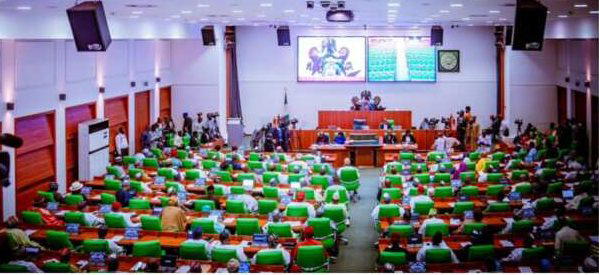
Tension is rising in the nation’s legislative arena as the two chambers of the National Assembly meet today to take a common position on the method of election result transmission from polling centres to the Independent National Electoral Commission’s result portal.
The 24-member committee, made up of 12 each from the Senate and House of Representatives, converge on NASS today to finalise their position on the controversial issue, which almost threw the chambers into chaos last week until the senators summoned an emergency meeting to assuage Nigerians with a slightly different position from what they had earlier adopted.
But ahead of the meeting, intense lobbying as to which version of the proposed amendment should be adopted, has begun in earnest, spiking the potential of the lawmakers taking a position dictated by the All Progressives Congress, APC, which controls both chambers of NASS.
Findings by Vanguard in Abuja revealed strong indications that the adoption of the Senate version of Section 60 (3) of the Electoral Act, which provides for both electronic and manual transfer of election results, is being vigorously pursued by the ruling party.
This, it was gathered, is to align with what some argue was in line with the interest of the APC.
It was gathered that the APC leadership appears more comfortable with the Senate’s version which allows for some flexibility in electronic transmission of election results.
This version includes a caveat that could potentially create loopholes, unlike the House version, which is seen as more rigid and potentially favour the opposition.
The Senate version removes the “real-time” requirement, allowing presiding officers to transmit results at their discretion, and designates manual Form EC8A as the primary source in case of communication failure.
In contrast, the House version mandates real-time electronic transmission, which civil society groups and opposition parties argue substantially reduces opportunities for manipulation, thus increasing transparency.
But many Nigerians fear the Senate version of the bill could lead to manipulation. For instance, the former Chairman of the Inter-Party Advisory Council, IPAC, Chief Peter Ameh, while speaking on the issue said: “The recent revision by the Nigerian Senate to Clause 60(3) of the Electoral Act Amendment Bill, which now permits the electronic transmission of election results from each polling unit only “provided the system does not fail,” represents nothing more than cosmetic tinkering with the existing law.
“There is no meaningful difference between this so-called “revised” clause and the previous ambiguous provision.
“The Senate has merely introduced a conditional escape hatch that guarantees continued confusion, manipulation and distrust in our electoral process.”
Although the ruling party enjoys a comfortable majority in both chambers, the party is leaving nothing to chance in its bid to have its way.
While the House of Representatives approved real-time transmission of election results from polling unit to IReV, the Senate also approved it but deleted the word “real time” and added a proviso that if communication network fails, the Form EC8A would be used for collation and declaration of results.
Insiders say while the 12 House members on the 24-man committee are insisting on the version passed by the House which enjoys the buy-in of opposition parties and civil society groups, the Senate team is pushing for the version passed by the Red Chamber.
Senator Seriake Dickson, has since voiced his support for the House version of the contentious Section 60 (3).
At a press conference in Abuja last week, Dickson urged members of the conference committee to, among other things, “go into that conference and adopt the House version. You should adopt the House version in its entirety.”
According to him, the House version represents the letter and spirit of the consensus reached by the joint committees of the National Assembly, consultants and the Independent National Electoral Commission, INEC.
He said: “That version was what the joint committees and all of us, consultants and even INEC itself, assured us at the community interaction level of their capacity to transmit electronically.”
While taking issues with the Senate proviso, the opposition senator described Section 60 (3) as “a very crucial clause” which “was deliberated upon and agreed unanimously at the joint committee level but was rejected and instead a similar clause with less potency and clarity in the previous law was brought back,”
Speaking in a similar vein, Senator Natasha Akpoti-Uduaghan said: “Real-time electronic transmission of election results is a critical step toward deepening transparency, preserving the sanctity of the people’s mandate and restoring public confidence in our electoral process.
“Our democracy must continue to evolve with systems that ensure every vote truly counts and every voice is faithfully represented.”
Majority’ll havfe its way — Harmonisation c’ttee members
A member of the harmonisation committee, who pleaded anonymity for fear of sanctions, said: “We are in a democracy and in accordance with the dictates of this game, the minority will definitely have their say but the majority as always, will have their way.
“Both chambers are controlled by the APC. Whichever version is chosen at the end of the day must enjoy the buy-in of our party before it becomes law. Let me put it on record, our party is not afraid of any political contest, we are sure we have performed and we will win in 2027.”
With what played out in the Senate on Tuesday, it was a signal to the fact that the APC wants that of the Senate to be adopted, using its numerical strength at the Upper Chamber, just as at the moment, the APC has 80; PDP 21; NNPP 1; APGA 1; LP 2 and ADC 1 and with the composition of the Senate conference committee, using loyalty to the position of the party, the ruling party will win as, out of twelve, it has nine members as against the opposition’s three.
It is very clear that the ruling party in Nigeria and with the body language of the President of the Senate, Senator Godswill Akpabio; his deputy, Senator Jubrin Barau, the Senate leader, Senator Opeyemi Bamidele; the whip, Senator Tahir Monguno and others, are carrying out the position of the Senate and that is the direction majority of members of the committee in the Senate will push.
In this case, the opposition parties in the Senate will only have their voices heard because the majority will surely have its way for transmission not mandatory and to remove real time with the excuse by the APC of no network connection, while the opposition is saying it’s not the position of the people.
The question is why is APC adopting online party validation/registration of members, while it is seemingly opposed to real time e-transmission of results?
Analysts say the clash reflects deeper political calculations ahead of 2027. For the opposition, mandatory real-time transmission reduces opportunities for post-poll alterations and strengthens public trust in the system.
APC lawmakers defend flexibility
Although the APC holds majority seats in both chambers, several of its lawmakers have defended the Senate’s more flexible framework.
A member of APC in the House, who does not want to be named, argued that the law must reflect Nigeria’s infrastructural realities, saying “we cannot legislate technology beyond our capacity. ‘’There are polling units where network connectivity is nonexistent. If you make real-time upload compulsory and it fails due to poor signal, do you void the election in that polling unit? We must be practical.”
Similarly, a senior APC member of the House Committee on Electoral Matters, Musa Adamu (APC, Kano) who noted that granting INEC discretion didn’t mean abandoning transparency, said: “Electronic transmission is not being removed. What we are saying is that INEC, as the implementing body, should determine how best to deploy technology without creating legal landmines.
‘’We do not want a situation where technical glitches become grounds to overturn legitimate votes. Managing party membership data and conducting a nationwide general election are not the same.
‘’One is internal administration; the other is a constitutional exercise involving 176,000 polling units. The scale and risks are different.”
APC lawmakers also dismissed accusations of double standards over the party’s embrace of online membership registration while hesitating on mandatory real-time result uploads.
Opposition insists on mandatory real-time uploads
Opposition lawmakers, particularly from People’s Democratic Party, PDP, have taken a sharply different stance, insisting that only mandatory real-time electronic transmission could guarantee electoral credibility.
Lawmakers from other opposition parties echoed same sentiments. On his part, Chinedu Okafor of Labour Party, LP, who warned that flexibility could be misinterpreted, said: “Every time you leave something to discretion, the public becomes suspicious. Make it mandatory. Where there is no network, provide satellite backup. Democracy must not depend on convenience.”
INEC caught in the middle
INEC officials have consistently maintained that the commission was committed to technological innovation which required clear legislative backing and adequate funding.
An APC member in the House of Representatives familiar with the negotiations, said the harmonisation committee might explore a compromise.
He said: “One option being discussed is mandatory upload where network exists, with clearly defined fallback procedures where it does not. The goal is to protect transparency without creating chaos.”
As the conference committee convenes, three possible outcomes loom: Adoption of the House’s strict real-time clause; endorsement of the Senate’s discretionary model; or a compromise, blending both approaches.
Whichever path lawmakers choose, the decision will shape not only the 2027 electoral framework but also public confidence in Nigeria’s democratic process.
At the end of Monday’s deliberations, Nigerians may have a clearer sense of whether reform will be anchored on transparency or tempered by political caution.
Empirical data guided our decision — Senate
Insisting on its position yesterday, the Senate explained that data helped in its decision to make the electronic transmission of election results discretionary, rather than mandatory.
It said further that the decision was based on the stark realities of the country and not on emotions or sentiment, after due consultation and engagement with principal actors in the country’s communications and power sectors, among others.
Senate Leader, Senator Opeyemi Bamidele, who said this in a statement issued by his directorate of media and public affairs, said by global standards, real-time electronic transmission of election results “may not be practicable at this stage of our development
Bamidele noted that lawmaking “comes with huge obligations globally and that the Senate cannot discharge such responsibilities to the detriment of the citizenry.”
The Senate Leader observed that Clause 60(3) of the Electoral Bill, 2026 “is an initiative that any legislature or parliament globally will have embraced ordinarily,” citing its potential to deepen trust in democratic institutions, especially the National Assembly and INEC.
He noted that the Senate looked at the other side of Clause 60(3) of the Electoral Bill 2026, revealing that the country’s communication and power infrastructure would not guarantee real-time electronic transmission of election results as envisaged by some stakeholders.
Citing data from the Nigerian Communications Commission, NCC, Bamidele said Nigeria had only achieved about 70% broadband coverage in 2025, while her Internet user penetration was only 44.53% of the population within the same timeframe.
Bamidele equally cited the Speedtest Global Index, which ranked Nigeria 85th out of 105 countries in mobile network reliability and 129th out of 150 countries in fixed Internet broadband reliability.
He said: “Based on the Speedtest Global Index, Nigeria’s mobile network reliability was 44.14 megabits per second. This is extremely low compared with UAE that has 691.76 mbps; Qatar with 573.53 mbps; Kuwait’s 415.67mbps; Bahrain’s 303.21 mbps and Bulgaria’s 289.41 mbps. The Index placed Nigeria far below global average.
“Nigeria’s fixed internet broadband rating is quite low by global standard. Out of 150 countries, Nigeria occupied 129th position with only 33.32 mbps. In this rating, Singapore came first with 410.06 mbps, followed by UAE’s 382.35 mbps; France’s 346.25 mbps, Chile’s 348.41 mbps; and Hong Kong’s 345.25 mbps.”
The Senate leader, also cited official data that revealed the state of power infrastructure, indicating that at least 85 million Nigerians “still lack access to grid electricity. This figure amounts to about 43% of the population.
“This shortfall speaks to the state of our power infrastructure. Even though our generation capacity hovers roughly between 12,000 and 13,500 megawatts, our distribution and transmission capacity is acutely limited.
‘’As we all know, it can only deliver 4,500 megawatts to households nationwide. But with the Electricity Act, 2025, our power sector will record significant growth from this financial year.”
With the conditions of the country’s communication and power infrastructure, Bamidele doubted the practicability of the real-time electronic transmission of election results, noting that making such a provision mandatory could plunge the country into a crisis.
By global standards, He said the real-time electronic transmission of election results “may not be practicable at this stage of our development. To avoid a situation that compounds our country’s woes, it is better we make it discretionary since Section 62(2) of the Electoral Act, 2022 has already established the National Electronic Register of Election Results.
“All these facts were before us for consideration before we initially decided to retain Section 60(3 $ 5) of the Electoral Act, 2022 in the interest of people and security. The data speak directly to the stark realities of our federation and not emotion or sentiment.
“We recognise that lawmaking globally comes with huge responsibilities. As representatives of the people, we cannot enact laws based purely on public emotion or sentiment. These are huge obligations the Constitution places upon us all, and we cannot discharge the responsibilities to the detriment of the citizenry.
“In democracy, lawmaking sits at the heart of public governance. Indeed, it is its lifeblood that freely flows in the veins of all public institutions. It does not respond to mere emotions or sentiments but to facts, proofs or realities that can define or distort the future of our political system.
‘’If our law does not capture the realities of the federation, then it is a script for anarchy or a ploy for instability. This deduction guided the decision of the Senate to redraft Clause 60(3 & 5) with a caveat, while at the same time addressing the concerns of our people nationwide substantially.
‘’The caveat, in this case, is the outright deletion of ‘real time’ from the clause, so we will not end up with an electoral governance framework that cannot respond to the stark realities of our fatherland.”
The post Electoral Act harmonisation: Reps under pressure to abandon compulsory e-transmission of results appeared first on Vanguard News.
Read the full article
Continue reading on vanguardngr.com
More from vanguardngr.com

5 minutes ago
La station de radio CHOC FM est paralysée par une cyberattaque

6 minutes ago
کشت شقایق الیفرا؛ جایگزینی برای تریاک یا تنها تکمیل درمان؟/ صفاتیان: بیماران تحت درمان با شربت تریاک میلی به مصرف قرص بوپرنورفین ندارند

8 minutes ago
تاخیر در آغاز به کار مدارس کرمان به دلیل گرد و غبار
8 minutes ago