6 min read
Mannat Gandotra: Painting At The Point Of Rupture
deccanchronicle.com
Sunday, February 15, 2026

Fresh from solo exhibitions with Ota Fine Arts and Half Gallery, Mannat Gandotra reflects on tension as a generative force. For the Royal College of Art graduate, a painting is not an image but an internal system negotiating its own near death and rebirth. Excerpts from a conversation : Your pa...
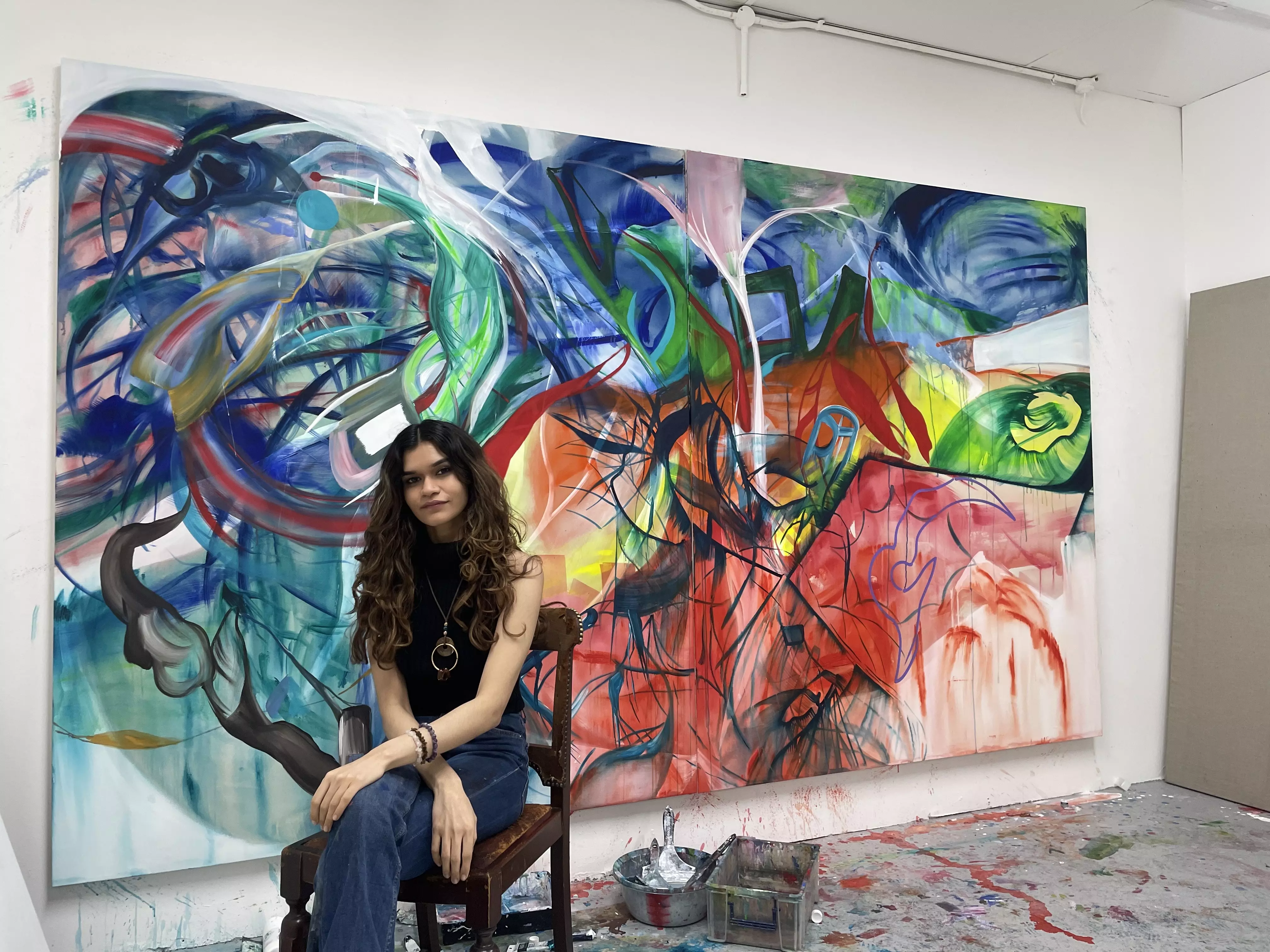
Fresh from solo exhibitions with Ota Fine Arts and Half Gallery, Mannat Gandotra reflects on tension as a generative force. For the Royal College of Art graduate, a painting is not an image but an internal system negotiating its own near death and rebirth.
Excerpts from a conversation :
Your paintings often feel on the verge of collapse. What draws you to that edge of instability while working?
I’m interested in the moment just before something collapses, the point of rupture I think of as the near-death of a painting. When a work is negotiating its own existence and destiny, it becomes far more engrossing, not as an image or depiction, but as an internalised system you can enter. Stability can feel decorative, even like a way of avoiding discomfort. I’m drawn to the opposite, allowing tension to remain. That discomfort keeps the work charged, tense, and pulsating.
These moments of climax, where the painting feels maximally charged, are not endpoints. It’s like the apex of a symphony, a moment of heightened intensity that is still only one note within a larger, unfolding composition. The line does not stop at the edge of the canvas, and colour does not resolve the image. Each work feels like a snippet taken from an ever-moving world, a brief glimpse into an internal system that continues beyond what we can see. The paintings operate as microcosms, but not closed ones.
Allowing that instability to persist is central to my painting. It keeps the work alive, and it reflects my own state of being, my sense of humanity.
You have spoken about jazz and atonality shaping your practice. How do you know when a painting has found its rhythm, even if harmony is broken?
I am not looking for rhythm or harmony in the traditional sense. Rhythm, for me, comes from the internal laws of the world I’m exploring rather than balance. I’m drawn to nature’s defiance of symmetry, to things that sit off-centre or feel unresolved yet still carry their own lyricism. There is poetry in that imbalance.
In jazz, dissonance isn’t a problem. It’s celebrated because it’s intentional and alive, and atonality only heightens that tension. The metaphor I often return to is a flowing river, a stream of consciousness shaped by repetition and by the way the hand moves and glides across the canvas. The forms, obstructions, and shifts in speed are what introduce resistance. What emerges is a friction between flow and interruption, between rhythm and disruption, and it’s that struggle that generates the system of the painting. For truthful rhythm, you need barricades.
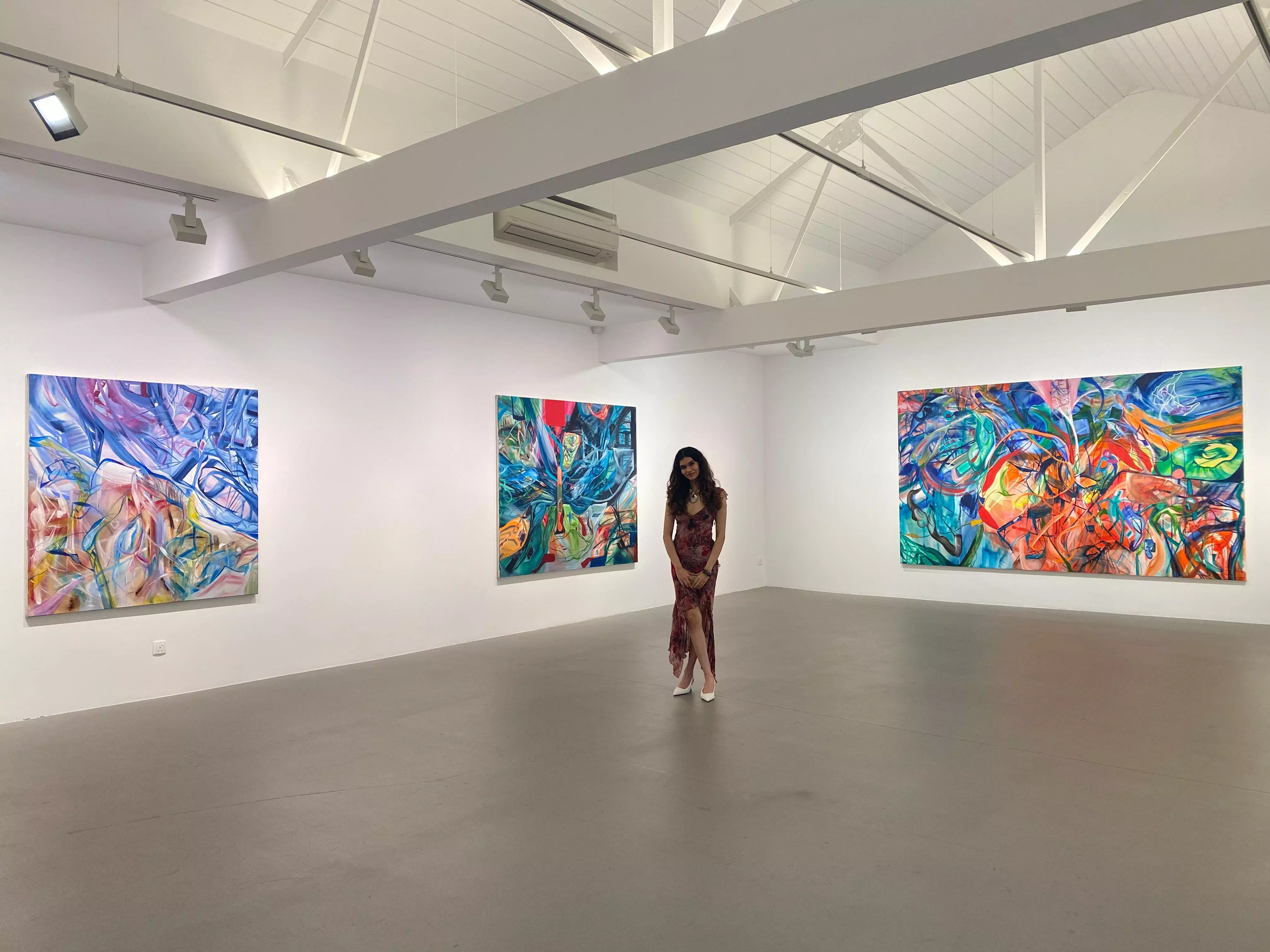
Ragamala painting translates sound into image in a very different cultural context. How do you navigate that lineage without becoming illustrative or nostalgic?
I’m not approaching Ragamala as a nostalgic reference point. What interests me is the systemic logic behind it, the organisation of mood, time, sensation, intensity, saturation, borders, and containment, without relying on depiction. Ragamala isn’t illustrative in its logic; it’s structural. I think of it almost as a sound system, and I engage with it as a way of thinking rather than a visual language to quote. That allows the work to stay present, rather than drifting into memory, revival, or becoming an ode to Ragamala itself.
Many of your works feel more like organisms than abstractions. At what point does a painting begin to assert its own will over yours?
Quite early, even before I start painting. The moment I assemble the wooden stretcher bars, it feels like constructing a skeleton. Stretching the cotton canvas over it feels like adding skin. At that point, the work already exists as an object, sitting in the room with its own presence.
That’s where the first ignition happens. Once a few decisions are made, it feels like striking a match. The fire is already there, and those initial points begin to guide the work. I don’t experience the process as asserting dominance over the painting. It feels collaborative, incident-driven, and at times the painting even feels as though it’s overpowering me.
I’m drawn to a panpsychic way of thinking, the idea that the painting has its own trajectory or predisposition. It tells me what it wants to become as much as I act upon it. The work starts to feel like its own organism, with its own internal logic, its own world. In that exchange, it can feel like your own aliveness is being reflected back at you.
I don’t think in terms of abstraction or figuration. The forms feel like organisms with their own emotions. They simply are.
It isn’t just the painting that feels sentient, but the line, colour, form and composition themselves. When I stop imposing and begin responding, the painting takes over. The process becomes cyclical, almost like a pilgrimage. It unfolds into what it needs to be, and it can never be recreated in the same way again.
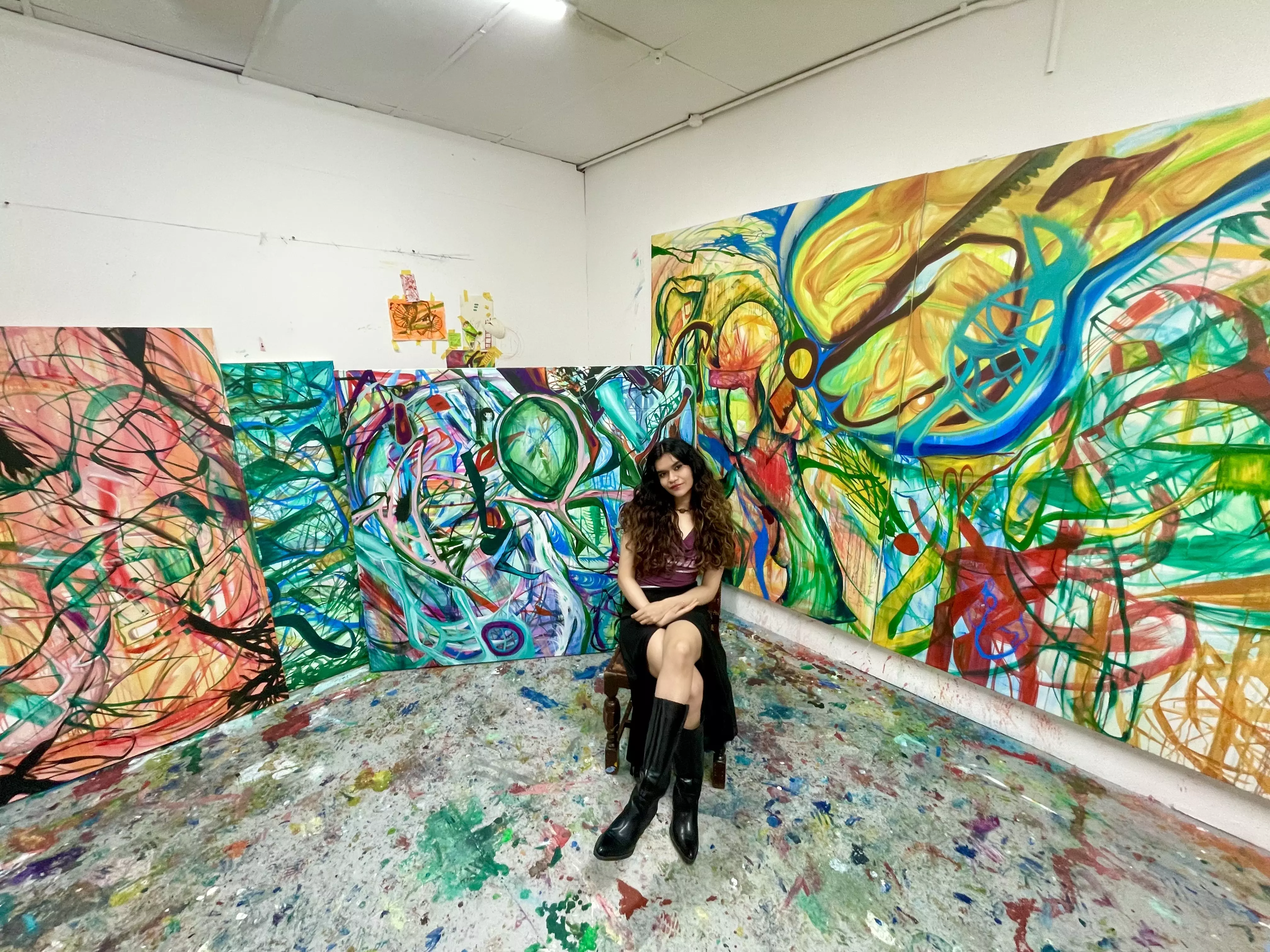
Having exhibited across Asia, Europe, and the US so early in your career, how has showing internationally changed the way you think about audience and meaning?
If anything, it has made me less preoccupied with the audience. I’ve seen that the work communicates through sensation before interpretation. People respond to pressure, density, and instability, even when cultural references differ. That has allowed me to trust the work more and explain it less. Over-intellectualising art isn’t necessary; it’s the emotive frequency that’s universal, felt not just across continents, but across timelines.
As a young Indian artist trained abroad, do you feel a pressure to represent something, or has your practice moved beyond that frame altogether?
I’m conscious that Western art systems often turn cultural differences into something legible and consumable. That can create pressure for artists working abroad to lean heavily on identity as a way of being understood. For me, that approach feels limiting. It would be strange to position my work between categories and then rely on a single label to hold it in place.
I’m Indian, I’m a woman, I’m a painter. Those realities stay with me. The question is how much I depend on them to explain the work. I’m more interested in painting as a thinking process than in representation as a strategy.
Read the full article
Continue reading on deccanchronicle.com


