4 min read
Book Review | Cultural Milestone In Corporate Law
deccanchronicle.com
Saturday, February 14, 2026

Akshay Jaitly’s narration of the formation of Trilegal, is more than just “the making of a modern Indian law firm,” as he describes it. It has the potential to serve as a plinth for the future of corporate legal practices in India, paces ahead of what vanilla litigators assume would be their work...
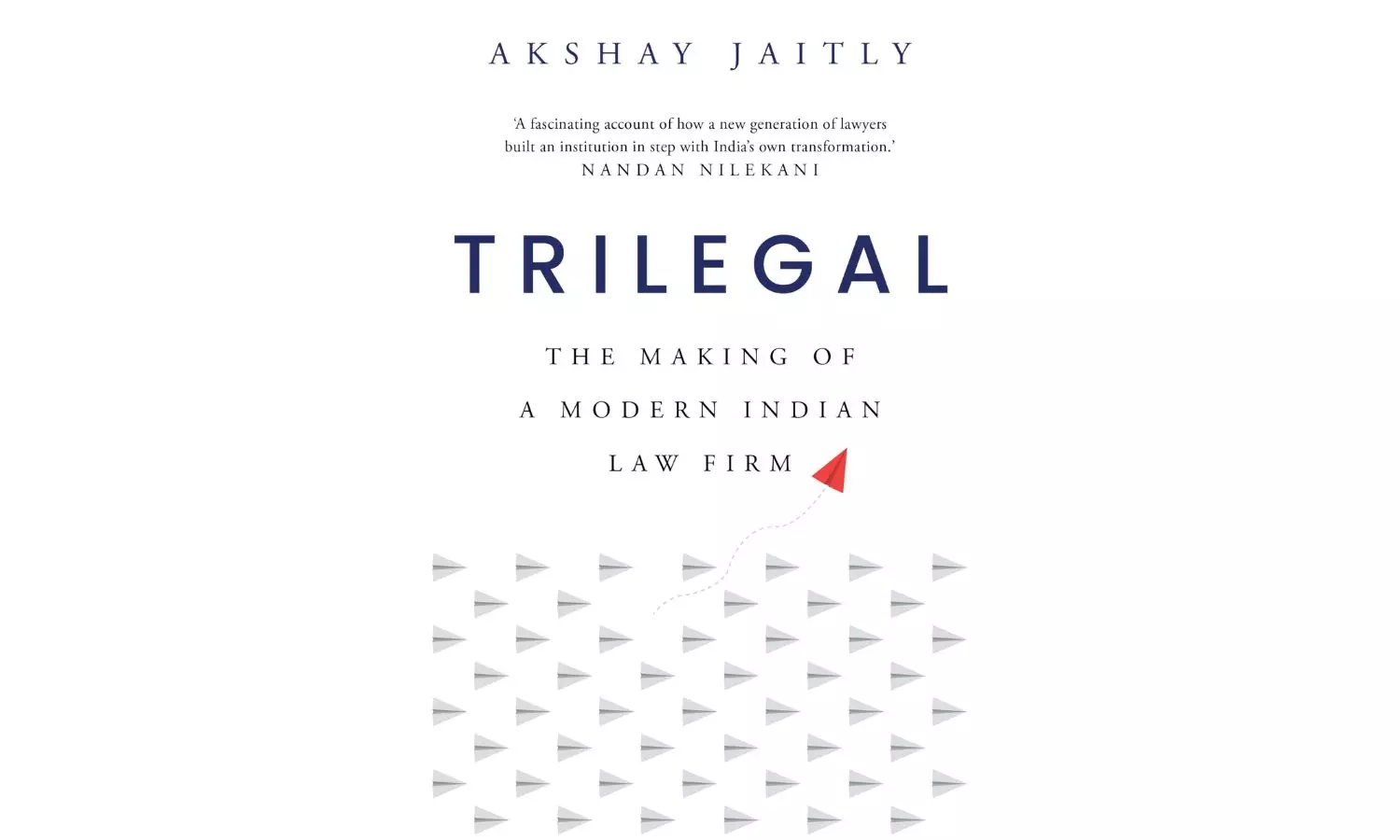
Akshay Jaitly’s narration of the formation of Trilegal, is more than just “the making of a modern Indian law firm,” as he describes it. It has the potential to serve as a plinth for the future of corporate legal practices in India, paces ahead of what vanilla litigators assume would be their workplace culture in an ordered world. If the popular television serial Suits is what common perception assumes as a corporate legal firm model, then reality is possibly a few parsecs away. This book dwells on the complexities and the fragility of a structure that has only recently started striking roots in India.
The architecture of a corporate law firm is different from a typical company, even a major shift away from a regular partnership. The act of finding the most suitable glue for a perfect democratisation, while staying on the right side of a profit motive, is tough. In a trade where the produce can often depend on personal contact and trust, calculation of reward remains a general bone of contention.
Within such a brittle, crystalline form, a corporate law firm has to struggle to retain talent and grow. The fact that, after a quarter of a century of existence, Trilegal now has 150 partners and over 1,200 lawyers, is a testimony to the determination of its founders to stay on the path of fairness. The structure of Trilegal may not yet be perfect, but the fact that there is constant agreement to strive towards that is what keeps the architecture valid and valuable.
While much of the book tries to narrate the story of the creation of an institution, it also imparts valuable lessons to Indian entrepreneurs on how it is important to remove the stamp of eternal ownership of equity and deliver a level playing field, where even founding members would one day say goodbye with a handshake and a pat on the back.
That said, Trilegal is also about a subtle warning on how the glacial pace of Indian jurisprudence harms the formation of companies, mergers and acquisitions and the enforcement of contracts. A contract, just like a piece of legislation, is as good as its execution. The intent might be good, great even, but if the system stands in the way of if its execution, the ultimate purpose will wither in the wind.
Overall, this isn’t just a book about the new legal firm perceptions that have landed in India, but about a generation of entrepreneurs who have had the courage to understand that family-led and family-owned corporate bodies have had their time in the sun, and the new India ready to absorb fresh ideas and positions. This is a complex affair, as the formation and growth of Trilegal showed. What emanated from an idealistic position of democratic governance was the fact that in real life it was necessary for a governance system of fewer individuals to lead and empower the larger vision. By April 1, 2020, the company had narrowed the leadership to a two-member committee, aided by the board.
This was necessary, as was self-confidence. The author narrates an incident in which, in a desperate attempt to secure a meeting with a top client, he approached his father, a senior government officer, for a reference. What his father said stuck to him. He said: “Beta, I’m telling everyone in town that my son is part of setting up a new law firm and he hasn’t asked me for any help to get work. Let me continue saying that.”
Such indirect confidence boosters ultimately helped him and the firm soar to new heights, with revenues climbing from just Rs 2 crore in 2001 to nearly Rs 1,600 crore as of 2025. This is as much a story of talent, as of diligence, trust and grit. Within an ambience of degrading social values, Trilegal stands out as a beacon of hope.
Trilegal
By Akshay Jaitly
Juggernaut
pp. 336; Rs 899
Read the full article
Continue reading on deccanchronicle.com


