3 min read
Nigeria urges stronger African health systems at AU summit
vanguardngr.com
Saturday, February 14, 2026
•Leads drive for 2m community health workers by 2030 By Johnbosco Agbakwuru, Abuja Nigeria has urged African nations to embrace health security sovereignty, moving away from reliance on foreign aid toward self-sufficient, homegrown health systems. Vice President Kashim Shettima made the ...
•Leads drive for 2m community health workers by 2030
By Johnbosco Agbakwuru, Abuja
Nigeria has urged African nations to embrace health security sovereignty, moving away from reliance on foreign aid toward self-sufficient, homegrown health systems.
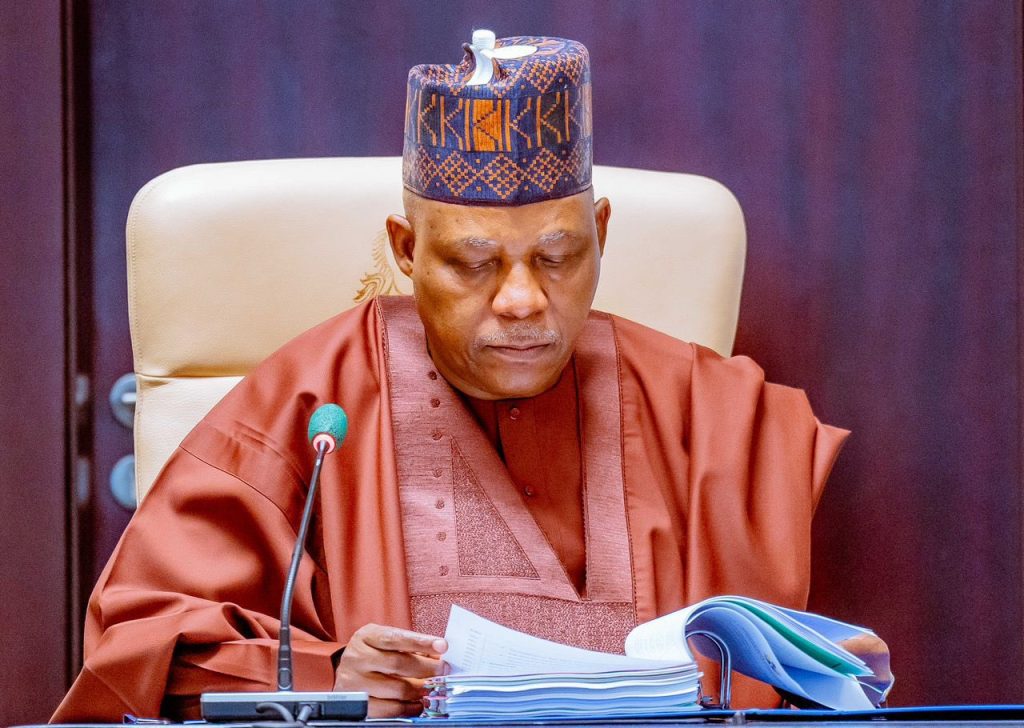
Vice President Kashim Shettima made the call on Friday during a high-level side event on “Building Africa’s Health Security Sovereignty” at the ongoing 39th Ordinary Session of the Assembly of Heads of State and Government of the African Union (AU) in Addis Ababa, Ethiopia.
Shettima, representing President Bola Ahmed Tinubu at the summit, stressed that Africa must ensure its health systems are not subjected to the uncertainties of distant supply chains or the shifting priorities of global panic.
“Nigeria stands ready to collaborate with every member state of our Union to make health security sovereignty measurable in factories commissioned, laboratories accredited, health workers trained, counterfeit markets dismantled, and insurance coverage expanded,” he said.
The Vice President cautioned against vulnerability, recalling Africa’s struggles during the COVID-19 pandemic when the continent waited and improvised for rationed vaccines and scarce oxygen. He noted that endurance is not a strategy, insisting that leadership must deliberately reduce vulnerability.
“Health security is national security, and in an interconnected continent, national security is continental security. A virus does not carry a passport. A counterfeit medicine does not respect a border. A pandemic does not wait for bureaucracy,” Shettima declared.
Nigeria’s Initiatives
Shettima outlined measures Nigeria is adopting under President Tinubu’s leadership, including boosting local pharmaceutical manufacturing, increasing domestic health financing, and strengthening regulatory oversight.
He highlighted the Nigeria Health Sector Renewal Investment Initiative, launched in December 2023, which secured over $2.2 billion in commitments to renovate more than 17,000 primary healthcare centres, train 120,000 frontline health workers, and expand health insurance coverage within three years.
The Vice President also pointed to Nigeria’s efforts in epidemic intelligence, genomic surveillance, and emergency preparedness through the Nigeria Centre for Disease Control and Prevention (NCDC). He added that regulatory oversight has been intensified under NAFDAC, with upgraded quality-control laboratories and stricter enforcement against substandard medicines.
Beyond public systems, Shettima said Nigeria is unlocking its healthcare value chain through the Presidential Initiative to Unlock the Healthcare Value Chain (PIPUHVAC), aimed at removing structural bottlenecks for local pharmaceutical manufacturers, medical device assemblers, and biotechnology innovators.
Continental Collaboration
Coordinating Minister of Health and Social Welfare, Prof. Muhammad Ali Pate, reaffirmed Nigeria’s commitment to leading by example in building workforce capacity and strengthening health systems. He noted that Nigeria is working to bridge rural-urban gaps in health worker distribution and build resilience across the continent.
Africa CDC Director General, Dr. Jean Kaseya, commended Nigeria’s leadership, stressing the need for synergy of resources to address fragmented investments in health systems.
Health Ministers from Senegal, Malawi, and Ethiopia also pledged support for the initiative, aligning with Nigeria’s call to boost investment in workforce databases and strengthen community health systems.
At the end of the forum, African Union Ministers of Health and Finance urged AU Heads of State and Government to strengthen political commitment and increase sustained investment in human resources for health and community health systems.
They specifically called for elevating Human Resources for Health (HRH) and Community Health Workers (CHWs) as strategic pillars of Primary Health Care (PHC), Universal Health Coverage (UHC), and Pandemic Preparedness, Prevention, and Response (PPPR).
The ministers also set a continental target of two million community health workers by 2030, alongside increased domestic financing and the development of national community health acceleration plans.
The post Nigeria urges stronger African health systems at AU summit appeared first on Vanguard News.
Read the full article
Continue reading on vanguardngr.com


