7 min read
50 years after: Remembering General Murtala Muhammed
vanguardngr.com
Friday, February 13, 2026
By Jide Ajani, General Editor This report brings you never before told details of the coup that led to the killing of General Murtala Ramat Muhammed, Nigeria’s third military head of state. But the report also captured some details of the coup that brought Muhammed to power. Fifty year...
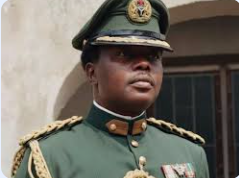
By Jide Ajani, General Editor
This report brings you never before told details of the coup that led to the killing of General Murtala Ramat Muhammed, Nigeria’s third military head of state.
But the report also captured some details of the coup that brought Muhammed to power. Fifty years after the assassination of one of Nigeria’s greatest leaders, Nigerians who knew him and those who have read about him are still left wondering what Nigeria could have become had late General Muhammed served the country for more than 200 days. Born on November 8, 1938, in Kurawa Quarters, Kano City, Muhammed was 37+years when the assassins’ bullets.
Mad men with guns
It was Friday, February 13, 1976. The day started for Nigerians, and specifically, Lagosians like any other day. Many had left their homes for work and their places of livelihood and earnings.
Like other Nigerians, Murtala Muhammed was on his way to work at Dodan Barracks, in Ikoyi, Lagos. He did not live in the comfort of a presidential palace, so he had to be driven from his house in the heart of Lagos to his office everyday. But this day was going to be different for many reasons.
As his vehicle stopped somewhere around George Street, not far from the Federal Secretariat in Ikoyi, plain clothes men emerged from a gas station in the opposite direction. They had waited at the gas station for Muhammed to pass by. They knew there would always be a traffic bottleneck at the traffic light junction. They knew his route. They knew there would be little or no resistance since he moved around without the accoutrement of security overload.
His car was an unmistakable dark-coloured Mercedes Benz. The car was unarmored. It always had the Staff Flag on both sides of the front burnet, while the Coat of Arms were at the rear.
Once they sighted the car, they moved swiftly. The car was not tinted so it was easy for them to identify their prey. They fired several shots at Muhammed. They wanted him dead. From his head, to his chest and his belly, the bullets dug holes in his body. The only form of defence said to be around him was a pistol carried by his Orderly. After certifying that he was dead, they left his mangled body in the car.
Killed along Muhammed were his driver and his ADC, Lt. Akintunde Akinsehinwa. Lt. William Seri was later identified as the leader of the team that fired at General Muhammed’s vehicle.
Gloom enveloped the land. Only those who were at the scene of the event knew immediately that the victim of that shooting was the head of state.
Colonel Ibrahim Taiwo: Murder they wrote in Ilorin
While confusion reigned in Lagos, something else was happening in far away Ilorin, Kwara State. The military governor of the state was Colonel Ibrahim Taiwo, a very close friend of Murtala Muhammed. The two had been very close. They were both involved in the infamous Asaba massacre, where hundreds of civilians were allegedly killed because of what was termed disloyalty to the Nigerian state in its war against Biafra. Taiwo was also said to have been very instrumental in the coup that brought Muhammed to power in July 1975.
Now, some soldiers who were said to be under the command of Taiwo during the war still had their grievances against their boss. The Dimka coup gave them an opportunity to extract their pound of flesh.
According to a report, Colonel Taiwo was murdered by some of the soldiers who were on his side during the civil war in 1967. Major Kefas was one of them. He was said to have “ordered Lieutenant Obadiah of the Defence Company 26 Infantry Brigade in Ilorin to go and grab the Kwara State governor.
Accompanied by Lieutenant Sunday Iwaya, they carried out the instructions, abducted their target and took him to a bush at Amberi, along Ajase Ipo/Offa Road. Here, orders were reportedly given to Sergeant Ahmadu and Bala to fire. That was the end of Colonel Ibrahim Taiwo. He was buried in his native town of Ogbomoso in Oyo State.”
“Both him and his killers were raised in the North. While at Bida High School, Taiwo was said to have been two years ahead of Ibrahim Babangida, Abdusalam Abubakar, Gado Nasko, Mohammed Magoro, Mamman Vatsa, Sanni Bello, Garba Duba and Sanni Sami.
A murderous coup of confusion
Meanwhile, as the killing of Muhammed was being carried out, one Lt- Col. Buka Suka Dimka was at the FRCN office broadcasting a coup speech that added to the confusion of the day. His speech was incoherent. His voice, slurry. It was later discovered that Dimka made the broadcast in a state of inebriation from an excessive intake of alcohol.
What created so much confusion that day was Dimka’s declaration of an imposition of a curfew from 6am to 6pm (a daytime curfew). Meanwhile, his broadcast was made between 7:30am and 9am. What that meant for Lagosians and indeed Nigerians was that they were all in breach of a sudden curfew. Even those already at their places of work began to scamper to safety and return home.
Forces loyal to the government of the day quickly rallied and mobilised against Dimka. One of the heroes of the day was Major Ibrahim Babangida. He escaped but was later captured at Abakaliki in a brothel, while again trying to flee.
Meanwhile General Olusegun Obasanjo, Muhammed’s deputy at the Supreme Military Council, SMC, was also penciled for assassination. He was later sworn-in as Muhammed’s replacement.
How Muhammed got to power
It is worth recalling that General Muhammed was selected to lead the takeover from General Yakubu Gowon, then head of state who was on an official function at the Organisation of Africa Unity, OAU, summit in Addis Ababa, Ethiopia.
It was learnt that some young officers, apparently disenchanted with the Gowon regime, had been planning on how to remove him as far back as late 1974. Leading the group were then Colonel Joe grab, Colonel Ibrahim Taiwo, Muhammadu Buhari, T Y Danjuma, Major Shehu Yar’Adua, Ibrahim Babangida.
In fact, Muhammed was out of the country some 96 hours before the coup of July 1975. According to a family source, “Muhammed was not in the country. He was in London. On my way to London, I met Yar’Adua, who said he had a message for Muhammed. He said it would not be written but verbal. He told me to inform Muhammed that whatever he was doing in London, he needed to be back in the country before Tuesday, July 29, 1975. Muhammed was minister of communication at that time.”
Continuing, he said he “asked Yar’Adua what was going on but Yar’Adua said it was none of my business. So, when I got to London, I passed the message across to Muhammed. Muhammed shook his head three times and said ‘these young people’ three times. He said ‘they are going ahead with what they have planned and I need to be in the country so that nothing would go wrong.’ So, he wasn’t part of the thing until they called on him to lead them.”
He only ruled for 200 momentous days.
The post 50 years after: Remembering General Murtala Muhammed appeared first on Vanguard News.
Read the full article
Continue reading on vanguardngr.com
More from vanguardngr.com

24 minutes ago
В Калужской области кассир-контролер приняла роды в машине

24 minutes ago
В Крыму задержали двоих участников террористической организации

25 minutes ago
ВСУ обстреляли автобус в Херсонской области, есть раненые
25 minutes ago