3 min read
Senate questions NBET over ₦3trn power sector debt, funding gaps
vanguardngr.com
Thursday, February 12, 2026
By Henry Umoru ABUJA — The Senate has raised concerns over the rising debt in Nigeria’s power sector, noting that outstanding liabilities across the electricity value chain have now reached about ₦3 trillion. The issue dominated a session yesterday when Johnson Akinnawo, Acting Managing...
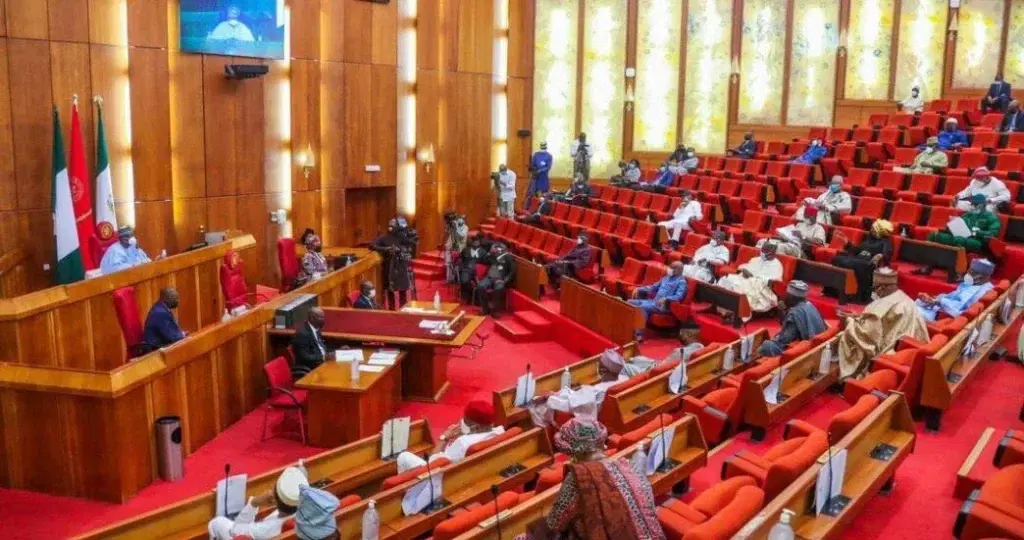
By Henry Umoru
ABUJA — The Senate has raised concerns over the rising debt in Nigeria’s power sector, noting that outstanding liabilities across the electricity value chain have now reached about ₦3 trillion.
The issue dominated a session yesterday when Johnson Akinnawo, Acting Managing Director and CEO of the Nigerian Bulk Electricity Trading Plc (NBET), along with top officials of the agency, appeared before the Senate Committee on Finance, chaired by Senator Sani Musa (APC, Niger East), during the 2026 budget defence.
Senators probed the agency on performance gaps, persistent deficits between electricity tariffs and the real costs of generation, transmission, and distribution, as well as funding shortfalls.
Akinnawo explained that while ₦858 billion was appropriated for NBET in 2025, only ₦60 million was actually released. “At the close of the year, only ₦60 million was released toward the end of the year. Unfortunately, because of that, our budget performance was affected,” he said.
Senator Musa noted that while market receipts appeared strong on paper, the sector remained unstable. “If market performance is good, it should be sustainable for the markets,” he said.
Akinnawo added that a structural deficit persists. “There remains a gap between the cost of generation, transmission, and distribution of electricity,” he said, noting that distribution companies remit collections used to pay generation companies, but payments are constrained by low collections and funding shortfalls.
Explaining the payment process, Akinnawo said, “Every GenCo gets paid an equal percentage from whatever collections come from the DisCos. The Federal Government, through the Ministry of Finance, covers the funding gap arising from partial risk guarantees to make up the difference.”
The Senate expressed concern over the failure to release appropriated funds. “This money should have come to cover the gap between collections and what is required to pay GenCos,” Senator Musa said.
Akinnawo also highlighted challenges from foreign exchange exposure, as power tariffs are dollar-indexed. He stressed that decades of underinvestment have weakened the electricity value chain. “A chain is only as strong as its weakest link. Due to decades of poor investment…that is why we are where we are today,” he said.
The NBET chief said a presidential power sector debt reduction committee, chaired by the Minister of Finance, has been reconciling outstanding liabilities since March 2025. “I would say at the moment the debt is in the region of ₦3 trillion,” he disclosed.
Regarding 2026, NBET’s budget proposal has been reduced to ₦601 billion, 70 per cent of the 2025 appropriation, with released funds tied to specific projects that cannot be implemented in phases due to procurement rules.
At the end of the session, Senator Musa directed NBET to provide a detailed breakdown of revenues and expenditures and warned that the committee would intensify oversight as Nigerians continue to face erratic power supply and rising electricity costs amid mounting sector debt.
The post Senate questions NBET over ₦3trn power sector debt, funding gaps appeared first on Vanguard News.
Read the full article
Continue reading on vanguardngr.com


