10 min read
S Reps propose visa ban on Kwankwaso, Miyetti Allah, others
vanguardngr.com
Thursday, February 12, 2026
By Dapo Akinrefon, Bashir Bello & Nkiruka Nnorom LAGOS — United States lawmakers have introduced a bill aimed at addressing alleged religious persecution and mass killings of Christians in Nigeria, including a proposed terrorist designation for Fulani militias and sanctions against certain...
By Dapo Akinrefon, Bashir Bello & Nkiruka Nnorom
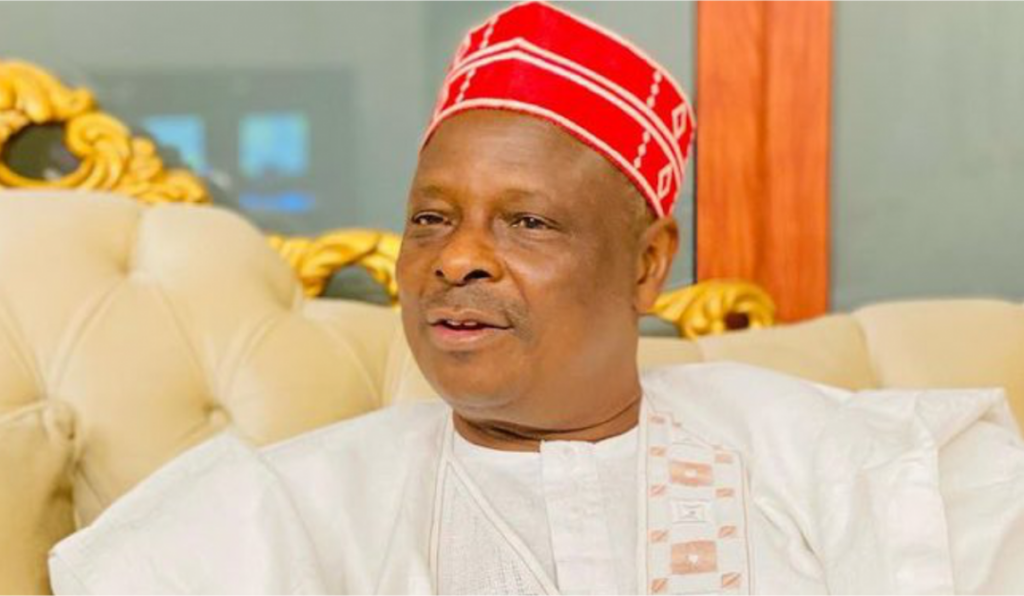
LAGOS — United States lawmakers have introduced a bill aimed at addressing alleged religious persecution and mass killings of Christians in Nigeria, including a proposed terrorist designation for Fulani militias and sanctions against certain Nigerian individuals and groups, including the presidential candidate of New Nigeria Peoples Party, NNPP, in the 2023 elections, Dr Rabiu Musa Kwankwaso.
While both the Presidency and Minister of Information and National Orientation, Mohammed Idris, could not be reached for comments, the Kwankwasiyya movement and NNPP put up a stout defence for their leader, Kwankwaso, who is said to be out of the country.
However, titled “Nigeria Religious Freedom and Accountability Act of 2026” (HR 7457), the bill was introduced by Rep. Riley Moore and co-sponsored by Rep. Chris Smith, Chairman of the House Foreign Affairs Sub-committee on Africa, alongside other Republican lawmakers.
Co-sponsors include House Appropriations Committee Chairman, Tom Cole; House Foreign Affairs Committee Chairman, Brian Mast; Appropriations Subcommittee on National Security and Related Programmes Chairman, Mario Diaz-Balart; and Foreign Affairs South and East Asia Subcommittee Chairman, Bill Huizenga.
Moore, author of the bill, has been one of US politicians insistent on claims of systemic Christian persecution in Nigeria. He paid a visit to Nigeria last November over the claim.
In November 2025, Trump designated Nigeria a Country of Particular Concern, a move that allows the US executive branch to apply diplomatic and economic measures.
Trump also authorised coordinated strikes with the Nigerian government against suspected militants on Christmas Day 2025.
The bill comes amid renewed international attention, following President Donald Trump’s re-designation of Nigeria as a Country of Particular Concern, CPC, over religious freedom concerns.
Key provisions
The bill mandates the US Secretary of State to submit an annual report to Congress detailing efforts to address what it describes as religious persecution in Nigeria.
Specifically, it requires:
*An assessment of Nigeria’s compliance with the International Religious Freedom Act.
*A review of actions taken, or not taken, by the Nigerian government to prevent persecution, prosecute perpetrators, repeal blasphemy laws, protect vulnerable communities, and facilitate the safe return of internally displaced persons, IDPs.
*Identification of individuals and entities sanctioned, or under consideration for sanction, under the Global Magnitsky Human Rights Accountability Act or listed as Entities of Particular Concern.
*An evaluation of US security assistance to Nigeria and whether such support risks enabling or exacerbating religious persecution.
*Details of humanitarian assistance delivered to displaced Christians, including funding amounts, recipients, and measurable outcomes.
*Components of the bill include an investigation into whether the Nigerian government is taking appropriate steps to cease enforcement of blasphemy laws, and to look into instances of non-Muslims, Muslims, and dissenters being subjected to Sharia law or blasphemy laws; and an assessment of internally displaced persons, IDP, conditions, including safety, humanitarian needs, and prospects for return.
*Others include an evaluation of any steps taken by the Nigerian government during the reporting period to address religious persecution, dismantle extremist networks, prosecute attackers, reform security forces, or improve protection for at-risk communities as well as recommendations for further executive actions or congressional authority deemed necessary and most helpful to halt the religious persecution and mass atrocities occurring in Nigeria.
In addition, the bill urged the US Secretary of State to determine whether certain Fulani-ethnic militias qualify for designation as a Foreign Terrorist Organisation, FTO, over religious violence in Nigeria.
Proposed sanctions
The legislation recommended targeted sanctions, including visa bans and asset freezes, against individuals and entities allegedly responsible for severe violations of religious freedom.
Among those listed are Rabiu Musa Kwankwaso, former governor of Kano State and leader of the New Nigerian People’s Party, NNPP; Miyetti Allah Cattle Breeders Association of Nigeria, MACBAN; Miyetti Allah Kautal Hore; and Fulani-ethnic nomad militias in Nigeria.
The Departments of State and Treasury will be required to impose sanctions or report to Congress why such measures have not been taken.
Lawmakers speak
Speaking on the bill, Moore, Republican representative from West Virginia, announced the proposed legislation in a post on X on Tuesday.
He wrote: “Today, I am proud to introduce the Nigeria Religious Freedom and Accountability Act of 2026 with Rep. Chris Smith.
“The U.S. is a Christian nation. As such, we must stand with persecuted Christians around the world… For years, Christians in Nigeria have faced unspeakable violence, churches burned, villages destroyed, families slaughtered, while the global community looked away.
“As part of the investigation President Trump asked me to lead, I visited Nigeria and witnessed first-hand the horrors our brothers and sisters in Christ face and saw the security challenges Nigeria faces.
“That is why I am proud to introduce the Nigeria Religious Freedom and Accountability Act of 2026 with Representative Chris Smith. This legislation makes clear that the United States stands with our persecuted brothers and sisters in Christ and seeks to help Nigeria address its many challenges.”
He, however, applauded the Nigerian government for working in coordination with the Trump administration to tackle security challenges and pledged continued efforts to strengthen US–Nigeria relations.
Rep. Smith, chairman of the House Foreign Affairs Africa subcommittee, said the United States has a responsibility to pressure Nigeria to act against systemic violence.
“The Nigerian government’s blatant denial of the religious persecution occurring within its borders has only enabled the religious-based violence in the country to fester, with Christian deaths and church attacks reaching unprecedented numbers,’’ he said.
The bill referenced destruction of churches, kidnappings, sexual violence, and attacks on villages, estimating that between 50,000 and 125,000 Christians were killed between 2009 and 2025.
He said: “Now that President Trump has rightly re-designated Nigeria a ‘Country of Particular Concern’, the United States has a responsibility to do its due diligence in ensuring that the Nigerian government is taking the proper steps to address and punish the systemic violence against Christians and non-radical Muslims by Islamist extremists, such as Boko Haram and Fulani terrorists.
“That is why it is paramount that the United States remains steadfast in its mission to promote and protect religious freedoms throughout the globe by ensuring that we are doing all we can to end this crisis. We set an important example for the rest of the international community.’’
House Foreign Affairs Committee Chairman, Brian Mast, said the bill aligned with President Trump’s efforts to hold Islamist extremists accountable.
“The free world cannot stand by as Christians face mass murders, kidnappings and brutal assaults at the hands of terrorist thugs and armed militias in Nigeria. The Nigerian government must do their part to eliminate the scourge of religious persecution plaguing the country,” Mast said. On his part, Tom Cole said: “Defending religious liberty in Nigeria and worldwide is both a moral duty and a vital American interest.
“The Nigeria Religious Freedom and Accountability Act of 2026 makes it clear: religious persecution will not be tolerated.”
Broader context
The bill also called on the US government to counter what it describes as “hostile foreign exploitation” linked to illegal Chinese mining operations in Nigeria.
If passed, the legislation will expand US congressional oversight of Nigeria’s religious freedom record and could trigger diplomatic, economic and security consequences, depending on the findings of the mandated reports.
We’re shocked, will respond at appropriate time — Kwankwassiya movement
Reacting to the proposed visa ban on Kwankwaso yesterday, spokesperson of the Kwankwassiya movement, Mansur Kurugu, said they received it in shock.
He said further that they were studying the proposed visa ban and will respond to it at the appropriate time.
“We received the information just like any other Nigerians with shock. At the moment, we are studying what that means, then at a later time, we shall issue a proper statement regarding that.’’
Vanguard gathered that the Kwankwassiya movement leader was currently out of the country.
Kwankwaso caught in web of int’l hypocrisy, blackmail — NNPP
Also reacting to the visa ban proposal by the US Congress, the New Nigeria Peoples Party, NNPP, expressed shock over the proposed sanctions targeted at its National Leader, Senator Rabiu Kwankwaso and the Miyetti Allah Cattle Breeders Association and Fulani Ethnic Militia. The NNPP National Publicity Secretary, Ladipo Johnson, dismissed any notion that Senator Kwankwaso had been responsible in any way for religious freedom violations.
The party said it is curious and regrettable that Kwankwaso would be cited for what he knew nothing about.
Johnson said: “We see this development as a contrived action against an innocent man who clearly has no relationship with religious fundamentalism in Nigeria.
‘’His record is there in the public domain, either in public office or in private life and it is advisable for people to investigate such things properly, before reaching such conclusions.
“That months before the latest development, Kwankwaso had openly reacted when President Donald Trump redesignated Nigeria as a Country of Particular Concern over alleged religious persecution.
‘’In a statement posted on his X handle at the time, Senator Kwankwaso cautioned against what he described as oversimplified characterisations of Nigeria’s internal challenges.
“Kwankwaso stated that it is important to emphasise that our country is a sovereign nation whose people face different threats from outlaws across the country.
However in a post shared on X , Rep Moore of the US Congress stated to Kwankwaso that, ‘Governor do you care to comment on your own complicity in the death of Christians?
‘You instituted Sharia law. You signed the law that makes so-called blasphemy punishable by death.” This was because Kano State, under Kwankwaso’s leadership, brought the Islamic legal code into full effect, joining other northern Nigerian states such as Zamfara, Sokoto, Katsina, Yobe, Jigawa, and Borno.
“But is this enough to accuse Kwankwaso of severe religious freedom violations? Why were the other state governors who introduced Sharia in their states not accused as well?
“Is Rep Moore being fair or selective? Isn’t the US in a good relationship with Qatar and Saudi (both Sharia countries)? Why is this coming just after our government apparently paid for a consultant in the US?
“Isn’t it strange that it is Kwankwaso, an opposition leader who has spoken out so many times about the insecurity under this administration, that the United States now seems to be turning on?
“We recall that as governor of Kano State, Senator Kwankwaso ensured that the Boko Haram sect was wiped out of the state and his close relationships with Christian leaders in Kano and across the country attest to his credibility as a national leader and statesman.
“Even when he was pressured to introduce Sharia, he still lost his election because the predominantly Muslim voters punished him for supporting a Christian presidential candidate, in the person of Chief Olusegun Obasanjo.
“Furthermore, in 2023 he ran his presidential campaign with a Christian Bishop, Bishop Isaac Idahosa, as his running mate.
“These are the facts, which we think should guide the Congress and its leaders, particularly Reps Riley Moore and Chris Smith to do a thorough investigation on the credibility of our leader, Senator Rabiu Musa Kwankwaso, so that Justice is done to his noble name and cleared of such undue embarrassment.”
The post S Reps propose visa ban on Kwankwaso, Miyetti Allah, others appeared first on Vanguard News.
Read the full article
Continue reading on vanguardngr.com


