4 min read
When Your Heart’s in The ‘Right’ Place
deccanchronicle.com
Wednesday, February 11, 2026

Most of us grow up believing the heart is situated on the left, but some people have their heart in the ‘right’ place. Medically, this condition is called dextrocardia. In simple terms, it means the heart points to the right side of the chest instead of the left. It is rare, usually congenital, a...
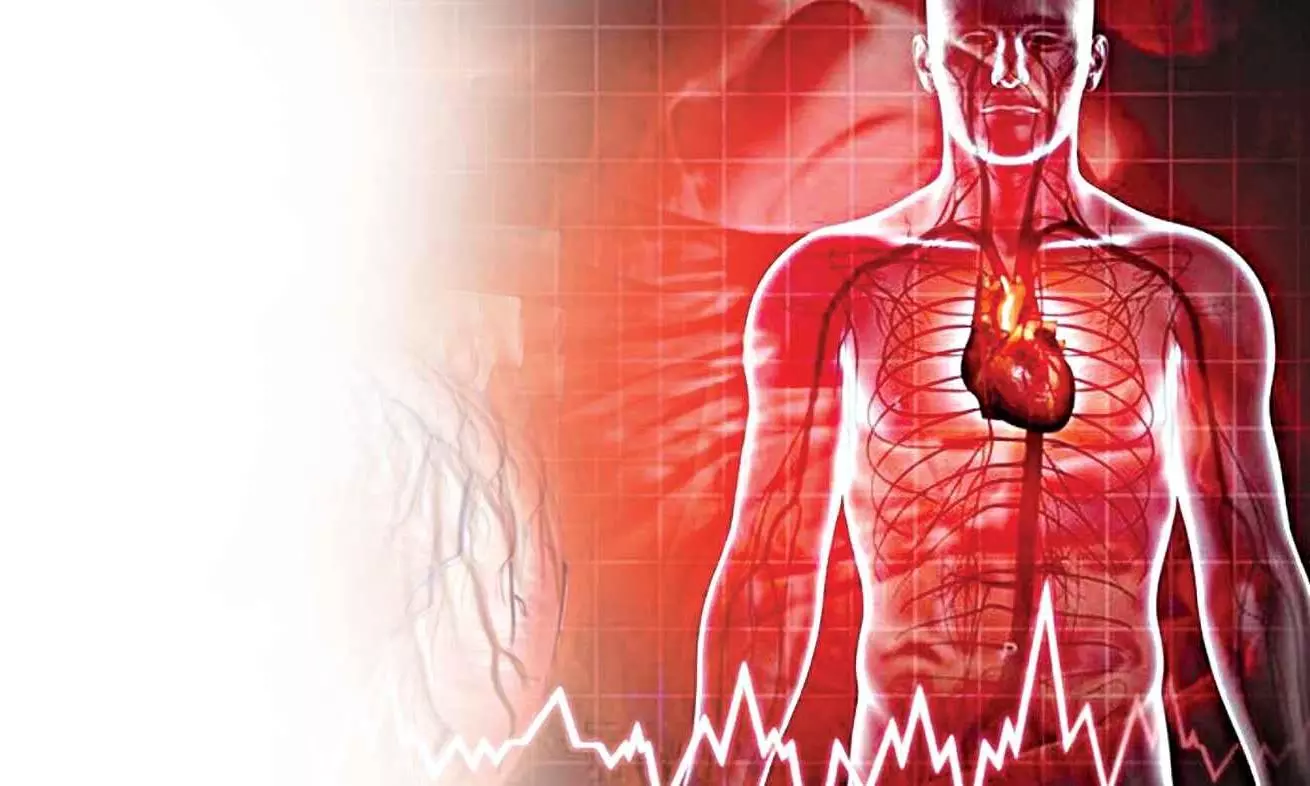
Most of us grow up believing the heart is situated on the left, but some people have their heart in the ‘right’ place. Medically, this condition is called dextrocardia. In simple terms, it means the heart points to the right side of the chest instead of the left. It is rare, usually congenital, and often discovered incidentally!
A Medical Detour
“Dextrocardia is a rare condition present from birth, in which the heart is located on the right side of the chest instead of the left,” says Dr. Ashvini B K, Noninvasive Clinical Cardio Physician, Renova Century Hospitals, Hyderabad. Although unusual, the condition is often detected incidentally during routine investigations such as a chest X-ray or an echocardiogram. Dr Ashvini opines that dextrocardia develops very early in pregnancy, at the stage when the baby’s heart is forming. “Under normal circumstances, the developing heart shifts towards the left side of the chest. In dextrocardia, this movement occurs towards the right,” she explains. Dr Ashvini emphasises that this is a natural developmental variation and is not linked to the mother’s diet, lifestyle, stress levels, infections, or medications taken during pregnancy.
Dr Priya Pradhan, Senior Consultant-Paediatric Cardiology, Narayana Health SRCC Children’s Hospital from Mumbai says, “While genetics can play a role in dextrocardia, the majority of cases are sporadic and occur purely by chance.” Certain genetic mutations that affect the body’s left–right axis during early development have been identified as reasons behind it.
The condition may also be linked to inherited disorders such as primary ciliary dyskinesia, including Kartagener syndrome. “Although familial occurrence is extremely rare, it is still possible,” Dr Priya notes. Speaking about prevalence, she says dextrocardia occurs in roughly one in 10,000 to 12,000 live births. The risk of recurrence within families, she emphasises, remains low unless the condition is part of a known genetic syndrome.
THERE'S NOTHING RIGHT OR WRONG
In most cases, dextrocardia is entirely harmless. It’s a ‘mirror heart’ that does not affect expectancy or day-to-day functioning. The point being, many individuals live full, healthy lives without ever realising they have the condition. Most discover it incidentally during imaging done for other unrelated reasons. Dr Priya quips, “Dextrocardia is not a disease, just a variation in anatomy.”
However, she explains that complexities depend on whether other organs, too, are mirrored aka situs inversus. Inversus is nothing but a mirror-image arrangement of internal organs. In such cases, the liver, stomach and spleen may also lie opposite to their usual positions. While this reversal may sound dramatic, many people with situs inversus remain asymptomatic unless other congenital issues are present.
Dextrocardia requires no treatment, although awareness is important. Dr Priya goes on to explain that challenges can also arise if dextrocardia is not anticipated. Interpreting ECGs may be difficult unless the leads are placed appropriately, and surgical or interventional procedures would require careful planning. She adds that diagnosis can sometimes be delayed when healthcare providers are unaware of the condition.
Management, she notes, becomes more complex when dextrocardia is associated with underlying congenital heart disease.
Awareness Matters
Dextrocardia is important because when the heart takes the right turn, literally, medical care must follow suit. If doctors aren’t aware, they must be informed of such a condition.
ECGs, too, can give mixed signals, where imaging can look “out of place,” and in emergencies, precious time may be lost while everyone searches where the heart isn’t.
Dr Ashvini says, “People with Dextrocardia should inform doctors about their condition, keep medical records handy and attend regular check-ups if needed.”
She opines that an overall genetic assessment would help in identifying underlying syndromes, understanding inheritance patterns, assessing recurrence risk, and guiding appropriate counselling for the patient and family.
Dextrocardia may place the heart on the right, but it places responsibility squarely on awareness, evaluation, and informed care. So, when associated anomalies or familial patterns are present, genetic counselling is not optional, it's simply essential!
A Heart-To-Heart Talk
• Dextrocardia is a rare condition present from birth, in which the heart is located on the right side of the chest instead of the usual left.
• Dextrocardia occurs in roughly one in 10,000 to 12,000 live births.
Read the full article
Continue reading on deccanchronicle.com


