6 min read
‘I Remain Loyal’: Loyalty on sale and the cynical currency of power in Nigeria, by Usman Sarki
vanguardngr.com
Wednesday, February 11, 2026
“When self interest comes into play, things get stagnant“— Japanese proverb There are few commodities as endlessly traded in Nigeria’s political bazaar as “loyalty.” It is advertised with solemn speeches, sold in exchange for appointments, and withdrawn without notice when the mar...
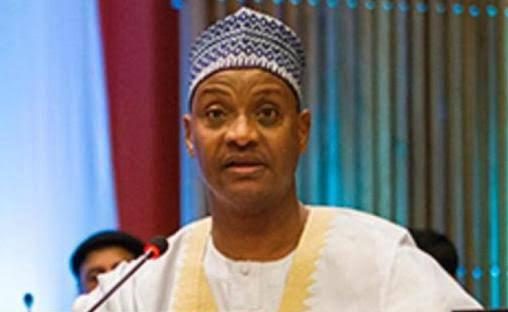
“When self interest comes into play, things get stagnant“— Japanese proverb
There are few commodities as endlessly traded in Nigeria’s political bazaar as “loyalty.” It is advertised with solemn speeches, sold in exchange for appointments, and withdrawn without notice when the market price falls. Loyalty in our politics has become so portable, so negotiable, and so transparently self-serving that it could almost be listed on the Nigerian Stock Exchange.
Every election cycle proves the same point: loyalty in Nigeria is a suitcase with wheels. Politicians carry it wherever they go, ready to unpack it in the camp of whichever party happens to be ascendant. Today, a senator declares undying allegiance to a political party. Tomorrow, he crosses the aisle, swears the same allegiance to another party and calls it “the will of my people.” By next week, he may be back at his original home, embracing old enemies as “brothers.”
In this endless carousel of defections and reconciliations, the phrase “I remain loyal” loses all meaning. Nigerians, with their characteristic wit, have given it new translations. On the streets, the phrase now means: “I remain available,” or more bluntly, “I remain hungry.”
Of course, this is not surprising. In a system built on patronage rather than principle, loyalty is a survival strategy. Nigerian politicians understand that access to power flows not from ideas or vision but from proximity to the right people. To stay close, one must pledge loyalty loudly, repeatedly, and without conviction or shame.
But loyalty in this context is never unconditional. It is always tethered to reward. As soon as the benefits stop flowing, loyalty evaporates, and new allegiances are formed. This is why loyalty in Nigeria comes with a built-in expiry date — usually the next election, the next reshuffle, or the next round of appointments.
There is, moreover, a whole theatre built around the performance of loyalty. We have seen it countless times: a defeated governor standing before cameras, declaring his “unwavering loyalty” to the President. A dismissed minister holding a press conference to reaffirm his “unshakeable loyalty” to the party. Legislators kneeling, bowing, or singing praises to their godfathers as a demonstration of fidelity.
The spectacle is often so exaggerated that it borders on satire. In fact, satire is hardly needed in Nigeria — our politicians write their own comedy scripts. The only problem is that their theatre has real consequences for governance and democracy.
Nigerians watch these rituals with weary amusement. On social media, cartoons, memes and jokes circulate each time a fresh “loyalty declaration” is made. Citizens chuckle because they know what lies behind the words: not fidelity to principle, but a calculation of benefits. Yet the laughter is tinged with frustration. The people understand that a political culture built on this kind of cynicism can deliver little beyond recycling the same faces and the same failures.
Over time, the cynicism trickles down. If politicians treat loyalty as a currency or commodity to be traded, why should citizens view politics as anything more than a hustle? The danger is that this corrodes the very idea of democracy. When trust is replaced by suspicion, when conviction is replaced by calculation, what remains is a hollow shell of governance.
Loyalty in Nigeria always comes at a price, and the price is often paid not by the politician but by the public. When leaders demand loyalty from subordinates, it usually means they are demanding silence in the face of wrongdoing. When officials pledge loyalty upward, it often means they will place their patrons’ interests above the public good.
The result is a vicious cycle. Patronage networks thrive, corruption deepens, and institutions remain weak while accountability becomes debased. Because loyalty is not to the law but to the leader, accountability collapses. Because loyalty is not to the voters but to the benefactor, citizens are sidelined. In effect, loyalty becomes an incentive for impunity.
What makes this even more cynical is that many politicians openly treat loyalty as an investment. They know that the louder they proclaim it, the higher their chances of being rewarded with contracts, appointments, or political protection. And when the return on investment diminishes, they simply shift portfolios — withdrawing loyalty from one leader and reinvesting it in another.
This is why defections are not treated as shameful in Nigeria but as pragmatic. A politician who switches parties is rarely condemned as unprincipled; rather, he is praised for being “strategic.” In this upside-down moral economy, loyalty is not measured by consistency but by adaptability.
The tragedy, however, is that this utilitarian view of loyalty erodes the very foundation of democratic politics. Without principled commitment, politics becomes nothing more than a struggle for survival in the jungle out there. Debates about policy, ideology, or vision are drowned out by the noise of shifting allegiances. Institutions remain fragile because they are subordinated to personalities. And citizens, deprived of meaningful representation, lose faith or trust in the system.
At its worst, this culture breeds sycophancy. Politicians outdo one another in pledging loyalty, not because they believe in the leaders they serve, but because they know that dissent is punished and praise is rewarded. This culture suffocates honest debate, silences criticism, and leaves the country trapped in a cycle where loyalty is purchased, not earned.
The phrase “I remain loyal” may sound harmless, but its implications are anything but. It encapsulates a culture where loyalty is for sale, where cynicism is the coin of the realm, and where politics is reduced to a cynical marketplace. Nigerians laugh when they hear it, but the laughter hides a deeper anxiety: if loyalty means nothing, what hope is there for principle?
Until Nigerian politics finds a way to anchor loyalty in institutions, laws, and citizens, the phrase will remain a national punchline — and democracy will remain hostage to the cynical calculations of those who know that in our political bazaar, loyalty is just another commodity to be traded.
The post ‘I Remain Loyal’: Loyalty on sale and the cynical currency of power in Nigeria, by Usman Sarki appeared first on Vanguard News.
Read the full article
Continue reading on vanguardngr.com


